Understanding Non-Fungible Tokens for Beginners: A Practical Guide to Digital Ownership
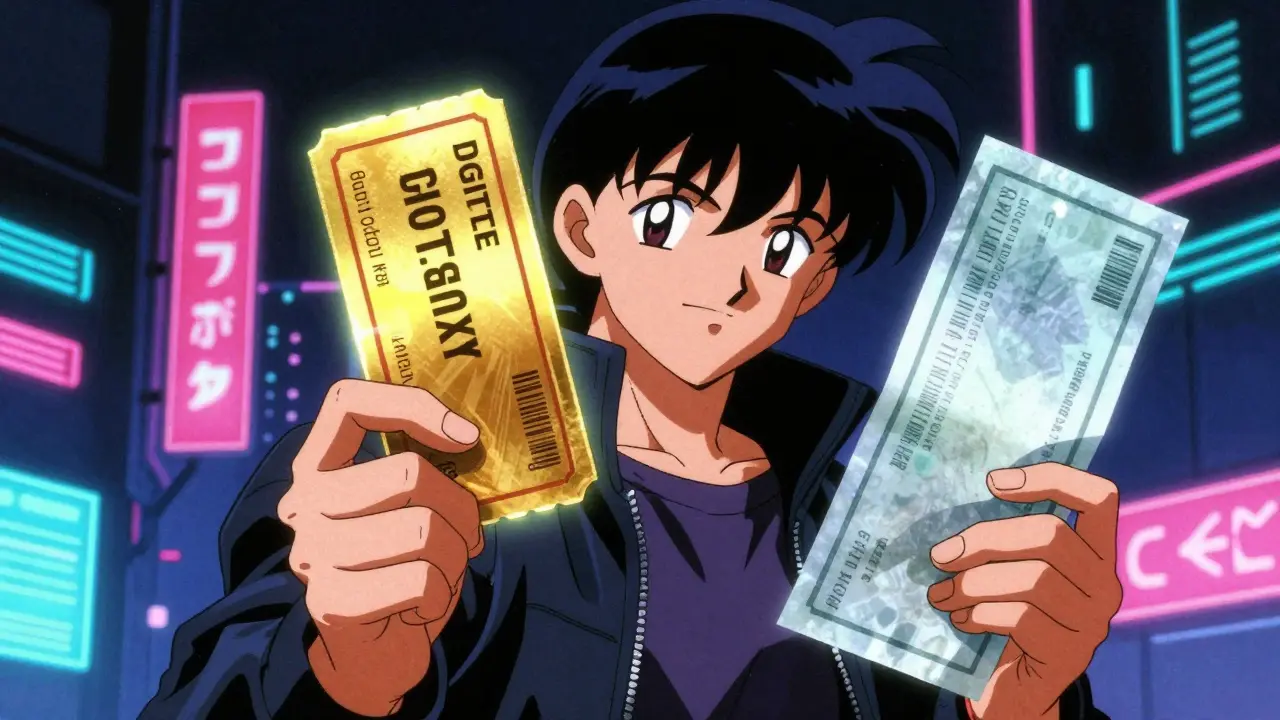
Imagine you hand someone a photocopy of your $100 bill. They have the image, but they don't have the money. You still hold the value. Now, imagine handing them the actual bill. That is the core difference between a standard digital file and a Non-Fungible Token. For years, we’ve treated digital images, music, and videos as infinite copies-easy to right-click and save, hard to own. NFTs changed that equation by introducing verifiable scarcity to the internet.
If you’ve heard the term tossed around in news headlines or social media arguments since 2021, you might be confused. Was it just a bubble? Is it dead? Or is there real technology underneath the hype? The answer lies in understanding what an NFT actually *is* versus how people traded it. This guide strips away the jargon to explain how these tokens work, why they matter, and how you can interact with them safely in 2026.
What Exactly Is an NFT?
To understand an NFT, you first need to understand the word "fungible." Something is fungible if it can be exchanged one-for-one with another identical item without any loss of value. A dollar bill is fungible; if I trade my $5 bill for yours, we are both still holding $5. Bitcoin is also fungible; one BTC equals another BTC.
An NFT is the opposite. It is non-fungible. Each token has unique identifying information recorded on a blockchain. Think of it like trading cards. Even if you have two identical-looking Pokémon cards, their condition, rarity, and history make them distinct. One might be worth $5, while the other, signed by a creator, could be worth $5,000. You cannot swap them evenly.
Non-Fungible Token (NFT) is a type of digital asset that represents ownership of a unique item or piece of content on a blockchain. Unlike traditional digital files that can be endlessly copied, NFTs provide verifiable proof of ownership through blockchain technology, solving the long-standing problem of digital scarcity.
When you buy an NFT, you aren’t necessarily buying the copyright to the image itself. You are buying a receipt-a cryptographic certificate-that proves you own the original version of that specific digital item. The image might still be viewable by everyone online, but only you hold the deed to the authentic edition.
How Do NFTs Work Technically?
NFTs live on blockchains. While several platforms support them, Ethereum remains the dominant network for high-value assets due to its security and established ecosystem. Other networks like Solana, Polygon, and Binance Smart Chain offer faster speeds and lower fees, attracting different types of users.
Under the hood, most Ethereum-based NFTs follow technical standards called ERC-721 or ERC-1155. These are simply sets of rules that ensure wallets and marketplaces can recognize the token as unique. When an artist creates an NFT, they go through a process called "minting." Minting converts a digital file (like a JPEG, MP3, or video) into a blockchain-based asset using smart contracts.
This process isn’t free. Because the blockchain needs computer power to record the transaction, users pay "gas fees" to the network validators. In early 2025, gas fees fluctuated wildly, sometimes spiking over $50 during busy periods. However, following Ethereum’s recent upgrades, average costs have dropped significantly, making entry more affordable for beginners.
The Evolution of the NFT Market
The narrative around NFTs has shifted dramatically from 2021 to 2026. In the early days, the market was driven largely by speculation. People bought profile pictures of apes or pixelated characters hoping the price would skyrocket. Many did not survive the subsequent market correction.
Today, the focus has moved toward utility. According to DappRadar’s 2025 State of NFT Report, the total market value stabilized at $18.7 billion in 2024. But the composition changed. Art and collectibles now represent 45% of volume, while gaming assets account for 30%, and virtual land 15%. More importantly, 68% of new projects launched in 2025 incorporate real-world benefits beyond simple digital ownership.
| Feature | Fungible (e.g., Bitcoin, USD) | Non-Fungible (e.g., NFTs) |
|---|---|---|
| Interchangeability | Yes, 1:1 exchange | No, each is unique |
| Divisibility | Yes (can split into smaller units) | No (indivisible) |
| Value Source | Intrinsic or market consensus | Rarity, utility, provenance |
| Primary Use Case | Currency, store of value | Digital ownership, identity, access |
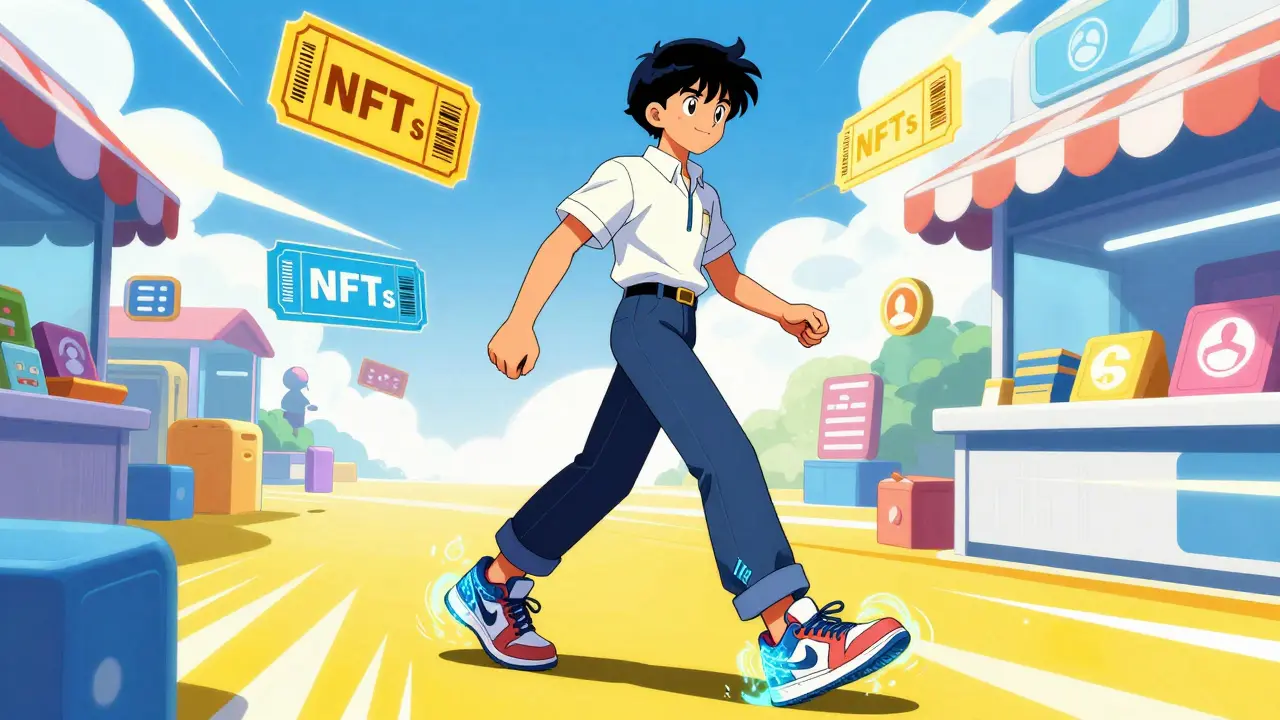
Enterprise adoption has also grown. Fortune 500 companies are experimenting with NFTs for customer loyalty programs and product authentication. Nike, for example, generated $185 million in sales through its .SWOOSH platform in 2024 by selling digital sneakers that unlock physical perks. This shift suggests NFTs are maturing from speculative toys into functional infrastructure for the creator economy.
Getting Started: Your First Steps
If you want to buy, sell, or create an NFT, you need three things: a wallet, cryptocurrency, and a marketplace. Here is how to set up your environment safely.
- Set Up a Crypto Wallet: You cannot store NFTs in a bank account. You need a digital wallet. MetaMask is the most widely used option, holding about 78% of the beginner market share. Download the browser extension or mobile app. During setup, you will receive a 12-word "seed phrase." Write this down on paper and hide it. If you lose this phrase, you lose access to your assets forever. No customer support can recover it.
- Buy Cryptocurrency: Most NFTs on Ethereum require Ether (ETH) to pay for transactions. Buy ETH through a regulated exchange like Coinbase or Kraken. You can start with as little as $10-$25. Transfer the ETH from the exchange to your MetaMask wallet address. Double-check the address; blockchain transactions are irreversible.
- Connect to a Marketplace: OpenSea is the largest marketplace, controlling roughly 62% of the market. Connect your wallet by clicking "Connect Wallet" on the site. You may need to sign a transaction to approve the connection. This does not cost gas fees initially, but buying or selling will.
Be aware of the learning curve. Trustpilot reviews from April 2025 highlighted that 41% of negative feedback related to unexpected gas fees, and 27% cited difficulty understanding blockchain concepts. Take your time. Never rush a transaction.
Minting Your Own NFT
Creating an NFT is often cheaper and easier than buying one, thanks to features like "lazy minting" or "gasless minting." Platforms like OpenSea allow creators to list an NFT without paying upfront fees. Instead, the buyer pays the minting fee when they purchase the item.
To mint:
- Prepare your digital file (image, video, audio).
- Upload it to your chosen marketplace.
- Add metadata: title, description, and properties (like rarity traits).
- Set royalties: Decide what percentage (usually 2.5% to 10%) you want to earn from future secondary sales.
- Publish: Confirm the transaction in your wallet.
For professional artists, the results vary. An Adobe survey of 1,200 digital creators found that 43% earned more than $1,000 monthly using NFTs, while 20% lost money after accounting for fees. Success usually depends on community building rather than just the art itself. Projects like Bored Ape Yacht Club succeeded because they offered holders exclusive access to events and networking, not just a picture of an ape.
Risks and Red Flags
The space is still wild west territory. Scams are common. Always verify contract addresses. Phishing sites mimic popular marketplaces to steal your seed phrase. Never enter your 12-word phrase anywhere except when setting up your wallet locally.
Market volatility is another risk. Dr. Michael Chen, a technology ethicist at Stanford University, cautioned in 2025 that many NFT assets lack intrinsic value beyond community perception. If the community loses interest, the price can drop to zero. Treat NFT purchases as high-risk investments or hobby expenses, not guaranteed savings.
Regulatory uncertainty also looms. The U.S. Securities and Exchange Commission (SEC) has issued guidelines stating that certain NFTs may be considered securities if they promise future profits. The European Union’s MiCA regulations, effective January 2025, established clearer frameworks, but global laws are still evolving. Stay informed about legal changes in your region.
The Future of Digital Ownership
Where do NFTs go from here? Industry analysts predict growth in intellectual property management, ticketing systems, and real-world asset tokenization. Imagine concert tickets as NFTs that prevent scalping and automatically refund if the event is canceled. Or think of luxury goods where the NFT serves as a permanent certificate of authenticity, transferring ownership every time the item is resold.
J.P. Morgan’s 2025 Digital Assets Report projects that NFTs will become standard for digital ownership verification within 5-7 years. The technology is moving from flashy profile pictures to invisible infrastructure that secures our digital lives. As metaverse platforms expand, NFTs will likely serve as the keys to our identities, avatars, and virtual property.
Do I own the copyright when I buy an NFT?
Generally, no. Buying an NFT typically grants you ownership of the token itself, which acts as a proof of authenticity and provenance. It does not automatically transfer the copyright or commercial rights to the underlying artwork unless explicitly stated by the creator in the smart contract or accompanying terms. Always check the license details before purchasing.
Are NFTs environmentally friendly?
This depends on the blockchain used. Early Ethereum relied on Proof-of-Work, which consumed significant energy. However, Ethereum switched to Proof-of-Stake in 2022, reducing its energy consumption by over 99%. Networks like Solana and Polygon are also designed to be energy-efficient. Therefore, modern NFTs have a much smaller carbon footprint than in previous years.
What happens if the website hosting my NFT disappears?
The NFT token itself remains on the blockchain and stays in your wallet. However, many NFTs link to external servers for the actual image or video file. If that server goes offline, you might see a broken link or placeholder image in your wallet. To mitigate this, look for NFTs stored on decentralized storage solutions like IPFS (InterPlanetary File System), which ensures the data remains accessible even if the original host vanishes.
Can I sell an NFT for less than I paid?
Yes. NFT markets are highly volatile. There is no guarantee of profit. You can list an NFT for any price, but buyers will only purchase it if they perceive value. Many beginners lose money due to high gas fees combined with low resale values. It is crucial to research floor prices and community sentiment before listing.
Which blockchain is best for beginners?
Ethereum is the most established and holds the highest value assets, but it can have higher fees. Polygon and Solana are excellent alternatives for beginners because they offer near-instant transactions and negligible fees. If you are just testing the waters, starting with a low-fee chain allows you to learn the mechanics of wallets and marketplaces without risking significant capital on gas costs.

Comments
Bill Gunn
June 2, 2026 AT 02:11Great breakdown on the tech side! 🧠 Most people still think you're buying the jpeg itself, not realizing it's just a receipt on the blockchain. The shift to utility is real though. I've seen some cool integrations with physical goods lately where the NFT acts as a warranty key. It’s wild how fast this space matured from 'ape pictures' to actual supply chain tools. Keep an eye on Polygon for low fees if you're just dipping your toes in. 👇
Rosie Morris
June 3, 2026 AT 03:31honestly this was so easy to read thanks!! i always get confused by all the jargon like gas fees and minting but u made it sound simple. im gonna try setting up metamask this weekend maybe lol
Joe Clements
June 3, 2026 AT 12:19I really appreciate how you explained the difference between fungible and non-fungible assets using the dollar bill analogy. It clicked for me immediately. I’ve been hesitant to jump in because of the scam warnings, but knowing about IPFS storage gives me a bit more peace of mind regarding long-term access to my files.
kamal ifrani
June 5, 2026 AT 10:22Let's be real here, most of this is still a grift for the average joe. You talk about utility, but who actually uses digital sneakers? The whole concept relies on the greater fool theory. People buy hoping someone else will pay more later. It's not 'digital ownership,' it's digital gambling dressed up in tech bro speak. Don't fall for the hype train.
Sam Dashti
June 6, 2026 AT 00:53The comparison table is super helpful. I never realized that divisibility was such a key differentiator until now. It makes sense why you can't split an NFT like you can Bitcoin. I'm curious though, how does the royalty system actually enforce itself if the secondary market doesn't support it? Seems like a loophole waiting to happen.
Christina Pearce
June 6, 2026 AT 11:37I found the section on risks particularly important. So many beginners forget that losing your seed phrase means losing everything forever. It’s scary to think there’s no customer support for crypto wallets. I’m definitely writing mine down on paper and hiding it well after reading this.
Joshua Alcover
June 6, 2026 AT 12:26One must consider the epistemological implications of decentralized ledger technology when assessing the veracity of digital provenance. The assertion that scarcity is artificial ignores the fundamental nature of cryptographic verification which establishes an immutable truth independent of centralized authority. This paradigm shift necessitates a reevaluation of property rights in the virtual sphere.
Diana Morris
June 7, 2026 AT 11:16stop overthinking it just do it. the best time to learn was yesterday the second best time is now. dont let fear stop you from exploring new tech. gas fees are lower now than ever before so what are you waiting for go build something
Dianne Wright
June 9, 2026 AT 05:38i mean obviously everyone knows this by now but thanks for reminding us peasants how it works. i already have three nfts sitting in my wallet doing absolutely nothing except costing me gas fees to move around. great advice really learned so much about how i lost money
trisya hazriyana
June 10, 2026 AT 23:48sure keep telling yourself its about utility. we all know its just speculative mania with extra steps. the jargon is just designed to confuse the little guy while the whales cash out. typical cycle. boring.
Debbie Lewis
June 11, 2026 AT 02:13I just watched this unfold over the last few years. It’s interesting to see how the narrative has shifted from pure speculation to actual use cases like ticketing and authentication. I’m not jumping in yet, but I’m keeping an eye on how enterprise adoption plays out.
stalin brian
June 12, 2026 AT 04:58hey guys nice discussion here. i think kamal is being a bit harsh but he has a point about scams. always double check urls. also if anyone is in india or asia solana is way better for fees right now. happy to help if anyone needs tips on wallets