Wagmi (Sonic) Crypto Exchange Review: Is It Real or a Scam?

You’ve probably seen the buzz. Maybe you clicked an ad promising high yields on the new Wagmi (Sonic) exchange. Or perhaps a friend sent you a link claiming it’s the next big thing in crypto trading. Before you connect your wallet or deposit a single dollar, stop. Take a breath. There is a massive misunderstanding happening right now, and falling for it could cost you everything.
Here is the hard truth: **There is no legitimate centralized cryptocurrency exchange called "Wagmi (Sonic)."**
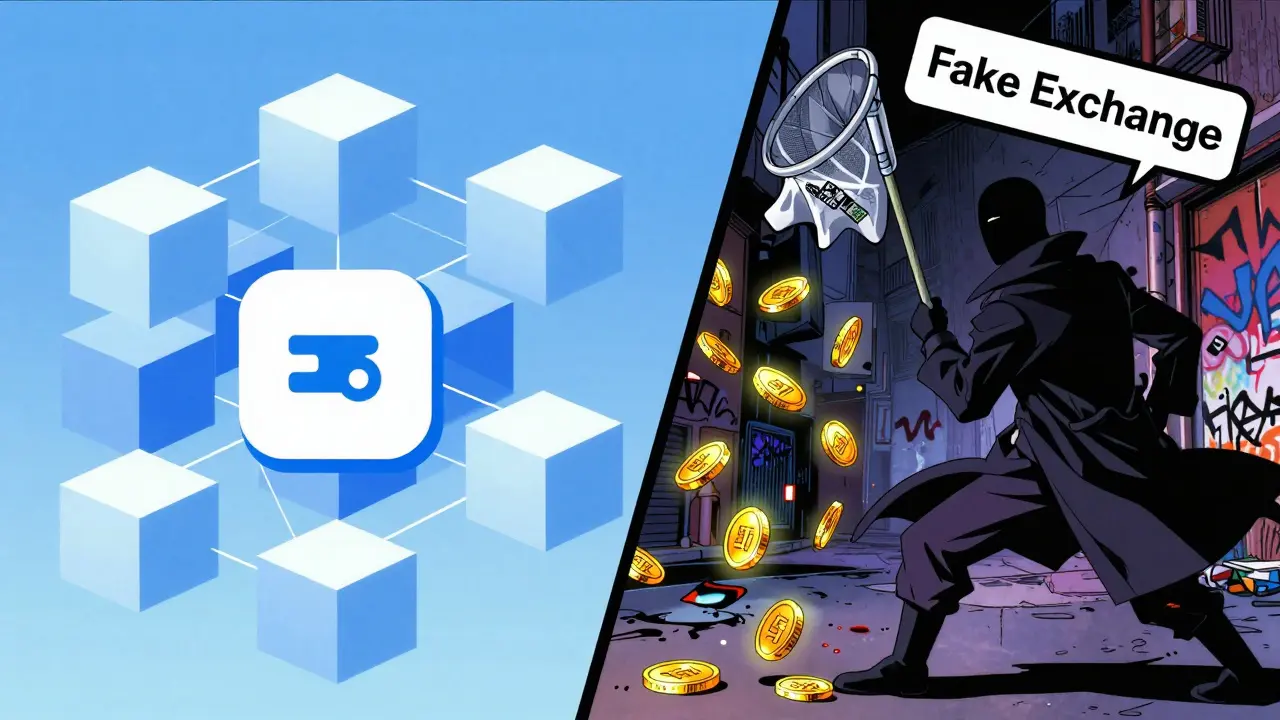
If you are looking for a platform where you can log in with an email, deposit fiat currency like USD or EUR, and trade Bitcoin or Ethereum against other pairs, this does not exist. The confusion stems from mixing up two completely different concepts in the crypto world: the Wagmi Protocol, which is a decentralized finance (DeFi) tool, and the Sonic blockchain (formerly Fantom), which is a network infrastructure. When these names are combined in marketing materials that look like an "exchange," it is almost always a red flag for a phishing site or a fraudulent scheme.
The Core Confusion: DeFi Protocol vs. Centralized Exchange
To understand why you should be cautious, we need to separate what Wagmi actually is from what scammers claim it is. This distinction is critical for your financial safety.
Wagmi is a decentralized finance (DeFi) protocol focused on automated yield farming and liquidity provision strategies. It evolved from a project called Popsicle Finance. Its primary function is to help users automate their positions in Automated Market Makers (AMMs) like Uniswap V3. It uses tools like GMI (a multiposition concentrator) to manage leverage and optimize returns for liquidity providers. It is software code running on a blockchain, not a company with a customer support team, a login page, or a bank account.
In contrast, a Centralized Exchange (CEX) is a regulated or semi-regulated corporate entity that holds custody of user funds and facilitates trades between buyers and sellers. Examples include Coinbase, Binance, or Kraken. These platforms have KYC (Know Your Customer) procedures, withdrawal limits, and dedicated apps.
When you see "Wagmi (Sonic) Exchange," someone is likely trying to trick you into thinking the Wagmi protocol operates like Coinbase but on the Sonic network. They are not. You cannot "sign up" for Wagmi in the traditional sense. You interact with it directly through your own non-custodial wallet, such as MetaMask or Rabby Wallet.
Why "Sonic" Is Being Used in This Context
The addition of "Sonic" to the name adds another layer of complexity-and risk. Sonic is the rebranded name for the Fantom blockchain, a high-performance smart contract platform known for its speed and low transaction costs. Sonic aims to improve upon the original Fantom architecture with faster finality and better scalability for developers.
Legitimate DeFi protocols, including Wagmi, may eventually deploy on multiple chains, including Sonic/Fantom, to offer users lower fees and faster transactions. However, deploying on a chain does not turn a protocol into an exchange. Scammers often capitalize on recent rebrands or mainnet launches (like Sonic’s upgrade) by creating fake websites that mimic the branding of popular protocols. They create sites like `wagmi-sonic-exchange.com` (which is not official) to harvest private keys or steal deposited assets.
Red Flags: How to Spot the Fake Wagmi Exchange
If you encounter a website claiming to be the "Wagmi (Sonic) Exchange," run through this checklist immediately. If any of these points apply, close the tab.
- Login Requirements: Does the site ask for an email address and password? Legitimate DeFi protocols like Wagmi never ask for this. They only require a wallet connection.
- Fiat On-Ramps: Does it promise to let you buy crypto with a credit card directly on the platform? Wagmi does not handle fiat currency. It only manages existing crypto assets within the DeFi ecosystem.
- Custody Claims: Does it say they will "hold" your funds for you? In DeFi, you always hold your own funds. If a site claims to store your WAGMI tokens or USDC for you, it is acting as a custodian, which Wagmi is not.
- Guaranteed Returns: Does it promise fixed daily profits (e.g., "1% daily APY")? DeFi yields fluctuate based on market conditions. Guaranteed returns are the hallmark of a Ponzi scheme.
- Domain Name: Check the URL carefully. The official Wagmi website is `wagmi.com`. Any variation, especially those adding "exchange," "trading," or "sonic" in the domain, is suspicious.
Understanding the WAGMI Token and Its Risks
Let’s talk about the asset itself. The WAGMI token serves as the governance and utility token for the Wagmi protocol, allowing holders to vote on proposals and access premium features. As of mid-2026, the token has faced significant volatility. Price data indicates it trading in the fractions of a cent (around $0.0047), with technical indicators showing bearish sentiment.
For investors, this means high risk. The token is not widely listed on major centralized exchanges like Binance or Coinbase. Most trading happens on decentralized exchanges (DEXs) like Uniswap or Curve. This lack of liquidity on major venues makes it harder to enter or exit large positions without affecting the price. Furthermore, predictions from various analytics firms show conflicting outcomes, with some projecting minor gains and others suggesting further declines. This uncertainty underscores the importance of understanding what you are buying. You are buying a governance token for a niche DeFi tool, not shares in a stable exchange company.
How to Safely Use Wagmi Protocol (If You Choose To)
If you are interested in the actual Wagmi protocol-not the fake exchange-here is how you do it safely. This process requires a basic understanding of Web3.
- Use a Trusted Wallet: Install a reputable browser extension wallet like MetaMask or Rabby. Never download wallet extensions from links provided in emails or social media DMs.
- Verify the Contract Address: Go to the official Wagmi website (`wagmi.com`). Look for the verified contract address of the WAGMI token on block explorers like Etherscan or SonicScan. Scammers often create fake tokens with the same name but different addresses.
- Connect via Official Interface: Only interact with the protocol through the official dApp. Do not click "partner" links unless you have verified them independently.
- Start Small: DeFi involves smart contract risks. Even legitimate protocols can have bugs. Start with an amount you are willing to lose entirely.
- Revoke Permissions: After interacting with the protocol, use tools like Revoke.cash to ensure you haven’t granted unlimited spending allowances to unknown contracts.

Comparison: Real Wagmi Protocol vs. Fake Exchange Scams
| Feature | Real Wagmi Protocol | Fake "Wagmi (Sonic)" Exchange |
|---|---|---|
| Type | Decentralized Application (dApp) | Centralized Website (Phishing) |
| Access | Wallet Connection (MetaMask, etc.) | Email/Password Login |
| Custody | User-held (Non-custodial) | Platform-held (Custodial) |
| Fiat Support | No | Yes (Often fake) |
| Regulation | Unregulated Code | Claims Regulation (False) |
| Risk | Smart Contract Risk, Impermanent Loss | Total Loss of Funds, Identity Theft |
What About the WAGMI Conference?
You might also hear about the "WAGMI 2025" conference. This is a legitimate industry event focusing on blockchain innovation, tokenization, and DeFi trends. It features speakers discussing topics like omni-chain DeFi and meme coin advocacy. However, attending or reading about this conference does not validate any specific "Wagmi Exchange." Conferences are marketing hubs where both legitimate projects and scams try to gain visibility. Always verify information independently of conference hype.
Conclusion: Protect Your Assets
The crypto space moves fast, and terminology gets blurred. But when it comes to your money, clarity is everything. There is no "Wagmi (Sonic) Crypto Exchange." There is a DeFi protocol named Wagmi that operates on various blockchains, potentially including Sonic. And there are countless scammers trying to profit from the confusion.
If you want to participate in Wagmi’s ecosystem, do so through the official dApp using your own wallet. If you want a traditional exchange experience, stick to well-known, regulated platforms like Coinbase or Kraken. Do not bridge the gap between the two by trusting unverified websites. In crypto, if it sounds too good to be true, or if the name doesn’t quite match the official documentation, it’s probably a trap.
Is Wagmi (Sonic) a safe place to store my crypto?
No. Because "Wagmi (Sonic) Exchange" does not exist as a legitimate entity, any site using this name is likely a scam designed to steal your funds. For storage, use a hardware wallet like Ledger or Trezor, or a reputable non-custodial software wallet.
Can I buy WAGMI tokens on Binance or Coinbase?
As of 2026, WAGMI is not widely listed on major centralized exchanges like Binance or Coinbase. It is primarily traded on decentralized exchanges (DEXs). Be wary of any site claiming to list it exclusively; it is likely a fake.
What is the difference between Wagmi and Sonic?
Wagmi is a DeFi protocol for yield farming and liquidity management. Sonic (formerly Fantom) is a blockchain network. Wagmi can operate on the Sonic network, but they are separate entities. One is an application, the other is the infrastructure it runs on.
How do I know if a Wagmi website is official?
The only official website for the Wagmi protocol is wagmi.com. Always check the URL carefully. Avoid sites that ask for login credentials, promise guaranteed returns, or have domains that slightly misspell the brand name.
Is the WAGMI token a good investment?
Investing in WAGMI carries high risk. The token has shown bearish technical indicators and low liquidity on major exchanges. It is a governance token for a niche DeFi tool, not a stable asset. Only invest what you can afford to lose and conduct thorough independent research.





Comments
Andrew Schneider
July 13, 2026 AT 11:18Oh, look at us playing detective with blockchain acronyms like it's a damn CSI episode. 🕵️♂️ You really think the average joe cares about the difference between a 'protocol' and an 'exchange'? They just want their Lambo. This whole article is basically screaming 'I'm smarter than you' while ignoring the fact that people are getting scammed because the industry itself is a confusing mess of buzzwords. Wagmi? Sonic? It sounds like a toy store exploded. If I wanted to lose my money, I'd go to Vegas, not read a blog post about DeFi yield farming strategies that nobody understands anyway. The real scam is convincing people this complexity is necessary. 🙄
Ella Collinson
July 14, 2026 AT 21:06The semantic distinction drawn here is fundamentally flawed in its practical application for retail investors. While technically correct that Wagmi is a non-custodial protocol, the marketing obfuscation employed by malicious actors leverages this exact terminology gap. The risk vector isn't just phishing; it's the cognitive load required to distinguish between Layer-1 infrastructure (Sonic/Fantom) and Layer-2 or application-layer protocols (Wagmi). Most users lack the technical literacy to parse these distinctions, making them vulnerable to social engineering attacks that mimic legitimate UI/UX patterns. We need standardized verification badges across all dApp interfaces, not just educational articles.
Tuan Nguyen
July 15, 2026 AT 03:32It is genuinely pathetic how easily the masses fall for these 'guaranteed returns' schemes. One would assume basic financial literacy has evolved since the Tulip Mania, but apparently, the introduction of blockchain technology has merely provided a new playground for the intellectually deficient. The fact that anyone believes a decentralized protocol offers custodial services suggests a profound misunderstanding of what 'decentralization' actually entails. It is not a magic box that holds your coins safely; it is code. And if you cannot verify the contract address yourself, you deserve to be drained. Truly embarrassing for the entire crypto community.
Hazel Fruitman
July 16, 2026 AT 18:20i mean like... duh? why do ppl keep falling for this?? its so obvious when a site asks for ur password lol. u dont need a password for defi. thats literally the point. its wild how many times i see this same scam popping up with different names. sonic, wagmi, whatever. they just slap two trendy words together and boom, millions lost. its sad really. we should be helping each other out instead of letting these scammers win. stay safe guys! ❤️
Eric Braddock
July 18, 2026 AT 00:23You're all missing the bigger picture here. The confusion isn't accidental; it's engineered. The rebranding of Fantom to Sonic was a deliberate move to disrupt market sentiment and create a vacuum where fraudulent entities could insert themselves as 'official' partners. Who benefits from this chaos? Not the retail investor. The deep state actors controlling the narrative are using these 'scams' to weed out the weak holders and consolidate power among the elite few who understand the true nature of the ledger. Wagmi isn't just a protocol; it's a test. A stress test for the global financial system. Wake up sheeple. The matrix is feeding you fake tokens to keep you docile. 🐑
Josephine Finlayson
July 19, 2026 AT 12:06I completely agree with the cautionary tone of this piece, which is incredibly important for everyone to read carefully. It is so easy to get swept up in the hype, especially when friends share links that look official. Please, always double-check the URL and never connect your wallet to a site you haven't verified through multiple independent sources. Your financial security is paramount, and taking these extra steps can save you from immense stress later on. Let's support each other by sharing accurate information rather than fear-mongering, okay? Stay safe out there! 🌸
Anuj Kashyap
July 20, 2026 AT 21:18Ah, the eternal dance between innovation and exploitation. 🎭 One wonders if the concept of 'trust' has been entirely eroded in the digital age, replaced by a paranoid verification ritual that borders on the absurd. Is it truly possible to navigate this landscape without losing one's sanity? Perhaps the only true safety lies in abstaining altogether, yet here we are, commenting on scams as if they were a spectator sport. How quaint. 😏
Ray Arney
July 21, 2026 AT 04:54Good info here. I've seen a lot of people asking about this on Discord lately. Just stick to the main sites like Uniswap or Curve if you're trading on Sonic. Don't click random ads.
Antony Lopez
July 21, 2026 AT 20:03This is typical American ignorance disguised as helpful advice. In Europe, we have strict regulations that prevent these kinds of blatant frauds from operating with such impunity. You people let any cowboy start a 'crypto exchange' and wonder why your wallets get drained. It's a cultural failure. If you can't manage your own keys, you don't deserve to participate in the free market. But sure, keep blaming the scammers instead of your own lack of due diligence. Classic.
Johan Otto
July 22, 2026 AT 15:45Boring article. 😒 I lost $500 last week and it wasn't because of a fake exchange, it was because the bridge broke. So tell me, is the bridge a scam too? Or is it just bad tech? Nobody knows anymore. It's all just gambling with better graphics. 📉
Andrew Schneider
July 23, 2026 AT 06:06@Johan Otto Oh, poor baby. Crying about bridge failures now? 🍼 First it's the fake exchange, now it's the infrastructure crumbling. Maybe if you didn't put your life savings into meme coins, you wouldn't be so sensitive. But hey, keep whining. It's entertaining. 😂
Johan Otto
July 24, 2026 AT 05:42@Andrew Schneider Shut up. At least I tried. You're just a keyboard warrior hiding behind emojis. 🤡
Mark Tuason
July 25, 2026 AT 05:30I appreciate the detailed breakdown of the differences between the protocol and the scam sites. It is crucial to emphasize that no legitimate DeFi platform will ever request login credentials. I have shared this with my local investment club to ensure everyone is aware of the risks. Thank you for providing such clear guidance.
Autumn Story
July 25, 2026 AT 20:41Thank you so much for writing this!! I was actually thinking about trying out some new platforms on Sonic because I heard it was super fast. This makes me feel way better knowing what to look out for. I'll definitely check the URL twice before connecting my wallet. Safety first, right?! 💖✨
Nick Wengel
July 27, 2026 AT 15:28Simple truth: if it asks for a password, it's not DeFi. Keep it simple, folks. Don't overcomplicate it. Just use MetaMask and stick to known sites. That's all you need to know.
Ruth Williams
July 28, 2026 AT 10:17It is astonishing that such elementary concepts require extensive explanation. The distinction between a centralized entity and a decentralized protocol is foundational to understanding blockchain technology. Those who fail to grasp this basic dichotomy are simply unqualified to participate in this ecosystem. Do not expect hand-holding from the community when you neglect to perform even the most rudimentary research. Ignorance is not a virtue.