What is Aavegotchi ALPHA (ALPHA) Token? Utility, Supply & Price Explained

Have you ever tried to build something in a video game only to realize you are missing the specific material needed to finish the job? That is exactly where Aavegotchi ALPHA comes into play. It is not just another random cryptocurrency ticker you see on a chart; it is a core resource inside the Aavegotchi ecosystem, specifically designed for crafting and upgrading digital land installations within the Gotchiverse game.
If you are looking at ALPHA as a quick investment flip, you might be disappointed right now. But if you are curious about how decentralized gaming economies actually work, or if you own virtual land in this world, understanding ALPHA is crucial. This guide breaks down what the token does, why its price looks so strange on exchanges, and how it fits alongside other tokens like GHST.
The Role of ALPHA in the Gotchiverse
To understand ALPHA, you first need to understand the world it lives in: the Gotchiverse is the flagship play-to-earn game built by the Aavegotchi team, featuring ghost-like NFT avatars backed by yield-bearing assets from the Aave lending protocol.. Think of it as a fully on-chain metaverse where your digital pets earn interest while you sleep.
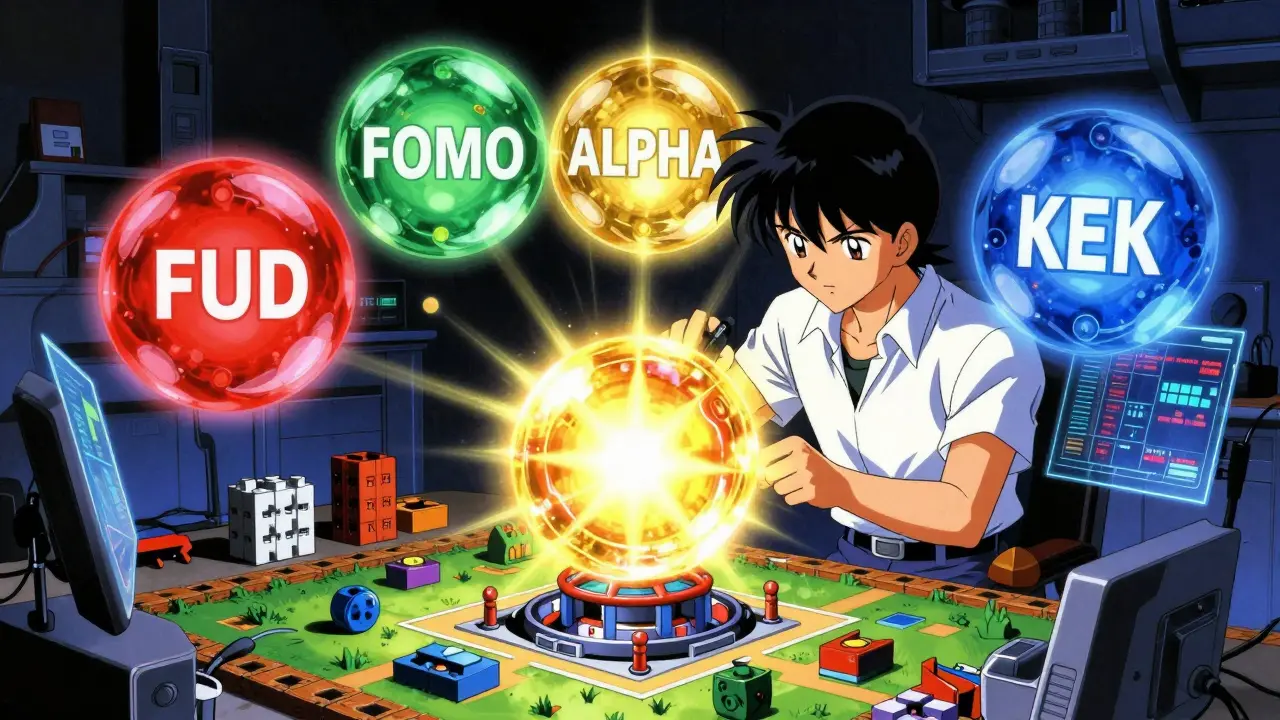
Inside this world, players don't just trade characters; they manage real estate. To make their land productive, they build structures called Installations. These aren't just cosmetic decorations. They are functional buildings that help harvest resources, store items, or boost defense. Building and upgrading these Installations requires raw materials known collectively as Gotchus Alchemica are four ERC-20 resource tokens (FUD, FOMO, ALPHA, KEK) used as elemental resources for crafting and upgrading installations in the Aavegotchi game..
ALPHA is one of these four elements. Specifically, it is considered the second-rarest raw element. You cannot simply buy it with cash on most major exchanges and expect it to arrive instantly. Instead, you typically acquire it by owning or borrowing land parcels in the Gotchiverse and harvesting it over time through gameplay. Once you have it, you spend it to craft better buildings, which in turn helps you generate more value in the game. It is a classic supply-and-demand loop driven entirely by player activity.
ALPHA vs. GHST: Know the Difference
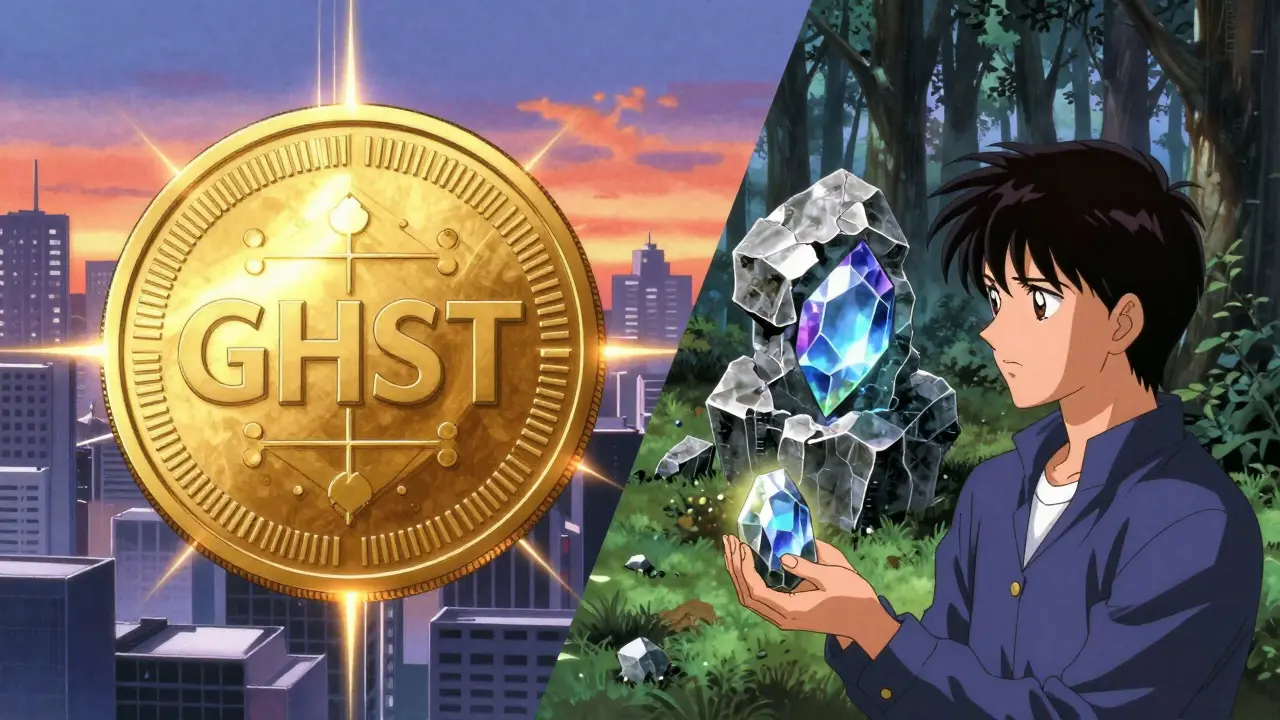
Newcomers often confuse ALPHA with GHST is the primary governance and utility token of the Aavegotchi ecosystem, used for purchasing NFTs, staking, and voting in the DAO.. This is a critical distinction because they serve completely different purposes.
| Feature | ALPHA | GHST |
|---|---|---|
| Primary Use | In-game resource for crafting/upgrading land | Governance, buying NFTs, staking rewards |
| Rarity | Second-rarest alchemica element | Standard utility/governance token |
| Acquisition | Harvested via gameplay or niche DEX swaps | Bought on major centralized exchanges (Binance, Kraken) |
| Liquidity | Very low (micro-cap status) | Moderate (listed on top-tier exchanges) |
| Network | Polygon (ERC-20) | Ethereum / Polygon / Base |
GHST is the "money" of the ecosystem. You use it to enter the game, buy your initial NFTs, and vote on future updates. ALPHA is the "lumber" or "stone." You use it to build things once you are already inside. If you want to speculate on the project's overall success, you look at GHST. If you want to play the game effectively, you need ALPHA.
Tokenomics and Supply Confusion
Here is where things get tricky for investors. If you check various crypto data aggregators, you might see conflicting numbers regarding the total supply of ALPHA. Some sources, like CoinMarketCap and Bitget, report a maximum supply of 5 billion tokens. Others, including Coinbase’s asset page, mention a figure closer to 25 billion. This discrepancy likely stems from how different platforms account for in-game units versus the actual on-chain ERC-20 contract deployment.
Regardless of the exact number, the most important metric for right now is the circulating supply. As of early 2026, many trackers list the circulating supply of ALPHA as zero. What does that mean? It means there are virtually no tokens being actively traded on open public markets in a way that generates a reliable market capitalization. The tokens exist-they are minted and distributed-but they are largely locked up in player wallets, staking contracts, or internal game mechanics rather than sitting on exchange order books waiting to be sold.
This lack of circulation explains why the "market cap" often shows as $0 USD on some sites, even though the Fully Diluted Valuation (FDV) might estimate millions based on theoretical pricing. It is an illiquid asset. You cannot dump millions of dollars worth of ALPHA onto the market without crashing the price because there isn't enough depth to absorb it.
Technical Architecture: Built on Polygon
From a technical standpoint, Aavegotchi ALPHA is an ERC-20 token deployed on Polygon PoS network, chosen for its low transaction fees and fast confirmation times, which are essential for high-frequency in-game resource transfers.. Why does this matter?
Imagine trying to pay $0.10 every time you harvested a small amount of wood in a game. You would go bankrupt before you built anything. By running on Polygon, a Layer 2 scaling solution for Ethereum, the cost of transferring ALPHA between players or spending it on upgrades is negligible. This allows for micro-transactions that make the gameplay feel smooth and responsive. Your wallet connects to the Polygon network, and when you click "craft," the smart contract executes instantly without draining your funds in gas fees.
This integration also means ALPHA is compatible with any standard Web3 wallet that supports Polygon, such as MetaMask or Binance Web3 Wallet. However, because it is not listed on major centralized exchanges like Coinbase Pro or Kraken for direct fiat purchase, acquiring it usually involves swapping other assets on decentralized exchanges (DEXs) like QuickSwap or SushiSwap, which requires a bit more technical know-how.
Is ALPHA a Good Investment?
Let's be direct: ALPHA is not currently a mainstream investment vehicle. Its price action is extremely thin. On days when trading volume hits roughly $1,000 USD across all markets, the price can swing wildly based on a single large trade. Predictive models on platforms like Coinbase often show a price of CA$0.00 with undefined changes because there simply isn't enough historical data to form a trend.
However, its value proposition is tied directly to the adoption of the Gotchiverse. If the game grows, more players will need land. More land owners will need to build Installations. More Installations require ALPHA. In this scenario, demand for the token rises internally, potentially driving up its external trading price as players seek to buy it quickly rather than farming it slowly.
The risks are significant. The token is highly illiquid. If the game loses popularity, the demand for crafting materials vanishes, leaving holders with tokens that have no buyers. Additionally, the roadmap for ALPHA includes potential expansions into staking and governance roles, but these features are still evolving. Until then, treat ALPHA as a utility tool for gamers, not a savings account for investors.
How to Get Started with ALPHA
If you decide you want to hold or use ALPHA, here is the practical path forward:
- Set up a Polygon-compatible wallet: Download MetaMask or use a browser-based wallet like Binance Web3 Wallet. Ensure you have added the Polygon network to your settings.
- Acquire MATIC or ETH: You will need native currency to pay for gas fees on the Polygon network. Buy a small amount of MATIC (or POL) on a major exchange and send it to your wallet.
- Use a Decentralized Exchange (DEX): Connect your wallet to a DEX that lists ALPHA pairs, such as QuickSwap. Search for the ALPHA token contract address to ensure you are getting the correct asset.
- Swap for ALPHA: Trade your MATIC or USDC for ALPHA. Be aware of slippage; since liquidity is low, you may get slightly less than the quoted price.
- Connect to Gotchiverse: Link your wallet to the Aavegotchi platform. From here, you can start interacting with the game, claiming rewards, or using ALPHA to upgrade your land holdings.
Remember, never share your private keys or seed phrase. Legitimate platforms will never ask for them. Stick to official links found in the Aavegotchi documentation to avoid phishing scams, which are common in the crypto gaming space.
What is the current price of Aavegotchi ALPHA?
As of early 2026, the price of ALPHA is extremely volatile and often reported near $0.005 or lower due to very low liquidity. Many data aggregators show a market cap of $0 because the circulating supply is minimal. Always check live prices on decentralized exchanges like QuickSwap for the most accurate, albeit limited, trading data.
Can I buy ALPHA on Coinbase or Binance?
You generally cannot buy ALPHA directly with fiat currency on major centralized exchanges like Coinbase or Binance. It is primarily available through decentralized exchanges (DEXs) on the Polygon network. You would need to swap other cryptocurrencies for ALPHA using a Web3 wallet connected to a platform like QuickSwap or SushiSwap.
What is the difference between ALPHA and GHST?
GHST is the main governance and utility token used for buying NFTs, staking, and voting. ALPHA is a secondary resource token used specifically for crafting and upgrading land installations within the Gotchiverse game. GHST has higher liquidity and broader exchange listings, while ALPHA is tied closely to in-game mechanics.
Why is the circulating supply of ALPHA listed as zero?
The circulating supply appears as zero on many trackers because most ALPHA tokens are held in player wallets, staking contracts, or internal game systems rather than being actively traded on public order books. This makes the token illiquid, meaning there are few sellers available at any given moment, which prevents the formation of a stable market capitalization.
Is Aavegotchi ALPHA a good long-term investment?
ALPHA is considered a high-risk, speculative asset due to its low liquidity and dependency on the success of the Aavegotchi game. Its value is derived from its utility as a crafting resource. If the game grows, demand may rise. However, it lacks the broad adoption and exchange support of more established tokens, making it unsuitable for conservative investors.