Token Unlock: What It Means and Why It Matters in Crypto
When you hear token unlock, the moment when previously locked cryptocurrency tokens become tradable on the open market. Also known as token release, it’s not just a technical update—it’s a market event that can wipe out or double a project’s value overnight. Most new crypto projects lock up a big chunk of their token supply at launch. Why? To prevent early investors, team members, or venture capitalists from dumping everything right away and crashing the price. But when those locks expire, all those tokens flood the market—and if demand doesn’t keep up, the price drops hard.
That’s where token vesting, a schedule that gradually releases tokens over time to align incentives comes in. Good vesting schedules stretch unlocks over months or years, often with cliffs—like 25% released after one year, then monthly after that. Bad ones? They release 30% of the total supply in a single day. You’ll see this in projects like NFTLaunch (NFTL), a project where early whitelist access determined who got tokens before public sale, or SpaceY 2025 (SPAY), where token distribution tied to gameplay and community activity. If you don’t know when the next unlock is, you’re guessing instead of trading.
token release schedule, a public timeline showing exactly when and how many tokens will be unlocked isn’t just marketing fluff—it’s your early warning system. Projects like RACA x BSC Metamon, where token rewards were tied to NFT ownership and limited to qualified holders, show that unlocks mean nothing without real demand. If the community’s gone, or the game’s dead, a big unlock just means more sellers. On the flip side, if a project has real usage—like VeThor Token (VTHO), a utility token burned daily to pay for transactions on VeChain—unlocks can actually support price stability because demand keeps up with supply.
Some tokens never unlock at all. Others unlock slowly, in batches, or only after certain milestones. Always check the whitepaper, the blockchain explorer, or the project’s official announcements. If they’re hiding the schedule, that’s a red flag. You don’t need to be a developer to track this—you just need to know where to look. And if you’re holding a token that’s about to unlock, ask yourself: who owns the unlocked supply? Is it the team? Investors? Or a few whales with a history of dumping? The answer tells you more than any chart ever could.
Below, you’ll find real breakdowns of token unlocks, vesting schedules, and what happened when they hit the market—from failed airdrops to projects that survived because they planned ahead. No fluff. No hype. Just what actually happened, and why it matters to you.
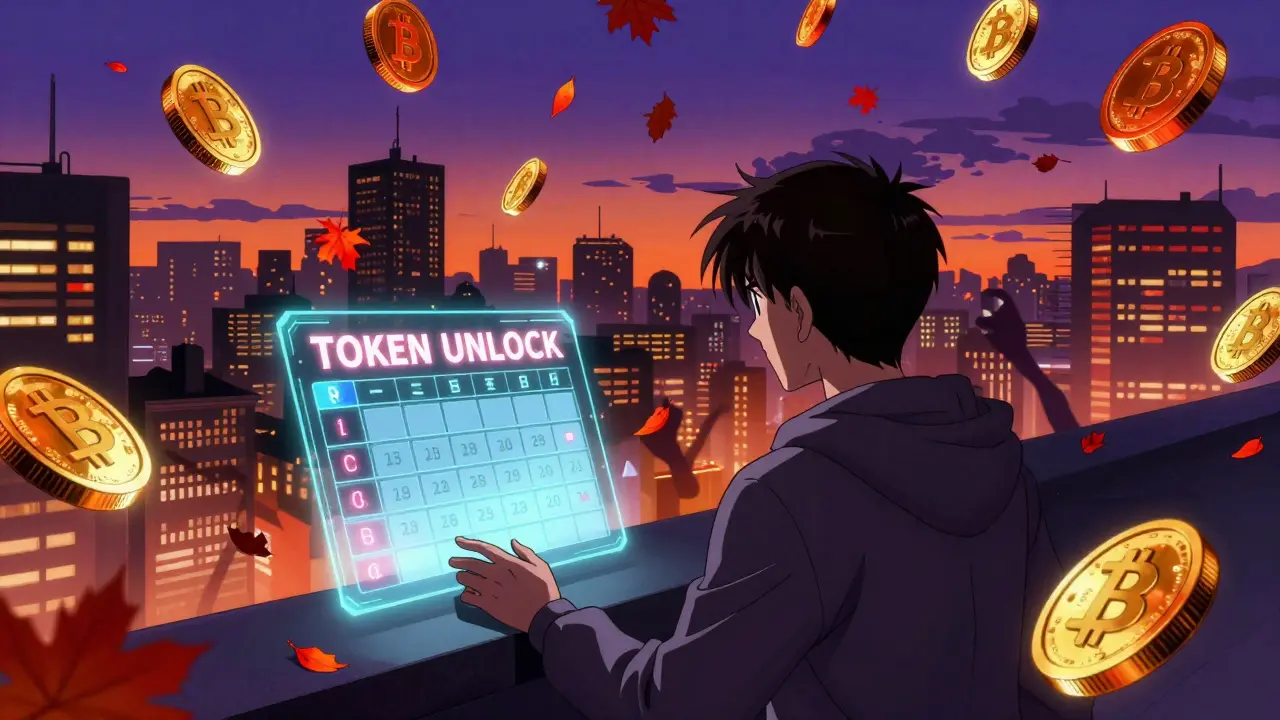
Token Unlock Events and How They Move Crypto Prices
Token unlock events release locked crypto tokens into the market, often causing sharp price drops. Learn how team unlocks, vesting schedules, and market timing affect prices - and how to protect your portfolio.
Recent Post