Token Unlock Events and How They Move Crypto Prices
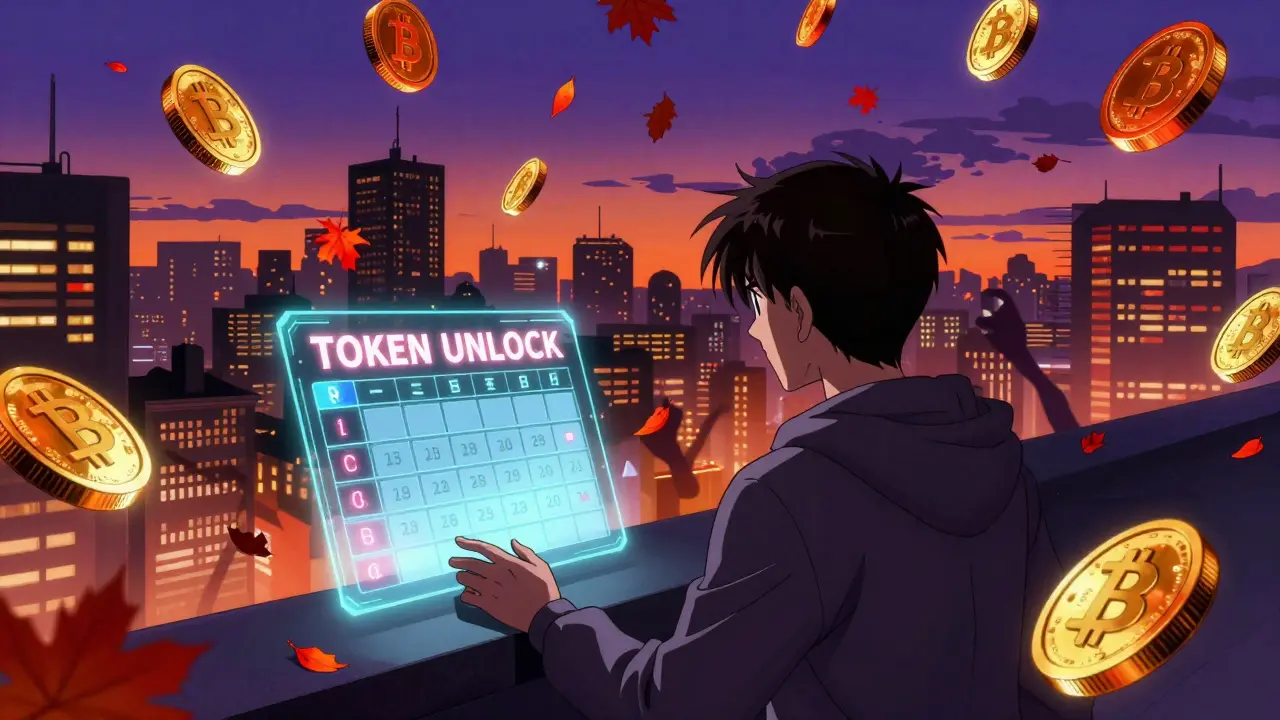
Token Unlock Impact Calculator
How Token Unlocks Affect Prices
Calculate potential price impact based on unlock size, type, and market context. This tool uses data from real-world examples to estimate the likely price movement after a token unlock event.
Results
Every week, hundreds of millions of dollars worth of cryptocurrency tokens suddenly flood the market. Not because of a new feature, a partnership, or a viral tweet - but because of something most retail traders ignore: token unlock events. These aren’t random occurrences. They’re scheduled releases of tokens that were locked up for months or years. And every single one of them carries a predictable weight on price.
Think of it like this: Imagine you’re running a small business. You give your team 10% of the company as a bonus, but you lock it away for two years. You don’t want them cashing out on day one. You want them to stick around, build the business, then get paid as it grows. That’s what token unlocks are designed to do. But in crypto, the market doesn’t wait for the story. It reacts to the supply.
What Exactly Is a Token Unlock?
A token unlock happens when tokens that were previously locked - usually held by founders, investors, or team members - become tradable on exchanges. These locks are built into the token’s smart contract at launch. They’re part of the tokenomics, the economic design of the project. Without them, early insiders could dump their entire holdings the moment the token goes live, crashing the price before anyone else even gets in.
There are three main types of unlock schedules:
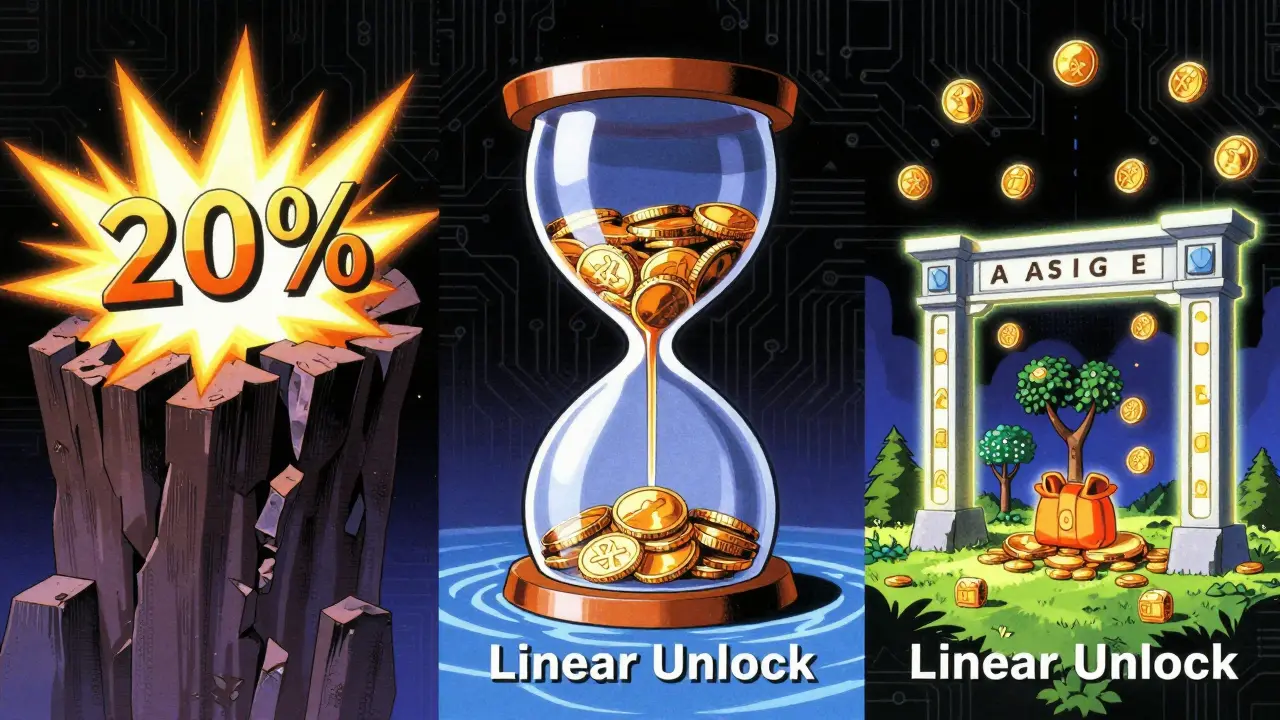
- Cliff unlocks: Nothing releases for 6 to 12 months. Then, a huge chunk - say 20% of the team’s allocation - hits the market all at once. Projects like Solana and Polygon used cliff unlocks early on.
- Linear unlocks: Tokens release slowly over time, like 1/48th per month for four years. This spreads out the pressure. Projects like Arbitrum and Chainlink use this method.
- Event-based unlocks: Tokens release only after a milestone is hit - like mainnet launch, 1 million users, or a major upgrade. This ties rewards to performance.
The problem? Most retail traders don’t track these. They buy because a coin is trending. Then, when the price drops 20% overnight, they panic-sell - not realizing the drop wasn’t because the project failed. It was because 40 million tokens just hit the market.
Why Do Token Unlocks Crash Prices?
It’s simple math: More supply + same demand = lower price.
When a team or investor gets access to their tokens, they often sell. Not always. But enough do to create pressure. Even if they only sell 30% of what they unlocked, that’s still a massive wave of selling. And because crypto markets are thin - especially for altcoins - even a few million dollars in selling can send prices tumbling.
Here’s what the data shows:
- 90% of all token unlocks cause negative price pressure, no matter who’s selling.
- Team unlocks (founders, developers) cause the biggest drops - an average of -25%.
- Investor unlocks (VCs, funds) drop prices by about -8.7% on average, because they hedge better.
- Unlocks that fund ecosystem growth - like marketing or developer grants - actually have a +1.18% average impact.
It’s not about the dollar amount alone. It’s about the percentage of circulating supply. If a token has 10 million coins in circulation and 1 million unlock, that’s 10% of the market suddenly available. That’s a red flag. If it’s 20% or more? Even the best projects struggle. Gate.io’s research found that unlocks over 20% of circulating supply cause an average -18.3% drop - even if the team announced it months in advance.
When Does the Price Drop Start?
It’s not just on the unlock day. The market starts reacting 30 days before the event. Why? Because traders who know what’s coming start selling early. Or shorting. Or warning others. This creates a self-fulfilling prophecy.
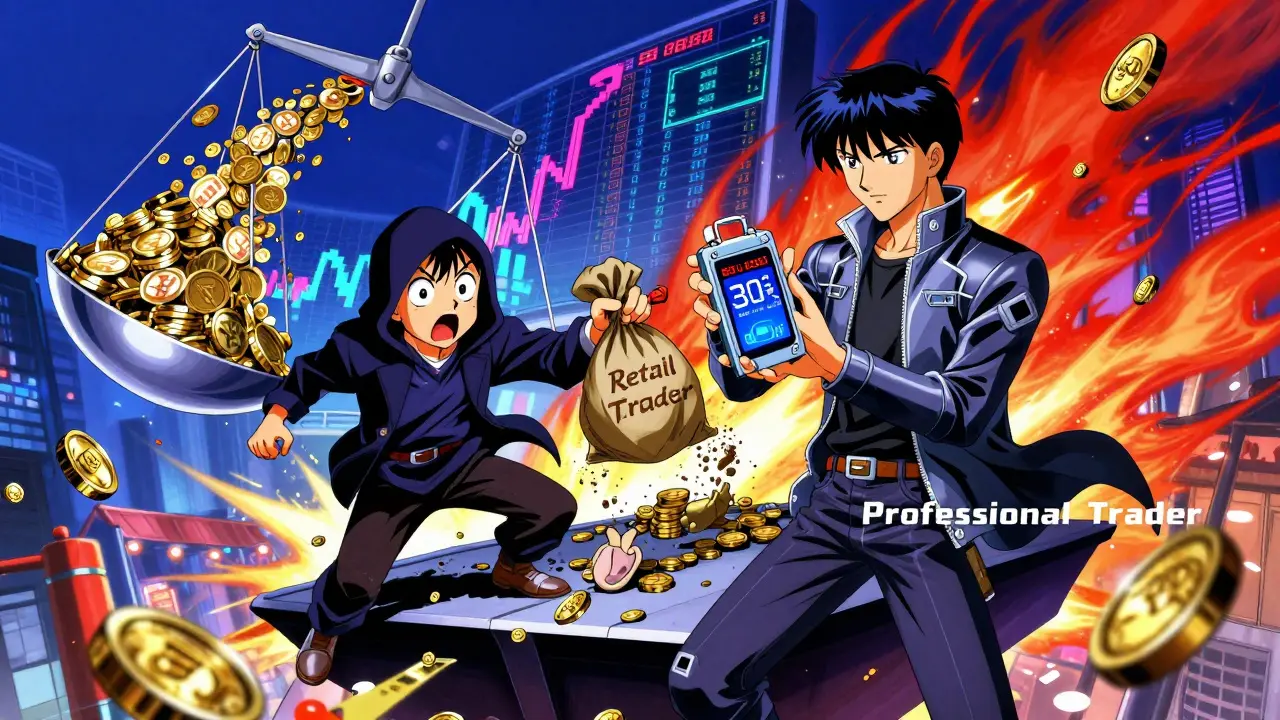
Professional traders call this “front-running the unlock.” They watch the schedule like a clock. If a big unlock is coming in two weeks, they might exit their position early - or even short the token. Retail traders, meanwhile, keep holding, hoping for a moonshot. Then, when the price crashes, they’re left holding the bag.
The steepest drops happen in the 7 days before and after the unlock date. That’s when the real selling pressure hits. And it doesn’t bounce back quickly. Altcoin Sherpa found that only 18% of tokens recovered to their pre-unlock price within 90 days. That’s a brutal statistic.
Who Gets Hit the Hardest?
Not everyone reacts the same way. The type of unlock matters.
Team unlocks are the worst. Founders and developers get their tokens after a cliff period. They’ve been working for years. Now they can sell. Some do. Some don’t. But the market doesn’t care about intent. It sees supply. And it reacts.
Investor unlocks are less damaging. These are hedge funds, venture capital firms, and institutional players. They’ve got teams that hedge - using derivatives, options, or futures - to offset the sell pressure. They know how to manage it. They don’t panic. They plan.
Ecosystem unlocks are the exception. These are tokens released to fund development, marketing, or community grants. They’re not meant to be sold. They’re meant to be spent. When a project like Chainlink unlocked $289 million in Q4 2024 to pay for protocol upgrades and partnerships, the price went up 22%. Why? Because the market saw value being built - not cashed out.
Timing matters too. If a team unlocks tokens right after announcing a major upgrade, a partnership, or a new product launch, the negative impact shrinks by 52%. The good news cancels out the bad.
How to Protect Yourself
If you’re holding crypto, you need to know when unlocks are coming. Ignoring them is like driving blindfolded.
Here’s how to stay safe:
- Check the unlock schedule. Most projects list them on their website or in their whitepaper. But only 32% keep them updated. So don’t trust just one source.
- Use tracking tools. Services like TokenUnlocks.io and TokenTerminal show real-time unlock calendars. They’re free. Use them. TokenUnlocks.io has a 4.2/5 rating from over 140 users - mostly because they send accurate alerts.
- Look at the percentage. If an unlock is over 10% of circulating supply, be cautious. Over 20%? Consider reducing your position.
- Watch the timing. Is the unlock happening right after a major announcement? That’s a good sign. Is it just hanging out there, no news, no context? That’s a red flag.
- Don’t FOMO into new tokens. If a coin just launched and the team’s tokens unlock in 3 months, you’re buying into a ticking time bomb.
Professional traders start hedging 1-2 weeks before a big unlock. Some even start 30 days out. Retail traders? They wait until the price crashes. Then they ask why.
The Bigger Picture
Token unlocks aren’t going away. In fact, they’re getting smarter. In 2025, 63% of new token launches use dynamic vesting - meaning unlocks adjust based on real milestones, not just calendar dates. That’s a huge improvement. It ties rewards to performance, not time.
But the market is still catching up. Only 31% of retail traders track unlocks. Meanwhile, 79% of professionals do. That gap is where the money is made - and lost.
Regulators are watching too. The SEC said in May 2025 that large unlocks could be considered “distribution events,” meaning projects might need to disclose them like public companies. The Financial Stability Board warned that uncoordinated unlocks could threaten crypto’s overall stability.
By 2027, experts predict the average price impact of unlocks will drop by 40% - as more traders learn to anticipate them and hedge properly. But until then, the risk remains high.
Here’s the bottom line: Token unlocks are not noise. They’re signals. They’re not random. They’re predictable. And if you ignore them, you’re not being a long-term holder. You’re just gambling.
Real Examples That Shook the Market
In April 2025, the TRUMP token unlocked 40 million tokens worth $330 million. The price dropped 28% in four hours. One Reddit user lost 37% of their portfolio because they didn’t know it was coming.
Then, in May 2025, PYTH Network unlocked 58.62% of its circulating supply - $289 million. Most expected a crash. Instead, the price only dropped 9%. Why? Because the team had been clear. They used the unlock to fund exchange listings, marketing, and developer grants. Market makers hedged. The community understood. The drop was controlled.
The difference? Communication. Planning. Context.
One was chaos. The other was strategy.




Comments
Elizabeth Miranda
December 9, 2025 AT 14:58Wow, this is one of those posts that makes you realize how much you’ve been missing. I used to think price drops were just market panic - turns out it was just unlocks I never tracked. Now I check TokenUnlocks.io every Sunday like it’s church. No more surprises. Just strategy.
Chloe Hayslett
December 10, 2025 AT 02:02Oh wow, so the market’s just a bunch of dumb sheep waiting for the unlock bell to ring? And you’re telling me we’re supposed to *care* about this? I thought crypto was about rebellion, not spreadsheet tracking.
Annette LeRoux
December 10, 2025 AT 23:57It’s funny how we treat money like magic in crypto 🤔 But it’s just supply and demand - the same as 18th century grain markets. We’ve added blockchains, not wisdom. Unlocks are just time-delayed capitalism. The real question isn’t when they happen - it’s why we keep pretending we’re not part of the machine.
Manish Yadav
December 12, 2025 AT 06:45This is why people lose money. No discipline. No respect. Just buy and pray. You think Elon tweets make you rich? Nah. You need to know when the tokens drop. That’s the real game.
Doreen Ochodo
December 13, 2025 AT 12:59Track unlocks. Don’t guess. That’s it. Simple. No fluff. Just do it.
Holly Cute
December 14, 2025 AT 21:32Let’s be real - this whole ‘unlock tracking’ thing is just FOMO in a suit. 90% of these projects are scams anyway. Why care if the price drops? It was going to crash. The only people who profit are the ones who shorted it. The rest are just paying for the show. Also, ‘ecosystem unlocks’? Cute. That’s just PR with a spreadsheet. 😒
Chris Mitchell
December 15, 2025 AT 06:16Most people don’t realize unlocks are the quiet heartbeat of crypto. Not hype. Not tweets. Not influencers. This is the real rhythm. Learn it or get left behind. Simple as that.
Regina Jestrow
December 16, 2025 AT 14:22I read this and immediately opened my portfolio. I had three positions with unlocks in the next 45 days. One was over 22% of supply. I sold half. Not because I think it’s doomed - but because I don’t want to be the one holding the bag when the tide turns. Knowledge is power, but only if you act on it.
Scott Sơn
December 17, 2025 AT 18:23Bro, imagine being so obsessed with unlock dates you forget why you got into crypto in the first place. It’s supposed to be wild, chaotic, beautiful chaos. Now we’re all sitting here with Excel sheets and calendars like we’re managing a damn pension fund. Where’s the revolution? 😭
Frank Cronin
December 18, 2025 AT 19:17Only amateurs track unlocks. Real traders build positions around them. You don’t ‘avoid’ unlocks - you weaponize them. If you’re still holding a token with a 20%+ unlock looming and you didn’t hedge, you’re not an investor. You’re a donation to the market’s ATM.
Stanley Wong
December 19, 2025 AT 15:18i think its kinda sad that we’ve turned something that was meant to be about decentralization and trustless systems into this giant game of timing and prediction. we’re not supposed to be reading whitepapers like they’re stock reports. we’re supposed to be building something new. but now we’re all just waiting for the next unlock like it’s the release of a new iphone. maybe we’ve lost something along the way
miriam gionfriddo
December 20, 2025 AT 13:12so like i just found out my xrp has an unlock next week and i had no clue and now the price is dropping and i feel so dumb like why didnt anyone tell me this was a thing i thought crypto was just buy low sell high why is there so many rules
Nicole Parker
December 22, 2025 AT 13:07I used to think unlocks were just boring finance stuff. Then I lost a chunk of my portfolio on a team unlock I didn’t see coming. Now I read every project’s tokenomics like a novel. It’s not sexy, but it’s the difference between sleeping well and waking up to a 30% loss. I’m not a trader. I’m just someone who learned the hard way that knowledge isn’t optional in crypto. It’s survival.
Brooke Schmalbach
December 22, 2025 AT 17:27Let’s cut through the noise. You’re telling me the market is predictable? That’s not insight - that’s confirmation bias dressed up as strategy. Most of these ‘unlock data’ sites are built by people who sell premium alerts. The 18% recovery rate? That’s cherry-picked. The real number is closer to 5%. And the SEC warning? That’s just the beginning. They’re coming for this whole system. You think tracking unlocks will save you when regulators start classifying them as unregistered securities? Wake up. This isn’t finance. It’s a casino with a blockchain theme.