What Is Yield Farming in Crypto? A Simple Guide to Risks and Rewards

You see headlines promising 100% annual returns on your cryptocurrency. It sounds too good to be true, right? That’s exactly the trap many new investors fall into when they first hear about yield farming, which is a strategy in decentralized finance where users deposit crypto assets into liquidity pools to earn rewards, often in the form of transaction fees or governance tokens. While it can generate significant income, it also carries risks that could wipe out your entire investment if you aren’t careful.
Yield farming isn’t just a buzzword; it’s the engine that powers much of the decentralized finance (DeFi) ecosystem. But before you rush to connect your wallet and stake your tokens, you need to understand how it actually works, why those high percentages exist, and what could go wrong. This guide breaks down the mechanics, the math, and the real-world dangers so you can make informed decisions rather than gambling with your savings.
The Quick Summary: Key Takeaways
- Yield farming involves depositing crypto pairs into liquidity pools to facilitate trading on decentralized exchanges, earning you a cut of the fees plus bonus tokens.
- High APYs are not guaranteed interest rates. They fluctuate wildly based on market demand, token emissions, and competition between protocols.
- Impermanent loss is the biggest hidden risk. If the price of one token in your pair changes significantly compared to the other, you may end up with less value than if you had simply held the tokens.
- Smart contract vulnerabilities pose existential threats. Bugs in code can lead to hacks, draining funds from pools instantly and irreversibly.
- It requires active management. Unlike traditional savings accounts, yield farming demands constant monitoring of gas fees, pool performance, and security audits.
How Yield Farming Actually Works
To understand yield farming, you first need to grasp the concept of liquidity pools, which are smart contracts that hold pairs of tokens to enable trading without a traditional order book or central authority. In traditional finance, a bank acts as an intermediary for loans and trades. In DeFi, there is no bank. Instead, users provide their own capital to these pools.
Here is the basic workflow:
- Deposit Assets: You deposit two tokens of equal value into a pool. For example, you might deposit $500 worth of Ethereum (ETH) and $500 worth of USD Coin (USDC). This creates a 50/50 balanced position.
- Earn Fees: Traders use this pool to swap ETH for USDC. Each trade incurs a small fee (often 0.3%). These fees are distributed pro-rata to all liquidity providers (LPs) in the pool.
- Stake LP Tokens: When you deposit into a pool, you receive Liquidity Provider (LP) tokens representing your share. You can then "stake" these LP tokens in a "farm" offered by the protocol.
- Receive Rewards: The protocol rewards you for providing liquidity, usually in its native governance token. For instance, staking on Uniswap might reward you with UNI tokens, while SushiSwap rewards SUSHI tokens.
The combination of trading fees and governance token rewards constitutes your total yield. This system relies on Automated Market Makers (AMMs), which are algorithms that determine asset prices based on the ratio of tokens in the pool, such as the constant product formula x*y=k. Without AMMs, decentralized exchanges couldn’t function efficiently.
Understanding Impermanent Loss: The Hidden Risk
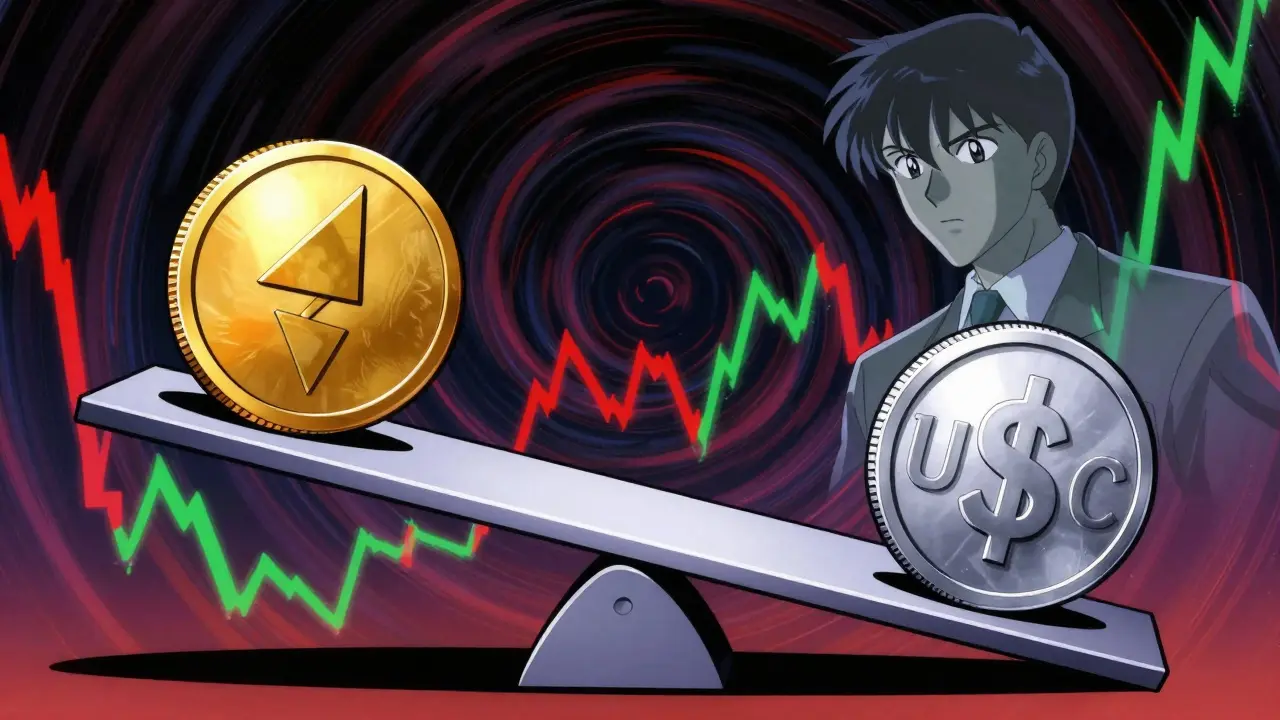
If yield farming were only about earning fees, it would be straightforward. The complication arises from impermanent loss, which is the difference in value between holding tokens in a liquidity pool versus holding them in a personal wallet during periods of price volatility. This is the most critical concept for any beginner to master.
Imagine you deposit ETH and USDC into a pool when ETH is priced at $2,000. Over time, ETH’s price rises to $4,000. Because the AMM maintains a balance between the two assets, the pool will automatically sell some of your appreciating ETH to buy more USDC to keep the values equal. Meanwhile, if you had just held the ETH in your wallet, you would have benefited from the full price increase.
In this scenario, you still own the same dollar value of assets in the pool, but you own fewer ETH tokens and more USDC. If ETH continues to rise, you lose out on those gains compared to simple holding. This loss is called "impermanent" because if the price returns to its original level, the loss disappears. However, if you withdraw your funds while the price is still divergent, the loss becomes permanent.
Research from Gauntlet Network indicates that volatile pairs, like ETH/USDT, can experience impermanent losses exceeding 50% during extreme market swings. Stablecoin pairs, such as USDC/DAI, carry minimal impermanent loss risk because their prices remain pegged to each other. Always calculate potential impermanent loss before entering a volatile pair.
| Strategy Type | Risk Level | Typical APY | Best For |
|---|---|---|---|
| Stablecoin Pools (e.g., USDC/DAI) | Low | 1% - 10% | Capital preservation, beginners |
| Volatile Pairs (e.g., ETH/USDC) | High | 10% - 100%+ | Experienced farmers, high risk tolerance |
| Governance Token Farms | Very High | 100% - 1000%+ | Speculators, short-term plays |
Yield Farming vs. Traditional Staking
Newcomers often confuse yield farming with crypto staking, which is the process of locking up cryptocurrency to support a Proof-of-Stake blockchain network and earn block rewards. While both involve earning passive income, they operate differently.
Staking is generally simpler and safer. When you stake Ethereum or Solana, you are helping secure the network. In return, you earn newly minted coins or transaction fees. The risk is primarily related to the validator’s performance or slashing penalties if the network detects malicious behavior. There is no impermanent loss in pure staking because you are not providing liquidity for trading pairs.
Yield farming, on the other hand, is more complex. You are acting as a market maker. Your returns come from trading fees and incentive tokens emitted by protocols. This introduces counterparty risk (the smart contract could fail), impermanent loss, and token volatility. If the governance token you’re earning crashes in value, your high APY means nothing. For example, early yield farmers earned massive amounts of SUSHI tokens, but many saw those profits evaporate when the token price dropped 90% from its peak.
Choose staking if you want lower complexity and long-term exposure to a specific blockchain. Choose yield farming if you want higher potential returns and are willing to actively manage your positions and accept higher risks.
Security Risks and Smart Contract Vulnerabilities
The decentralized nature of yield farming means there is no customer support hotline to call if things go wrong. You are interacting directly with code. Smart contract vulnerabilities, which are bugs or flaws in the code governing DeFi protocols that can be exploited by hackers to drain funds, represent the single greatest threat to your capital.
In 2022 alone, Chainalysis reported over $3 billion lost to DeFi hacks. Many of these exploits targeted yield farming protocols. Common attack vectors include reentrancy attacks, flash loan exploits, and oracle manipulations. Even established platforms are not immune. The Harvest Finance hack in October 2020 resulted in the loss of approximately $600 million, wiping out 82% of deposited assets for many farmers.
To mitigate these risks, always prioritize protocols that have undergone rigorous third-party audits by reputable firms like CertiK or OpenZeppelin. Check if the protocol has bug bounty programs. Avoid "rug pulls," where developers abandon a project and drain the liquidity pool. New protocols offering absurdly high APYs (like 10,000%) are often unsustainable schemes designed to attract quick capital before collapsing.

Getting Started: A Practical Checklist
If you decide to proceed, preparation is key. Yield farming is not a "set it and forget it" investment. Here is how to start safely:
- Set Up a Non-Custodial Wallet: Use a wallet like MetaMask, which is a popular software cryptocurrency wallet that allows users to interact with decentralized applications and manage their private keys. Secure your seed phrase offline. Never share it with anyone.
- Acquire Gas Tokens: You need native tokens to pay for transaction fees. On Ethereum, this is ETH. On BNB Chain, it’s BNB. Keep extra funds in your wallet to cover unexpected gas spikes.
- Research Protocols: Use aggregators like DeFi Llama, which is a data analytics platform that tracks Total Value Locked (TVL) and yields across various DeFi protocols. Look for protocols with high TVL and consistent historical performance. Avoid new launches unless you fully understand their tokenomics.
- Start Small: Begin with a small amount you can afford to lose. Test the waters with stablecoin pools to understand the mechanics without facing impermanent loss.
- Monitor Gas Fees: On networks like Ethereum, gas fees can eat into your profits. Consider using Layer 2 solutions like Arbitrum or Optimism, or alternative chains like Polygon, where fees are significantly lower.
The Future of Sustainable Yields
The era of unsustainable, inflationary yields is fading. Early yield farming relied heavily on printing new tokens to incentivize liquidity, leading to rapid devaluation. Today, the industry is shifting toward "real yield" models. Protocols like Aave and Compound now distribute a portion of actual trading fees to lenders and borrowers, rather than relying solely on token emissions.
This shift makes yields more sustainable but also lowers the maximum APYs you might see. Instead of chasing 1,000% returns that vanish overnight, successful farmers now focus on steady, fee-based income. Regulatory scrutiny is also increasing, with bodies like the SEC scrutinizing whether certain yield farming tokens constitute unregistered securities. As regulations clarify, we may see more institutional participation, bringing greater stability to the space.
Yield farming remains a powerful tool for generating passive income in crypto, but it demands respect for its complexities. By understanding liquidity pools, managing impermanent loss, and prioritizing security, you can navigate this landscape with confidence. Remember, in DeFi, you are your own bank-and your own risk manager.
Is yield farming legal?
Yield farming itself is not illegal, but regulatory frameworks vary by country. In the US, the SEC has indicated that some yield farming tokens may be considered unregistered securities. Always consult local laws and tax regulations before participating. In many jurisdictions, earnings from yield farming are taxable events.
Can I lose all my money in yield farming?
Yes, it is possible to lose your entire principal. This can happen through smart contract hacks, rug pulls by malicious developers, or catastrophic impermanent loss combined with a crash in the underlying token prices. Never invest more than you can afford to lose.
What is the best chain for yield farming?
Ethereum remains the largest ecosystem but has high gas fees. Layer 2 solutions like Arbitrum and Optimism offer lower costs and growing DeFi ecosystems. Alternative chains like BNB Chain, Solana, and Avalanche also offer competitive yields with faster transaction speeds. Diversifying across chains can help mitigate risk.
How do I calculate impermanent loss?
You can use online calculators provided by tools like DeFi Llama or Impermanent Loss Calculator. Input the initial price of the tokens, the current price, and the pool type. The calculator will show you the percentage loss compared to holding. Generally, the greater the price divergence between the two tokens, the higher the impermanent loss.
Are high APYs a red flag?
Extremely high APYs (e.g., hundreds or thousands of percent) are often unsustainable and indicate high risk. They are typically funded by new token emissions that will eventually dilute in value. Treat these as speculative bets rather than reliable income sources. Sustainable yields usually range from 5% to 20% depending on market conditions.