What Are NFT Tickets for Events? A Real-World Guide to Blockchain-Based Entry
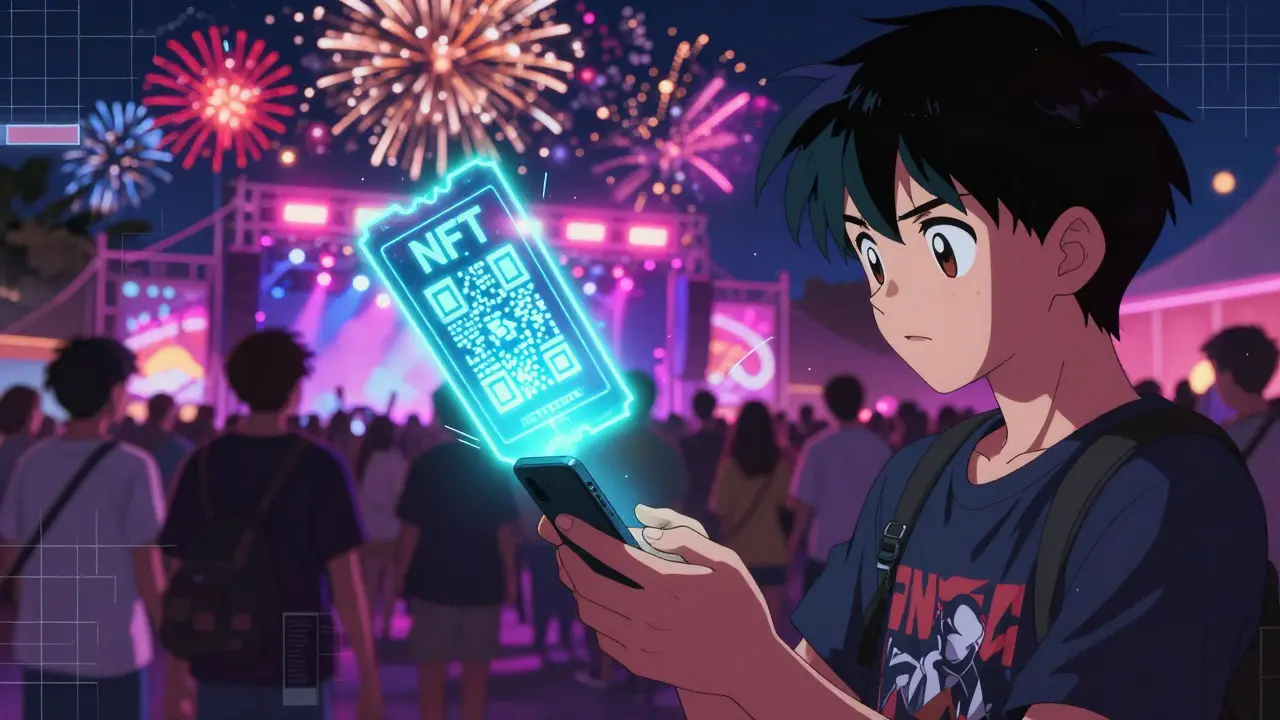
Imagine showing up to a concert, sports game, or festival and just tapping your phone to get in-no paper ticket, no app login, no scalper lines. Just your digital wallet, a quick scan, and you’re in. That’s what NFT tickets for events are starting to make real. Unlike the old-school paper or PDF tickets you print or save on your phone, NFT tickets are unique digital tokens stored on a blockchain. They can’t be copied, hacked, or faked. And they don’t just get you in-they can keep giving you value after the event ends.
How NFT Tickets Work (No Tech Jargon)
NFT stands for non-fungible token. That just means it’s a one-of-a-kind digital item. Think of it like a collectible card, but instead of being printed on cardboard, it’s locked into a public ledger called a blockchain. When you buy an NFT ticket, you’re not just getting access-you’re owning a verifiable piece of digital proof that says, "This event is mine."
Here’s how it actually works on the ground:
- You buy the ticket using crypto or a credit card through a platform like MoonPay or GUTS Tickets.
- The ticket gets created as a unique token on a blockchain-usually Polygon or Ethereum because they’re faster and cheaper than others.
- It’s sent directly to your crypto wallet (like MetaMask or Coinbase Wallet).
- At the event, you open your wallet, show the NFT, and a scanner checks it against the blockchain in under 3 seconds.
Unlike old QR codes that can be screenshotted and reused, NFT tickets use dynamic codes that change every 30 seconds. Even if someone takes a screenshot, it won’t work. And because the blockchain records every transfer, you can see exactly who owned the ticket before you-and if the organizer set it up right, they get a cut every time it’s resold.
Why Event Organizers Are Switching
Back in 2022, Ticketmaster’s system crashed during the Taylor Swift Eras Tour sale. Over 4.5 billion bot requests flooded their servers in minutes. Fans got nothing. Scalpers bought thousands and sold them for $10,000 a pop. That moment changed everything.
Now, big names like Coachella, the NBA, and the International Olympic Committee are testing NFT tickets-not because they’re trendy, but because they solve real problems:
- No counterfeits: Traditional tickets have a 12-18% fake rate, according to the National Association of Ticket Brokers. NFTs? Mathematically impossible to copy.
- Stop scalping: Smart contracts can block resale for 24 hours, limit transfers to verified fans, or require a human delay before selling. Bots can’t bypass that.
- Extra revenue: Every time an NFT ticket is resold, the original organizer can get 5-15% automatically. That’s free money-no middleman.
- Long-term value: Your ticket isn’t trash after the show. It can become a collectible, unlock VIP content, or even give you early access to next year’s event.
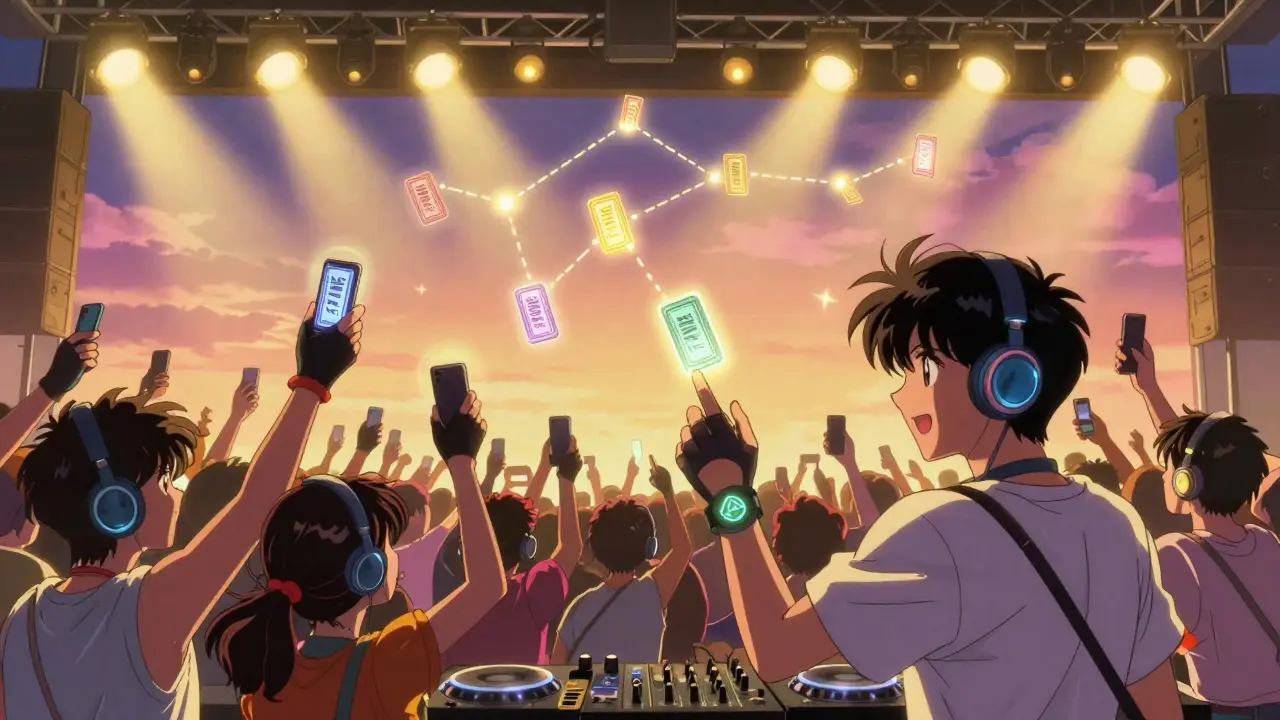
Organizers using platforms like ComeTogether report 31% higher fan engagement because people keep their tickets as digital souvenirs. That’s not just convenience-it’s loyalty.
What You Need to Use One
You don’t need to be a crypto expert. But you do need a few things:
- A smartphone with internet access
- A crypto wallet (MetaMask, Coinbase Wallet, or the app provided by the event)
- Basic knowledge of how to open and show a wallet
Most platforms now let you pay with a credit card. You don’t even need to buy Bitcoin or Ethereum yourself. MoonPay and other services handle the crypto side behind the scenes. You get your ticket, it lands in your wallet, and you’re good to go.
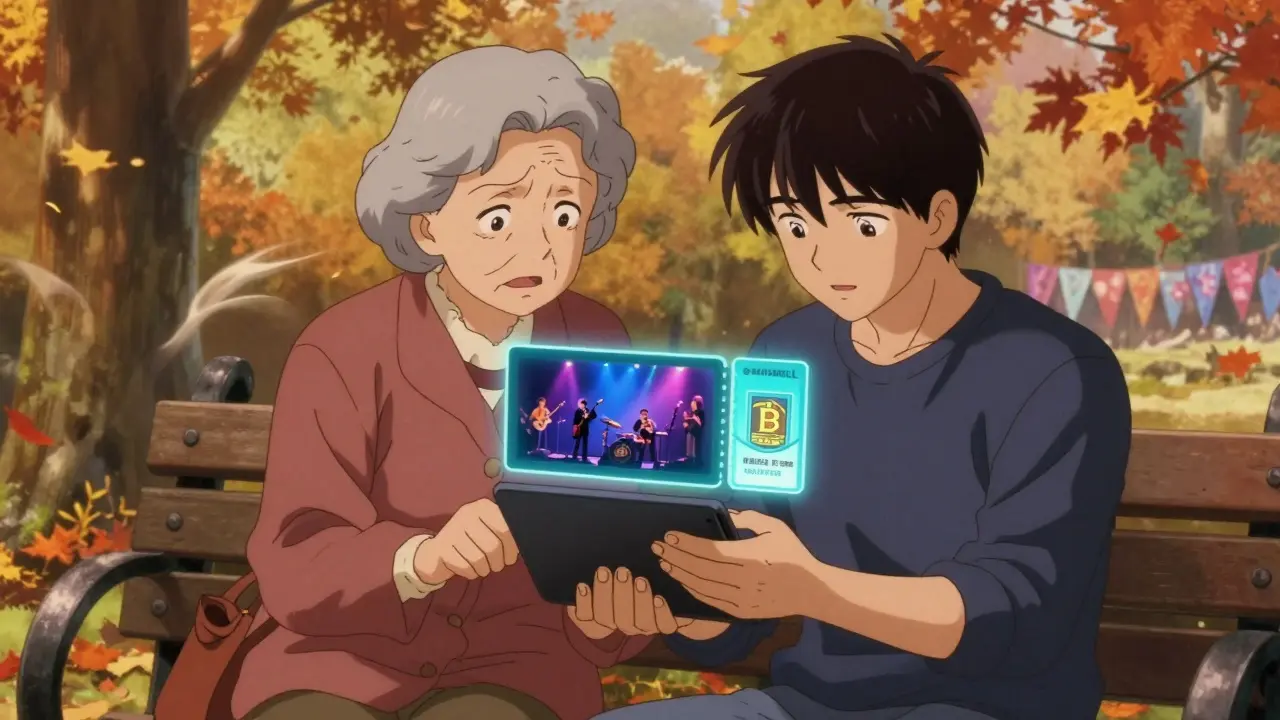
But here’s the catch: if you’ve never used a crypto wallet before, the first time can be confusing. One Reddit user, u/GrandmaRockFan, missed half her favorite band’s show because she couldn’t get her grandson’s NFT ticket working. She wasn’t alone. Around 68% of concertgoers say they’d avoid NFT tickets because they seem too complicated.
The Big Downsides
NFT tickets aren’t magic. They have real problems.
Costs: On Ethereum, transaction fees can hit $15 during busy times. On Polygon, it’s usually under $0.50. Most event platforms cover this for you, but not all do.
Access: If you don’t have a smartphone, or you’re not comfortable with apps, you’re left out. Older fans, rural communities, and low-income groups often can’t participate. Julia Streets, a ticketing consultant, warned this could create a "digital divide"-where only tech-savvy fans get the best experiences.
Support: If your wallet crashes or you lose your password, customer service isn’t always quick. Trustpilot data shows NFT ticket platforms take an average of 58 hours to respond-compared to 12 hours for Ticketmaster or Eventbrite.
Regulation: No one’s sure if NFT tickets count as securities. The U.S. SEC and EU’s MiCA rules are still figuring this out. That uncertainty scares off big companies.
Who’s Using Them-and Who Isn’t
NFT tickets aren’t for every event. They’re best for:
- Music festivals: Coachella, Lollapalooza, and Burning Man have tested them. Fans love the collectible aspect.
- Sports: The NBA’s NFT ticket rollout in 2022 had a 99.98% fraud prevention rate. Fans kept tickets as digital memorabilia.
- Premium experiences: VIP meetups, backstage passes, or artist meet-and-greets where scarcity matters.
They’re not great for:
- Local theater or community events: Too small, too low-budget. The tech overhead doesn’t make sense.
- Mass-market concerts: If your audience includes grandparents, teens without wallets, or people who just want to buy a ticket and go, NFTs add friction.
Right now, North America leads adoption with 47% of NFT ticketing projects. Europe is catching up, especially after the EU’s MiCA regulations kick in mid-2024. Asia-Pacific lags behind, mostly due to less crypto infrastructure.
The Future: Will NFT Tickets Take Over?
Gartner says NFT tickets will hit the "plateau of productivity" by 2026. That means they’ll be reliable, common, and useful-not just a gimmick.
What’s coming next?
- Biometric access: Your fingerprint or face scan could unlock your wallet at the gate-no phone needed.
- Hybrid tickets: Events will offer both NFT and traditional options. You pick.
- Smart ticket bundles: Buy a ticket, get a digital poster, exclusive audio clip, and early access to merch-all in one NFT.
The real question isn’t whether NFT tickets work. They do. The question is: Can they be simple enough for everyone?
Organizers who succeed will be the ones who treat NFT tickets like a feature-not a requirement. Offer them as an upgrade. Give clear tutorials. Have staff on hand to help. Make the wallet setup part of the fun, not the headache.
For fans, it’s a chance to own something real from a moment that mattered. For artists and promoters, it’s a way to build deeper relationships, not just sell seats.
NFT tickets aren’t the future of every event. But for the right ones-where exclusivity, authenticity, and community matter-they’re already here.
Are NFT tickets safer than regular tickets?
Yes, they’re far safer. Traditional tickets can be copied, scanned, or forged-studies show 12-18% of paper and digital tickets are fake. NFT tickets are stored on a blockchain, which makes them impossible to duplicate. Each one is unique and verified in real time. Even screenshots won’t work because the QR code changes every 30 seconds. If someone tries to sell a fake, the system instantly flags it as invalid.
Do I need cryptocurrency to buy an NFT ticket?
Not necessarily. Many platforms like MoonPay, Ticketmaster’s Token Tix, and GUTS Tickets let you pay with a credit card. The crypto part happens behind the scenes. You just get your ticket in your digital wallet. But once you have it, you’ll need a wallet app (like MetaMask) to show it at the event. You don’t need to understand crypto-you just need to open the app and tap "show ticket."
Can I resell my NFT ticket?
Usually, yes-but with rules. The event organizer sets the terms using a smart contract. Some allow resale right away. Others block it for 24-72 hours to stop bots. Many also take a cut (5-15%) every time it’s resold, which goes back to the artist or venue. This stops scalpers from making huge profits. If you try to sell it on a random marketplace, it might not work unless the event allows it.
What if I lose my wallet or forget my password?
This is the biggest risk. If you lose your wallet password or private key, you lose your ticket. There’s no "forgot password" button like with Eventbrite. That’s why it’s critical to back up your wallet properly-write down your recovery phrase and store it somewhere safe. Some platforms now offer backup options through trusted contacts or two-factor authentication, but it’s not universal. Always treat your NFT ticket like cash.
Are NFT tickets only for big events?
No, but they’re most common there. Big festivals, sports teams, and concerts have the budget and audience to make them work. Smaller events-like local theater or community gigs-usually skip them because the setup cost and learning curve aren’t worth it. That said, as tools get cheaper and easier (like Tokenproof’s white-label systems), we’re starting to see indie artists and small venues test NFT tickets too. It’s not just for the big leagues anymore.
Can I use an NFT ticket on multiple devices?
Not really. Your NFT ticket is tied to your wallet, which is tied to your device. You can access your wallet from any phone or computer, but you need to log in with your password or biometrics. You can’t just forward the ticket to a friend’s phone. The system checks the wallet address at entry, not the device. So if you want to give someone your ticket, you have to transfer ownership through the wallet-like sending crypto.
What happens to my NFT ticket after the event?
It doesn’t disappear. Unlike a paper ticket that gets torn up, your NFT stays in your wallet forever. Many organizers turn it into a digital collectible-unlocking exclusive content, early access to future events, or even merch discounts. Some fans treat them like trading cards, keeping them for nostalgia or resale. If the event was special, your ticket becomes a permanent digital keepsake. That’s the real power of NFT tickets: they’re not just access-they’re memory.
Comments
Bill Sloan
January 13, 2026 AT 18:09This is actually kinda wild 🤯 I went to a small indie show last month and they used NFT tickets. I thought I’d be stuck fumbling with my wallet, but it was smoother than scanning a QR code. The artist even gave us a free digital poster after the show. Now I keep it like a trophy.
Who knew buying a ticket could feel like collecting a piece of history?
ASHISH SINGH
January 14, 2026 AT 05:25NFT tickets? More like government crypto surveillance in disguise. Next they’ll scan your retina and link it to your social credit score. They say ‘no counterfeits’-yeah, right. What they really mean is ‘no more cash economy.’ This is how they control the masses. Remember when concerts were about music, not blockchain ledgers?
Vinod Dalavai
January 14, 2026 AT 10:46I get the hype, but honestly? My aunt tried to use one for a jazz festival and spent 45 minutes crying because she couldn’t find her recovery phrase. She’s 72. She doesn’t even know what a seed phrase is.
Love the tech, but don’t force it on people who just wanna enjoy the music. Maybe offer both? Like… a normal ticket option? Just a thought 😊
Chidimma Okafor
January 15, 2026 AT 15:46While the technological innovation is commendable, one must not overlook the socio-economic implications of this paradigm shift. The exclusion of non-digital-native populations, particularly in under-resourced communities, constitutes a structural inequity that undermines the very inclusivity that cultural events ought to champion.
It is imperative that event organizers implement tiered access protocols to ensure equitable participation, lest we risk transforming art into an elite digital privilege.
Andre Suico
January 17, 2026 AT 08:04The security benefits are real, but the support infrastructure is woefully behind. I had a ticket get stuck in limbo because of a wallet sync error. Took 72 hours to get a reply from the platform. Ticketmaster would’ve fixed it in 90 minutes.
NFT tickets need better customer service, not just better cryptography.
Jill McCollum
January 17, 2026 AT 17:43ok so i tried this for a local band show and my phone died right before entry 😭 i had no backup, no printout, no nothing. they let me in because i looked like i was gonna cry but like… what if i wasn’t lucky? this feels like a glitch waiting to happen.
Hailey Bug
January 17, 2026 AT 22:23The real win here isn’t security-it’s the resale royalty. Artists finally get paid every time their ticket changes hands. That’s huge. No more scalpers walking away with 90% of the profit.
And yes, it’s clunky for some, but so was online booking in 2005. Give it time. The next generation won’t even think twice.
Stephen Gaskell
January 19, 2026 AT 10:49America leads in tech adoption. Europe is playing catch-up. Asia? Still stuck in 2010. If you can’t adapt, you get left behind. This isn’t crypto propaganda. It’s progress. Stop whining about wallets and learn how to use your phone.
CHISOM UCHE
January 21, 2026 AT 03:39The underlying architecture leverages ERC-721 standards on a Layer-2 settlement protocol, which significantly reduces gas fees while maintaining cryptographic immutability. The dynamic QR implementation employs time-based one-time password (TOTP) authentication, rendering screen capture attacks obsolete. However, the UX friction remains a non-trivial adoption barrier, particularly among non-custodial wallet users.
Patricia Chakeres
January 21, 2026 AT 14:57Of course they say it’s ‘impossible to copy.’ That’s what they said about QR codes. And now look-every concert has fake tickets. This is just the next flavor of snake oil.
They want you to believe you ‘own’ something. But you don’t. You’re just leasing access through a private company’s blockchain. You think Apple or Ticketmaster will let you transfer that NFT to your kid? Dream on.
Alexis Dummar
January 21, 2026 AT 20:44It’s funny how we treat tech like it’s magic. You don’t own the ticket. You own a pointer to a record on a server somewhere. The ‘soul’ of the experience isn’t in the blockchain-it’s in the crowd, the sweat, the music.
But I get it. We’re all trying to hold onto something real in a digital world. Maybe the ticket’s just our new totem. Still… I miss paper tickets. They smelled like popcorn and regret.
kristina tina
January 23, 2026 AT 12:49I cried when I got my NFT ticket from my favorite band’s reunion. Not because it was techy-but because it came with a voice note from the lead singer saying ‘thank you for waiting.’
My mom didn’t get it. She said ‘just send me a pic.’ But I kept it. I’ll show it to my grandkids. ‘This is how your grandma got into the show where everything changed.’
That’s not just a ticket. That’s legacy.
Anna Gringhuis
January 24, 2026 AT 02:13Oh wow, so now we’re supposed to be impressed because a company figured out how to make us download another app?
Let me guess-next they’ll charge extra for the ‘premium’ version of your ticket that unlocks a 3-second audio clip of the drummer coughing.
It’s not innovation. It’s just capitalism with a blockchain filter.
Michael Jones
January 24, 2026 AT 11:04If you’re going to use NFT tickets, make sure you backup your wallet properly. Write down your 12-word phrase. Store it in a fireproof safe. Don’t screenshot it. Don’t email it. Don’t trust cloud backups.
And if you’re helping someone older or less tech-savvy? Sit with them. Walk them through it. Don’t just say ‘it’s easy.’ It’s not. Not yet.
Lauren Bontje
January 25, 2026 AT 00:48This is the end of American culture. First they take your cash. Then your privacy. Now they take your concert memories and lock them in some Silicon Valley server farm.
They’ll charge you $20 to ‘reclaim’ your ticket if you forget your password. Then they’ll sell your attendance data to advertisers.
Wake up. This isn’t progress. It’s colonization.
Stephanie BASILIEN
January 26, 2026 AT 08:19While I acknowledge the technical elegance of blockchain-based ticketing, I remain cautious regarding its long-term viability as a consumer-facing utility. The absence of standardized regulatory frameworks introduces material uncertainty, particularly with respect to asset classification and consumer recourse.
Until such frameworks mature, I would advise a cautious, opt-in approach.
Deb Svanefelt
January 26, 2026 AT 14:54I used to think NFTs were just overpriced JPEGs. Then I got one for my first festival. It didn’t just get me in-it came with a hidden message from the band, a song they never released, and a note saying ‘you were there when it all started.’
I didn’t know I needed that. But now I can’t imagine going back. It’s not about the tech. It’s about feeling seen. And that? That’s priceless.
Telleen Anderson-Lozano
January 28, 2026 AT 04:07I’m torn. I love the idea of keeping my ticket as a keepsake… but what if my phone dies? What if I upgrade? What if the platform shuts down? What if the blockchain gets deprecated? What if my wallet gets hacked? What if… what if… what if…?
It’s beautiful, but it’s also terrifying. Like owning a diamond that only glows when you have Wi-Fi.
Haley Hebert
January 29, 2026 AT 20:49I just want to go to a show without stressing. I don’t care if it’s paper or NFT or a carrier pigeon. Just… let me be there.
But if I could get a cool digital badge that says ‘I was at Coachella 2025’ and it unlocked a secret playlist? Okay… maybe I’m sold.
Just… please make it easy. I’m not a coder. I’m just a girl who loves music.
Dustin Secrest
January 30, 2026 AT 04:24The real question isn’t whether NFT tickets work. It’s whether we’re willing to trade convenience for control.
Organizers get royalties. Fans get collectibles. But who owns the data? Who controls the ledger? Who decides if you can resell?
We’re not just buying tickets. We’re signing a contract with a corporation we never met.
Josh V
January 30, 2026 AT 20:22I bought one for my son’s birthday and he screamed like he won the lottery. He’s 14. He didn’t care about crypto. He just wanted the digital glow. Now he shows it off like it’s a magic wand.
Maybe the future isn’t about understanding it. Maybe it’s about feeling it.
Hannah Campbell
January 31, 2026 AT 10:58So let me get this straight. You’re telling me I have to pay $15 in fees to see a band… and then I can’t even give my ticket to my friend if I change my mind?
And if I lose my phone? Too bad. Bye bye concert.
And you call this innovation? This is just Ticketmaster with a blockchain tattoo. I’m staying with paper. And I’m not sorry.
Rod Petrik
February 2, 2026 AT 05:00NFT tickets are a distraction. The real issue? The government and big tech are using this to build a unified digital ID system. Soon, you won’t just need a wallet to get into a concert-you’ll need it to buy groceries, ride the bus, see a doctor.
They’re testing the waters with music. Next? Your entire life.
Don’t be the guy who says ‘it’s just a ticket.’ It’s not. It’s the first domino.
Andre Suico
February 2, 2026 AT 06:11I’ve seen this play out before. Remember when online check-in killed the airport counter? People panicked. Now it’s normal.
NFT tickets aren’t perfect. But they’re fixing real problems: scalping, fraud, lost revenue. The friction will fade. The support will improve. The wallets will get easier.
Give it five years. You’ll wonder how we ever lived without them.