Kosovo Bans Crypto Mining to Fight Energy Crisis: What Happened and What’s Next
Crypto Mining Energy Calculator
This calculator shows the energy consumption of crypto mining rigs. In Kosovo, mining was banned because miners were using the public grid without paying. Now, miners must use their own power sources. The calculator helps you understand why this was necessary and what the energy implications are for different mining operations.
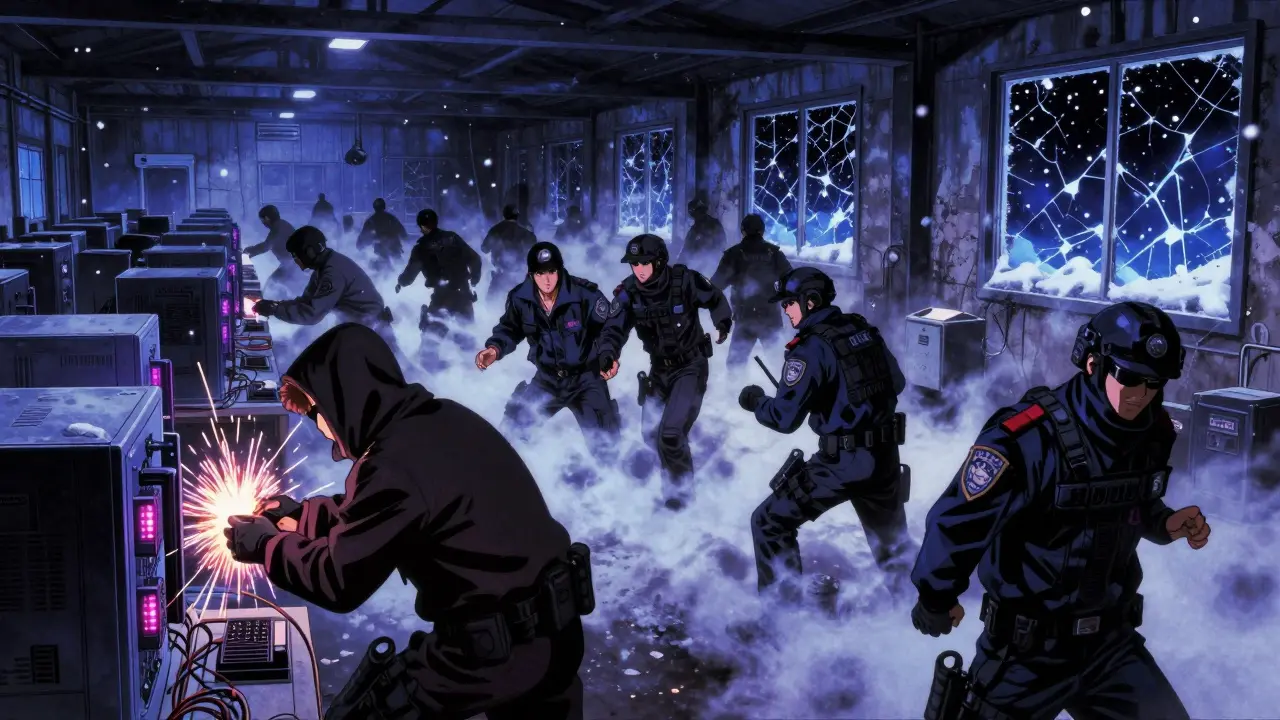
On January 4, 2022, Kosovo shut down its entire cryptocurrency mining industry overnight. No warning. No grace period. Just police raids, seizures of mining rigs, and a total ban on using the national power grid for crypto operations. The reason? The country was running out of electricity.
Kosovo, a small Balkan nation with just 1.8 million people, was already struggling to keep the lights on. One of its two coal-fired power plants had shut down. Imports were expensive and unreliable. Homes were going cold in winter. And then there were the miners.
In northern Kosovo, especially in Serb-majority areas, crypto mining had exploded. For years, miners had been running hundreds of high-powered computers 24/7, using electricity that was either free or nearly free. Some miners were pulling in up to 2,000 euros a month - five times the average local income. They weren’t stealing power in the traditional sense. They were just using a system that never accounted for their massive, hidden demand.
But when the grid started failing, the government had to act. The Technical Committee for Emergency Measures in Energy Supply recommended an immediate ban. The acting Economy Minister signed it. Within days, authorities confiscated over 500 mining machines in a single operation. Each rig cost between 20,000 and 30,000 euros. Entire businesses vanished overnight.
Why Crypto Mining Was the Target
Crypto mining isn’t like streaming videos or charging phones. It’s a power-hungry process. Miners use specialized hardware to solve complex math problems that verify transactions on blockchains like Bitcoin. These machines run nonstop, generating heat and eating electricity at an alarming rate.
A single high-end mining rig can use as much power as a small household. In Kosovo, hundreds - maybe thousands - of these rigs were plugged into the grid. No one knew exactly how many. No one had registered them. No one paid for the electricity they used.
According to University of Cambridge data, globally, only 39% of Bitcoin mining runs on renewable energy. The rest relies on coal, oil, and gas. In Kosovo, where coal already made up the majority of power generation, crypto mining was making an already dirty energy system even worse.
The government didn’t ban Bitcoin. It didn’t ban digital currencies. It banned the uncontrolled use of public electricity to mine them. That distinction mattered.
The Ban Wasn’t Permanent - But the Rules Got Tighter
By 2023, it became clear that a total ban wasn’t sustainable. Miners had sunk millions into equipment. Some had moved operations underground. Others were smuggling rigs across borders. The government realized it couldn’t just crush the industry - it needed to control it.
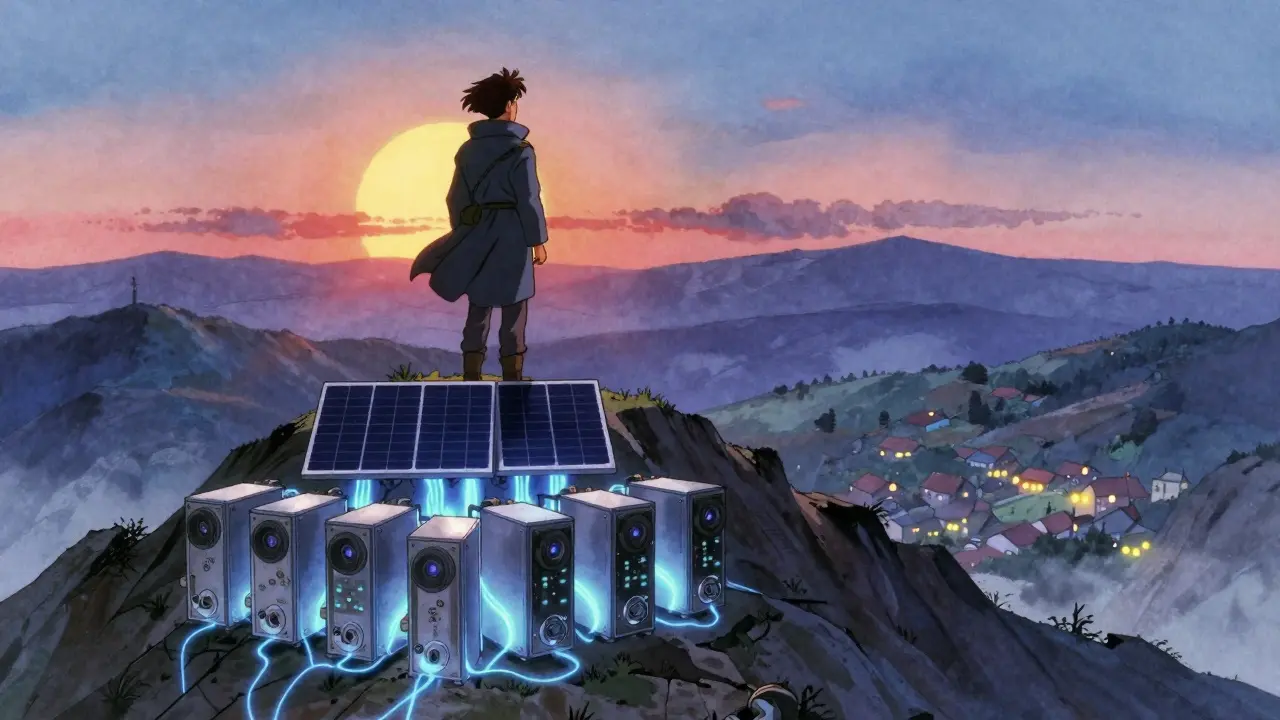
Today, crypto mining in Kosovo is allowed - but only if you don’t use the national grid. If you want to mine, you need your own power source: solar panels, wind turbines, or private generators running on diesel or gas. And you have to prove it.
The new rule is simple: No public electricity. No mining. The government doesn’t care if you mine Bitcoin, Ethereum, or Dogecoin. But if your rig is plugged into a state-owned outlet, it’s illegal. And they’re still catching violators.
Former parliamentary working group chair Mimoza Kusari-Lila said the goal was never to kill crypto. It was to stop energy theft and bring transparency. The government started pushing for a formal crypto law - one that would require miners to register their equipment, report energy use, and pay taxes on profits.
Why the Law Still Isn’t Finished
As of 2025, the draft crypto law is 90% complete. But it’s been stuck for over a year.
The European Commission stepped in. They sent two advisers to review the draft. Their concern? Money laundering. Kosovo has a history of informal economies and weak financial oversight. The EU didn’t want a new crypto law that could become a backdoor for criminal activity.
So the draft got revised. Now, miners must verify their identities. Transactions must be traceable. Mining companies must report income. It’s not about stopping crypto. It’s about making sure it doesn’t become a haven for illegal cash.
Some local miners say the rules are too strict. Others say they’re long overdue. But everyone agrees: the old days of free, unregulated mining are gone.
What This Means for Other Countries
Kosovo isn’t alone. China banned crypto mining in 2021, shutting down nearly 75% of the world’s Bitcoin mining capacity. Kazakhstan cracked down in 2022 after a winter energy crunch. Iran, Russia, and Egypt have all imposed restrictions.
But Kosovo’s approach is different. Instead of a total ban, it created a conditional one. You can mine - if you pay for your own power. That’s a model other energy-strapped countries are watching closely.
Think about it: if a country can’t afford to power its hospitals, should it let private miners use its grid? Kosovo said no. And it didn’t just shut them down - it gave them a legal way to keep going, if they were willing to adapt.
That’s not just policy. It’s pragmatism.
What Happened to the Miners?
Some gave up. Many sold their rigs for scrap or shipped them to countries with cheaper power - like Georgia or Kazakhstan.
Others went underground. There are rumors of miners using hidden diesel generators in warehouses, or tapping into unofficial power lines. But those operations are risky. Fines are steep. And the government has been increasing inspections.
A few smart operators switched to solar. In the mountains near Prizren, a handful of mining farms now run entirely on rooftop panels. They’re small, but they’re legal. And they’re growing.
One miner, who asked not to be named, said: “I lost everything in January 2022. But last year, I built a 10-kilowatt solar array. I run six rigs. I pay for my own power. I pay taxes. I’m legal. It’s harder. But it’s sustainable.”
Is Crypto Mining Ever Fair in Poor Countries?
This isn’t just about Kosovo. It’s about energy justice.
Rich countries complain about crypto’s carbon footprint. But in places like Kosovo, the real issue isn’t emissions - it’s survival. When families can’t heat their homes, and hospitals risk blackouts, using public electricity to mine digital coins looks like theft, not innovation.
That’s why Kosovo’s ban worked - not because it was harsh, but because it was fair. It didn’t punish innovation. It punished exploitation.
Now, the country is trying to turn a crisis into a blueprint: Let crypto grow - but only if it doesn’t steal from the people.
What’s Next for Kosovo?
The next big step is the final passage of the crypto law. Once it’s signed, mining will be fully regulated: registered, taxed, and monitored. The government plans to use tax revenue to upgrade the power grid - and maybe even fund renewable projects.
There’s also talk of creating a national crypto incubator - not for mining, but for blockchain startups that build real tools: land registries, supply chain tracking, digital IDs. That’s where the future is.
Miners? They’re being pushed toward clean energy. And that’s not a bad thing. The world is moving away from energy-hungry blockchains anyway. Ethereum switched to a greener system in 2022. Bitcoin’s energy use is still high, but alternatives are rising.
Kosovo didn’t ban crypto. It banned the abuse of a broken system. And in doing so, it forced the industry to grow up.
Why did Kosovo ban crypto mining?
Kosovo banned crypto mining in January 2022 because the country was facing a severe energy crisis. One of its two coal power plants had shut down, leading to widespread blackouts. Crypto miners were using massive amounts of electricity - often without paying - which worsened the shortage. The government acted to protect public energy access and prevent grid collapse.
Is crypto mining still illegal in Kosovo today?
No, it’s not completely illegal. As of 2025, crypto mining is allowed only if you use your own power source - like solar panels, wind turbines, or private generators. Mining using electricity from the national grid is still strictly banned. The government wants miners to be self-sufficient, not drain public resources.
How did miners respond to the ban?
Many miners lost their equipment during police raids in 2022. Some sold their rigs for parts. Others moved operations abroad. A growing number switched to solar power and now operate legally. A few still try to hide their rigs, but inspections have increased, and fines are heavy.
What’s the status of Kosovo’s crypto law?
The draft crypto law is nearly finished - about 90% complete as of 2025. It’s been delayed because the European Commission requested changes to strengthen anti-money laundering rules. Once passed, it will require miners to register equipment, report income, and pay taxes. The goal is to bring crypto into the formal economy, not shut it down.
Could other countries copy Kosovo’s approach?
Yes. Countries like Kazakhstan, Iran, and parts of the U.S. facing energy shortages are watching Kosovo closely. Its model - banning public-grid mining but allowing off-grid operations - offers a middle ground. It protects energy security without crushing innovation. That balance makes it a potential template for other energy-stressed regions.




Comments
Abby Daguindal
December 15, 2025 AT 14:15This is just another case of governments panicking when they don't understand technology. Crypto isn't the problem - bad infrastructure is. Blame the coal plants, not the miners.
SeTSUnA Kevin
December 16, 2025 AT 07:00The distinction between banning crypto and banning unregulated energy consumption is semantically precise. Kosovo’s policy demonstrates administrative competence rare in post-conflict states.
Madhavi Shyam
December 17, 2025 AT 16:16The energy arbitrage paradigm here is textbook. Miners exploited negative marginal cost electricity pricing - a systemic failure of grid accounting, not a crypto flaw.
Sue Bumgarner
December 18, 2025 AT 05:10USA would never let this happen. We don't let foreign governments tell us how to run our energy. If Kosovo can't power its people, maybe they shouldn't be trying to be a tech hub at all.
Kayla Murphy
December 18, 2025 AT 10:57Honestly? This is kind of beautiful. They didn't just crush people - they gave them a path forward. Solar miners? That's the future right there. Keep going, Kosovo!
Florence Maail
December 19, 2025 AT 04:07They're lying. This was all a cover to seize hardware and sell it to Chinese firms. You think they care about 'energy justice'? They just wanted the ASICs. 🤡
Chevy Guy
December 19, 2025 AT 23:32so they banned mining but not diesel generators... so miners just run 24/7 gas tanks and call it 'sustainable'... brilliant
Kelsey Stephens
December 20, 2025 AT 07:26I can't imagine losing everything overnight. But I also can't imagine heating my home while someone else runs 50 rigs in their garage. There's pain here on both sides.
Rebecca Kotnik
December 21, 2025 AT 09:35The philosophical underpinning of this policy is remarkably sophisticated: it decouples the technological artifact (cryptocurrency) from the infrastructural dependency (public electricity). This represents a mature governance model that prioritizes systemic resilience over ideological purity. The transition from prohibition to regulated self-sufficiency is not merely pragmatic-it is ethically coherent.
Sean Kerr
December 21, 2025 AT 20:06this is actually kinda genius?? like yeah the cops came in and took rigs but now people are putting up solar panels?? that’s wild. i love when systems get forced to grow 💪☀️
Elvis Lam
December 22, 2025 AT 17:28The Cambridge data is misleading. Most mining isn't in Kosovo. But Kosovo’s solution is the only one that actually works: make miners pay for their own footprint. No subsidies. No free rides. That’s the model every energy-strapped country needs.
Bradley Cassidy
December 24, 2025 AT 01:23so like… imagine you’re a family in Pristina and your heat’s off, but some dude’s got 100 rigs humming in his basement because he found a loophole? yeah… that’s not innovation. that’s just being a jerk. glad they fixed it 😅
Donna Goines
December 24, 2025 AT 02:30Wait, so the EU is stopping the law because of money laundering? Lol. Kosovo’s banking system is more honest than half the Wall Street banks. This is just them trying to control the narrative. They don’t want crypto anywhere near their borders.
Greg Knapp
December 25, 2025 AT 20:58I don’t care what you say, mining is evil and these people deserved to lose everything. They were stealing from children. That’s it. End of story. No more talking
Mark Cook
December 27, 2025 AT 14:32So… you’re telling me the solution to a power crisis is… more crypto? Just with solar panels? That’s not a fix. That’s a remix.
Craig Nikonov
December 28, 2025 AT 03:07Kosovo’s move is the first real example of a nation weaponizing energy policy against speculative capitalism. It’s not anti-crypto. It’s pro-people. The EU’s delay is pure colonialism dressed as compliance.
Shruti Sinha
December 28, 2025 AT 06:02Interesting. In India, we see miners using solar in Rajasthan. Same logic. Local power, local gain. No grid theft. Simple.
Dionne Wilkinson
December 29, 2025 AT 05:28I wonder if the miners who switched to solar feel… lighter? Like, not just in their electricity bill, but in their soul? Maybe this wasn’t a punishment. Maybe it was a gift.
Terrance Alan
December 29, 2025 AT 18:51The entire thing is a farce. The government didn't ban mining because of energy shortages. They banned it because they couldn't tax it. Now they want to tax it so badly they're pretending it's about fairness. It's all about control and revenue. Always.
George Cheetham
December 31, 2025 AT 15:23What’s beautiful here is how a crisis became a catalyst. Kosovo didn’t just react - it evolved. The miners who survived didn’t just adapt; they became pioneers. This isn’t a ban. It’s a birth.
Emma Sherwood
January 1, 2026 AT 16:04I’ve seen this before - in Nigeria, in Venezuela. When the grid fails, people find ways. But Kosovo’s approach? It’s the first time I’ve seen a government say, 'We won’t feed your greed, but we’ll help you build something better.' That’s leadership.
Tom Joyner
January 3, 2026 AT 04:24The fact that anyone still thinks Bitcoin is 'decentralized' after this is delusional. All it takes is one government with a power grid and a police force to end the myth.