Is Crypto Regulated in Iran? What You Need to Know in 2026

Is crypto regulated in Iran? The answer isn't simple. It's not a full ban, but it's far from freedom. The Iranian government doesn't stop people from owning Bitcoin or Ethereum - but it controls every step of how you get it, use it, and even talk about it. If you're in Iran or trying to understand what's happening there, you're dealing with one of the most tightly controlled crypto environments on the planet.
Everything Goes Through the Central Bank
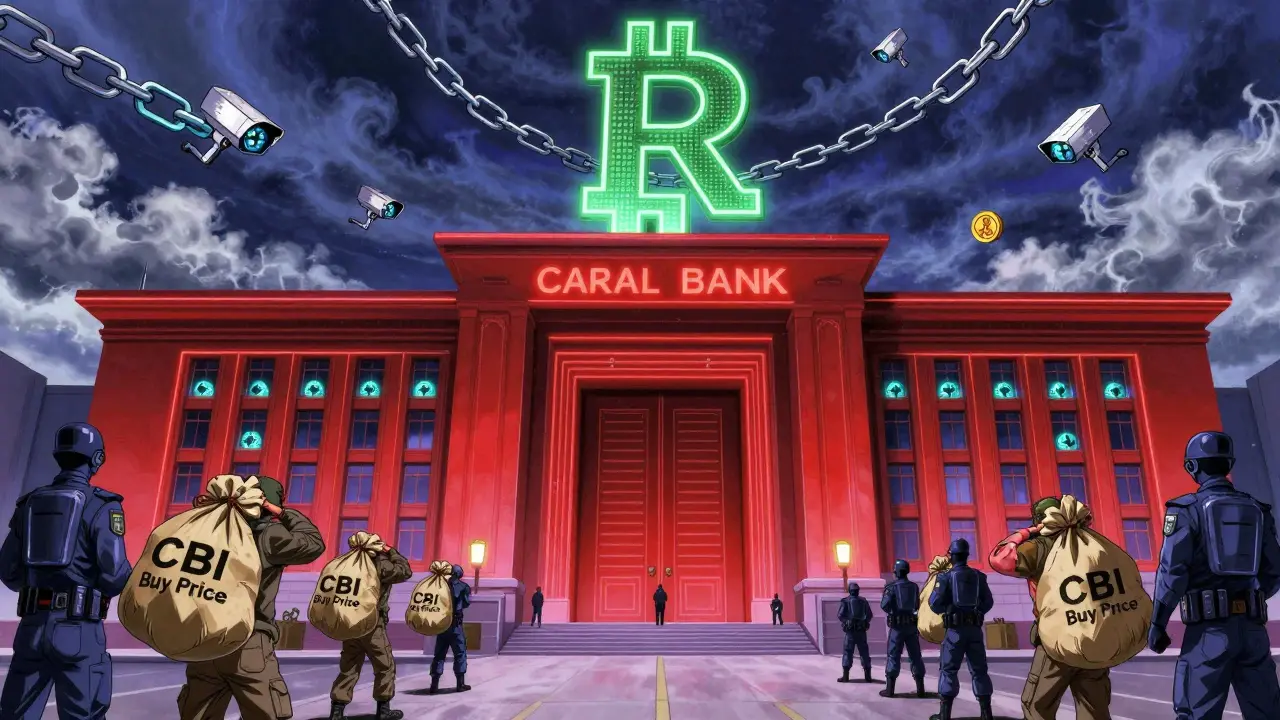
In January 2025, President Masoud Pezeshkian signed a directive that changed everything. The Central Bank of Iran (CBI) became the only legal authority over cryptocurrency. No exchange, no miner, no trader can operate without a CBI license. Even more strict: all payments between Iranian rials and cryptocurrencies must go through government-approved gateways. That means every transaction - whether you're buying Bitcoin or selling mined coins - leaves a digital trail the state can see in real time.
This isn't about protecting users. It's about surveillance. The CBI has direct, unrestricted access to every transaction record, wallet address, and user identity linked to crypto activity. TRM Labs called it "unprecedented state surveillance." If you trade crypto in Iran, you're not just using a financial tool - you're participating in a monitored system.
Miners Must Sell to the Government
Iran used to be one of the world's top Bitcoin mining countries, thanks to cheap electricity. But in 2019, the government made a move that pushed most mining underground: miners had to sell all their digital assets directly to the Central Bank at fixed prices. The CBI paid far below market value. Why? To control supply and profit from the boom.
The result? Energy tariffs for licensed miners skyrocketed. Many couldn't afford to run their rigs legally. Thousands shut down or went dark. Today, unofficial mining still exists - in basements, warehouses, and even apartment buildings - but it's risky. Power outages hit hard, and if caught, miners face fines or worse. The government doesn't want to stop mining. It wants to own it.
Stablecoin Limits Are Real - And Harsh
In September 2025, the Central Bank slapped strict caps on stablecoins like Tether (USDT) and USDC. Individuals and businesses can now buy no more than $5,000 per year and hold no more than $10,000 total. You have 30 days to comply - or risk having your wallet frozen.
Why? Because stablecoins let Iranians protect their savings from the rial's collapse. When inflation hits 50% or more in a year, people turn to USDT as a lifeline. The government sees this as a threat to its control over the economy. By limiting how much you can hold, they force people to keep more money in rials - even as those rials lose value.
After the cap was announced, Tether froze over 42 Iranian-linked addresses. Many were tied to Nobitex, Iran’s largest exchange. That sent shockwaves through the market. Users scrambled to switch to DAI, a decentralized stablecoin built on the Polygon network. By late 2025, DAI’s share of Iranian stablecoin use jumped from 35% to over 50% - and it’s still rising.
Advertising Crypto Is Now Illegal
In February 2025, Iran banned all crypto advertising - online and offline. No more YouTube videos. No more Instagram posts. No more billboards. Even discussing crypto in public forums can get you flagged. This isn’t just about stopping scams. It’s about erasing crypto from public conversation.
State media like Tasnim News Agency now warn people about "crypto risks," painting it as a tool for Western financial manipulation. But behind the scenes, Iranians are finding ways around the ban. VPNs are everywhere. Telegram channels are full of trading tips. Reddit threads in r/Iran and r/cryptocurrency are filled with users sharing how they bypass restrictions - often using decentralized exchanges that don’t require identity checks.
The National Digital Currency: "Rial Currency"
While foreign crypto is tightly controlled, Iran is pushing its own digital currency: "Rial Currency." Launched in 2018, it’s not Bitcoin. It’s not Ethereum. It’s a government-controlled electronic version of the rial. No mining. No decentralization. Just a digital ledger the Central Bank owns and manages.
The CBI says it’s meant to help with international trade, especially under sanctions. But in practice, it’s a tool for financial control. Unlike Bitcoin, you can’t use Rial Currency to send money abroad without permission. You can’t hold it outside Iran. And it doesn’t protect you from inflation - because its value is tied directly to the rial, which keeps dropping.
By mid-2026, the government plans to roll it out for everyday retail use - at grocery stores, gas stations, and public transit. That’s not innovation. It’s replacement. They want to kill the need for Bitcoin, Ethereum, or even stablecoins by offering a state-backed alternative that’s harder to escape.
Trading Volume Is Dropping - But Not Because People Stopped
Iran still has one of the biggest crypto markets in the Middle East. Daily trading hits around $143 million. The total market size? Estimated between $30 billion and $50 billion - bigger than Iran’s gold market.
But here’s the twist: about 60% of that trading happens outside the system. People use VPNs to access Binance, Kraken, or Coinbase. They trade peer-to-peer on local Telegram groups. They use DAI on Polygon to avoid USDT freezes. Chainalysis says Iran’s government controls the official channels - but the real market is running on shadows.
Since January 2025, crypto inflows into Iran have dropped 11%. That’s not because people lost interest. It’s because the government made it harder, slower, and riskier. The cost of compliance? Up to 5% extra in fees. The wait for account approval? Three to five business days. The fear of sudden freezes? Constant.

Taxes Are Now a Reality
In August 2025, Iran introduced its first crypto capital gains tax. For the first time, profits from Bitcoin or Ethereum sales are taxed - just like real estate or forex trades. The Ministry of Economic Affairs and Finance says it will integrate crypto tax reporting into existing systems by mid-2026.
This is a major shift. It means the government no longer pretends crypto is just a "shadow economy." It’s now officially part of the financial system - and it’s being taxed. If you made $20,000 in crypto gains last year, you now owe taxes on it. No one’s sure how enforcement will work yet. But the message is clear: the state sees your crypto. And it wants its cut.
What This All Means
Crypto in Iran isn’t banned. It’s absorbed. The government didn’t outlaw it - it took it over. Every transaction is tracked. Every miner is controlled. Every stablecoin is capped. Every ad is silenced. And every user is forced to choose between the state’s system - slow, expensive, and monitored - or the underground network - faster, riskier, but free.
Most Iranians who use crypto aren’t trying to evade sanctions. They’re trying to protect their savings. Their salaries vanish in months. Their life savings evaporate with inflation. Crypto isn’t a gamble - it’s survival.
But the cost of that survival keeps rising. The government keeps tightening. The tools change. The rules shift. And every time you think you’ve found a way around it - another freeze, another limit, another ban appears.
Iran’s crypto story isn’t about technology. It’s about power. Who controls money? Who sees your transactions? And who decides what you’re allowed to hold? In Iran, the answer is clear: the state does. And it’s not letting go.
Is Bitcoin illegal in Iran?
No, Bitcoin is not illegal in Iran. You can own it, trade it, and even mine it - but only under strict government rules. All transactions must go through state-approved channels, miners must sell their coins to the Central Bank, and advertising Bitcoin is banned. The government doesn’t ban Bitcoin - it controls it.
Can I use Tether (USDT) in Iran?
You can use Tether, but only within strict limits. As of September 2025, individuals are capped at $10,000 in total holdings and $5,000 in annual purchases. Tether has frozen over 42 Iranian-linked addresses since July 2025, and many users now avoid USDT entirely. DAI has become the preferred stablecoin because it’s decentralized and harder for governments to freeze.
Do I need a license to trade crypto in Iran?
Yes. Since January 2025, anyone trading, mining, or operating a crypto platform in Iran must have a license from the Central Bank of Iran. This includes individuals and businesses. Unlicensed activity is illegal and can lead to fines or account freezes. The licensing process takes 3-5 business days and requires full identity verification.
Can I use a VPN to access foreign crypto exchanges?
Yes, many Iranians use VPNs to access exchanges like Binance or Kraken. The government doesn’t block these platforms directly - but it bans advertising them and makes official channels so restrictive that people have no choice. Using a VPN is common, but it carries risk. If you’re caught, you could face scrutiny from authorities, especially if large sums are involved.
Is crypto taxed in Iran?
Yes. Since August 2025, capital gains from cryptocurrency trading are taxed. The government plans to integrate crypto tax reporting into its existing financial systems by mid-2026. Profits from selling Bitcoin, Ethereum, or stablecoins are treated like income from real estate or forex. This marks the first time Iran officially recognizes crypto as part of its taxable economy.
Why does Iran allow crypto if it’s so restricted?
Iran allows crypto because it needs it. International sanctions have cut off access to global banking. Crypto lets Iranians trade goods internationally, bypassing sanctions. It also helps people protect their savings from inflation. The government doesn’t want to eliminate crypto - it wants to control it, tax it, and use it as a tool for financial survival - while preventing citizens from using it to escape state control.
What’s Next?
The next few months will be critical. The Central Bank plans to expand its "Rial Currency" into everyday retail use by mid-2026. That could mean fewer people need crypto for basic transactions - but it also means less freedom. Meanwhile, DAI’s rise suggests users are building their own workarounds - outside the system, beyond the reach of the state.
If sanctions ease, Iran’s crypto rules might loosen. If they tighten further - as they have every time nuclear talks stall - expect even harsher limits. One thing is certain: in Iran, crypto isn’t about innovation. It’s about power. And the state is winning - for now.





Comments
Ifeanyi Uche
February 26, 2026 AT 09:40So the state controls crypto? Big deal. Every government does. The real issue is people who think freedom means doing whatever they want without consequences. You want to use Bitcoin? Fine. But don't act like you're some revolutionary when you're just avoiding taxes and sanctions. This is called governance. Not oppression.
Danny Kim
February 26, 2026 AT 12:22Let me get this straight. The government lets you mine Bitcoin… but only if you sell it to them for pennies? And then they tax your gains? That’s not regulation. That’s a pyramid scheme run by the Ministry of Irony. I mean, who writes these policies? A Soviet economist who got lost in 2025?
Cathy Sunshine
February 26, 2026 AT 13:26The fact that Iranians are turning to DAI because it’s decentralized… it’s poetic, really. The very technology meant to escape control is being weaponized into a quiet act of civil disobedience. The state thinks it’s controlling the narrative - but it’s just creating the conditions for its own obsolescence. The blockchain doesn’t care about borders. Or presidents.
Shannon Black
February 27, 2026 AT 19:14It is important to recognize that Iran's approach to cryptocurrency is not unique in the context of sanctioned economies. Similar dynamics have been observed in Venezuela and North Korea. The underlying motivation - economic survival under duress - is human, not technological. The tools may change, but the imperative remains constant: preserve value.
Richard Cooper
March 1, 2026 AT 03:54They ban ads but people still trade. They freeze wallets but people use DAI. They tax it but people mine in basements. This isn’t regulation. It’s a broken game they’re losing. The people won.
Dee Resin
March 1, 2026 AT 16:25So the government is basically saying: "You can have crypto, but only if you let us watch you use it, charge you for it, and take half your profit." Sounds like a Netflix subscription… if Netflix also called the cops when you binge-watched too much.
Tanvi Atal
March 2, 2026 AT 02:14Iranians use crypto because rials are trash. Simple. No philosophy. No politics. Just survival. Stop overthinking it.
Sony Sebastian
March 3, 2026 AT 19:31The CBI's centralized control architecture is fundamentally incompatible with the permissionless nature of decentralized ledgers. This creates a structural arbitrage: state actors attempt to enforce compliance through KYC/AML gateways while the user base migrates to non-custodial, trust-minimized protocols. The outcome is inevitable: regulatory capture accelerates decentralization.
Brian Lemke
March 4, 2026 AT 16:42Look, I get it - people think crypto is about rebellion. But here’s the beautiful part: Iranians aren’t rebelling against tech. They’re using tech to rebel against inflation. That’s not chaos. That’s ingenuity. The fact that DAI usage jumped to 50%? That’s not a glitch. That’s a revolution in plain sight. Keep going.
Megan Lavery
March 5, 2026 AT 14:12I just want to say - this is so real. My cousin in Tehran uses crypto to buy medicine. Not for fun. Not for speculation. Just to survive. It’s heartbreaking and inspiring at the same time. We need to stop seeing this as a tech issue. It’s a human one.
Mae Young
March 6, 2026 AT 00:56Oh, so now the government is "absorbing" crypto? What a euphemism. It’s not absorption. It’s colonization. You don’t "absorb" something - you crush it, tax it, monitor it, and then pretend you’re being smart. Meanwhile, the people are building their own internet. And guess what? It’s faster. It’s cheaper. And it doesn’t need your permission.
Trenton White
March 7, 2026 AT 06:25The Rial Currency rollout is the most telling part. Not because it’s a bad idea - but because it’s the only one the state can fully control. It’s not about innovation. It’s about control. And control is the only thing they’re good at.
Cheryl Fenner Brown
March 7, 2026 AT 09:19DAI > USDT 😌🔥 also why is everyone shocked? This is just capitalism with extra steps. Government = landlord. People = tenants. Crypto = rent strike. 🤷♀️
Michael Teague
March 9, 2026 AT 04:45They ban crypto ads? Cool. So now people talk about it in secret. That’s called marketing. They’re basically paying for free publicity. Nice job.
kati simpson
March 10, 2026 AT 04:26I think it’s really important to understand that when people turn to crypto in places like Iran, it’s not because they’re tech bros. It’s because they’ve lost faith in everything else. The rial, the banks, the government - they’ve all failed. Crypto isn’t the dream. It’s the last resort.
Cory Derby
March 10, 2026 AT 06:46For anyone new to this topic, I want to emphasize that the Iranian government’s approach is a textbook example of how authoritarian regimes respond to disruptive technologies. They don’t ban them. They co-opt them. And in doing so, they reveal their deepest fear: that people can find power outside the system.
Colin Lethem
March 10, 2026 AT 16:29I’ve been using crypto since 2017. Never thought I’d see a country turn it into a survival tool. But here we are. Iranians are the real OGs of crypto. They didn’t chase hype. They chased food. And they won.
Reggie Fifty
March 11, 2026 AT 13:56This is why America needs to stay strong. We don’t let our government control money like this. If Iran wants to turn into a surveillance state, fine. But don’t expect the rest of the world to follow. We have freedom. They have paperwork.
Kristi Emens
March 11, 2026 AT 22:35The fact that miners are forced to sell at fixed prices… it’s like the government is running a forced auction. They’re not stopping mining. They’re just taking the profit. It’s not evil. It’s economic policy. Cold. Calculated. Effective.
Deborah Robinson
March 12, 2026 AT 08:50You guys are making this sound so dramatic. But honestly? It’s just life. People use what works. If the system is broken, you find a way around it. That’s not rebellion. That’s just being smart. 🙌
Michelle Mitchell
March 13, 2026 AT 19:22i think the real story is how dAI is taking over… i mean… like… wow… that’s just… kinda… wild? 😅
Amanda Markwick
March 15, 2026 AT 10:12What’s happening in Iran isn’t about crypto. It’s about what happens when a government runs out of legitimacy. They can’t print money without it collapsing. They can’t open borders without sanctions crushing them. So they take the one thing that still moves - digital value - and try to own it. But you can’t own something that’s designed to be unowned. The blockchain doesn’t bow. It just keeps running. And the people? They’re just using it.
Vishakha Singh
March 17, 2026 AT 00:35The resilience of the Iranian people is truly admirable. In the face of economic hardship and institutional restrictions, they have turned to decentralized finance not as a trend, but as a necessity. This is not a technological phenomenon - it is a testament to human adaptability.
Don B.
March 18, 2026 AT 17:12So the government is basically playing God with money. Cool. I guess that’s why they call it the "Islamic Republic" - because even God needs a license to mine Bitcoin now. 😔