Iran's Crypto Strategy for International Trade: How Sanctions Shaped a Digital Workaround
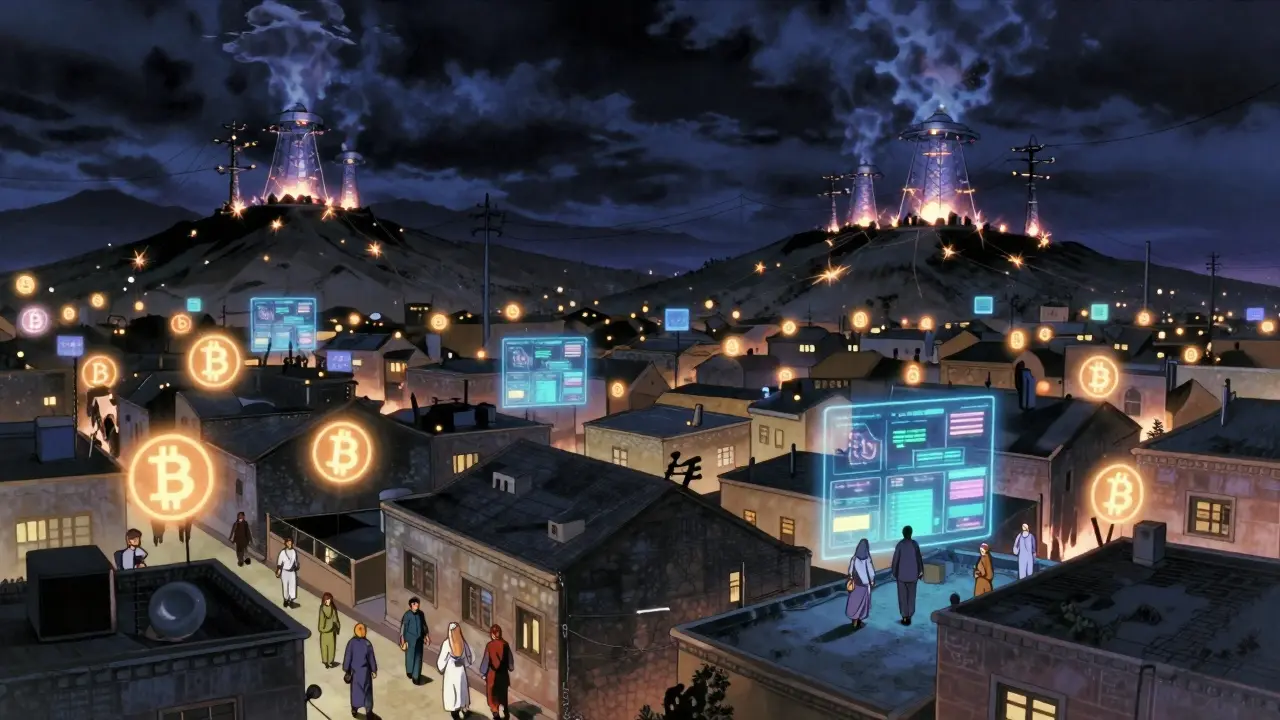
When global banks shut their doors to Iran, the country didn’t just wait for sanctions to lift-it built its own financial highway using Bitcoin and Ethereum. By 2025, Iran had turned cryptocurrency into a lifeline for international trade, not as a fringe experiment, but as a state-managed system designed to bypass sanctions, import essential goods, and keep its economy moving. But this wasn’t a smooth ride. Behind the scenes, power grids buckled, exchanges got hacked, and international watchdogs closed in.
Why Iran Turned to Crypto
After years of being cut off from SWIFT and blocked from using the U.S. dollar, Iran’s foreign trade hit a wall. Oil exports, once the backbone of its economy, dropped by over 70% in value. Banks in Europe and Asia refused to process payments for Iranian goods. Even humanitarian imports like medicine and medical equipment became harder to pay for. The government needed a way to move money without going through traditional channels. Cryptocurrency offered a solution. Unlike bank transfers, crypto transactions don’t require intermediaries. They can’t be easily frozen. And they leave a trail-but one that’s hard to trace unless you know exactly where to look. Iran didn’t just allow crypto; it started directing it. By 2022, the government had issued licenses to nearly 10,000 mining farms and around 90 exchanges. Bitcoin mining became a national priority. Why? Because mining doesn’t need foreign currency. You just need electricity and hardware. Iran had cheap power and a large population willing to run rigs. By 2024, the country was producing nearly 5% of all new Bitcoin globally. That’s more than the entire mining output of Canada or Kazakhstan.The Nobitex Engine
At the center of Iran’s crypto network was Nobitex. Founded in 2018, it grew into the largest exchange in the country, with over 11 million registered users. For ordinary Iranians, Nobitex was the only reliable way to buy Bitcoin with rials and then send it abroad to pay for imports. For the state, it was a pipeline. Analysis by blockchain intelligence firm Elliptic showed that Nobitex wasn’t just a retail platform. It was tied to a network of wallets and services linked to the Islamic Revolutionary Guard Corps (IRGC). Transactions flowing through Nobitex didn’t just pay for food or medicine-they funded industrial equipment, dual-use technology, and even military supply chains. In June 2025, everything changed. A sophisticated cyberattack drained over $90 million from Nobitex’s wallets. The breach wasn’t just a technical failure-it was a strategic blow. The exchange had become the central hub for Iran’s sanctioned trade. Losing that much crypto in one hit didn’t just hurt users; it disrupted supply chains, delayed imports, and exposed the fragility of the entire system.How Crypto Paid for Imports
Iran didn’t use crypto for domestic payments. That was still illegal. But for imports? That’s where the rules got flexible. The Central Bank of Iran officially permitted crypto payments for foreign goods. Companies could now buy machinery from China or pharmaceuticals from India by converting rials into Bitcoin on Nobitex, then sending the Bitcoin to a foreign vendor’s wallet. The process looked like this: An Iranian importer gets a quote from a supplier in Turkey. Instead of wiring dollars, they buy Bitcoin on Nobitex. The Bitcoin is sent to a wallet controlled by the Turkish company-or more often, to a third-party intermediary in the UAE or Malaysia. That intermediary then converts the Bitcoin into local currency and pays the supplier. The chain is broken, and the money never touches Iran’s banking system. This system moved $4.18 billion in crypto out of Iran in 2024 alone. That’s a 70% jump from the year before. And it wasn’t just small businesses. Major state-owned enterprises, including those linked to the IRGC, used the same method to import equipment for energy, mining, and defense projects.
The Shadow Banking Network
What made Iran’s strategy even more dangerous to Western regulators was how it blended crypto with traditional front companies. In September 2025, the U.S. Treasury’s Office of Foreign Assets Control (OFAC) exposed a $600 million shadow banking network tied to the IRGC-Quds Force. This network operated through shell companies in Dubai, Azerbaijan, and Armenia. They bought Iranian oil, paid in crypto, then funneled the proceeds into cryptocurrency wallets linked to individuals like Arash Estaki Alivand. These wallets-on Ethereum, Tron, and Bitcoin-were then used to buy goods abroad. The system was so layered that even blockchain analysts needed months to untangle it. What made it work? The lack of oversight. Many of the front companies didn’t file taxes. They didn’t have physical offices. They existed only on paper and on-chain. And because crypto transactions are irreversible, once the money moved, it was nearly impossible to claw back.Energy Costs and the Backlash
Iran’s crypto boom came with a hidden price: blackouts. Bitcoin mining is power-hungry. In 2025, mining operations consumed an estimated 4% of Iran’s total electricity. In some provinces, homes and hospitals faced daily outages because miners were siphoning power from the grid. The government responded with new rules. In early 2025, the Central Bank ordered the shutdown of rial-based payment gateways for exchanges. That meant Iranians could no longer directly buy crypto with their bank accounts. They had to use cash, peer-to-peer deals, or intermediaries-making the process slower and riskier. The move was meant to control capital flight and tax evasion. But it also hurt legitimate businesses. Importers who relied on crypto to pay for medical devices now faced delays. Farmers trying to buy fertilizer from Russia found their payments stuck. The crackdown didn’t stop crypto-it just pushed it underground.





Comments
Allen Dometita
January 8, 2026 AT 13:14This is wild. Iran turned crypto into a lifeline and nobody saw it coming. 🤯 Now the whole world’s watching how sanctions backfire. I’m just here for the chaos.
Brittany Slick
January 10, 2026 AT 00:53I mean… it’s kinda beautiful in a tragic way. They built a whole financial system out of desperation. Like, imagine having to use Bitcoin to buy insulin. 😔
Sherry Giles
January 10, 2026 AT 07:42OFAC is just mad because they can’t control it. This is what happens when you try to starve a nation into submission. They don’t need your banks. They’ve got blockchain. And guess what? It’s working. 🇮🇷🔥
Surendra Chopde
January 11, 2026 AT 23:35The energy consumption part is terrifying. 4% of a country’s power for mining? That’s not innovation-that’s a crisis waiting to explode. And now hospitals are losing power. This isn’t a solution. It’s a symptom.
Tre Smith
January 13, 2026 AT 23:30Let’s be clear: this isn’t ‘innovation.’ It’s sanction evasion dressed up as tech. The IRGC used Nobitex to fund weapons. Elliptic’s data is irrefutable. Calling this a ‘workaround’ is a euphemism for criminal infrastructure. The U.S. didn’t break Iran. Iran broke itself by choosing militarized survival.
Ritu Singh
January 15, 2026 AT 22:16You know what’s really happening? The West created this monster by refusing to see people as humans. When you deny medicine, you create crypto priests. When you freeze banks, you birth decentralized gods. This isn’t about money. It’s about the soul of a nation refusing to kneel
kris serafin
January 16, 2026 AT 12:43For anyone thinking crypto = anonymous: big mistake. Chainalysis tracked 80% of Iran’s flows. Every transaction leaves a fingerprint. The real lesson? Tech doesn’t fix politics. It just makes the mess harder to clean up. 🤖
Jordan Leon
January 16, 2026 AT 20:10There’s something deeply human here. Not the tech. Not the sanctions. But the quiet desperation of a mother who needs insulin, and the engineer who just wants to fix a turbine. They didn’t choose crypto. Crypto chose them because the world shut the door.
Rahul Sharma
January 18, 2026 AT 14:24The central bank's decision to cut rial-based gateways was a tactical error. It didn't stop crypto-it made it more dangerous. Now transactions are cash-based, peer-to-peer, untraceable, and unregulated. This is how underground economies are born.
LeeAnn Herker
January 19, 2026 AT 17:03Oh please. The U.S. sanctions are the real cyberattack. You think Iran hacked itself? Nah. You starved them, they got creative. And now you’re mad they didn’t just lie down and die. Classic.
Andy Schichter
January 20, 2026 AT 19:20So let me get this straight. They spent billions on mining rigs while people were freezing in the dark. And you’re calling this a ‘strategy’? More like a pyramid scheme powered by national suffering.
Caitlin Colwell
January 21, 2026 AT 09:02I just hope the farmers who couldn’t buy fertilizer are okay
Charlotte Parker
January 23, 2026 AT 08:36So let me get this straight-your ‘solution’ is to turn your country into a crypto sweatshop with blackouts and IRGC wallets? Congrats. You’ve turned innovation into a dystopian sitcom.
Calen Adams
January 25, 2026 AT 06:19This is a textbook case of systemic resilience. Sanctions forced decentralization. Centralized exchanges became choke points. The hack exposed structural fragility. The next phase? Layer-2 solutions, private chains, and maybe even tokenized barter. This isn’t over-it’s evolving.
Valencia Adell
January 27, 2026 AT 00:46The fact that you’re even impressed by this is terrifying. They didn’t outsmart the system-they broke it. And now everyone else has to clean up the pieces. This isn’t ingenuity. It’s a warning.
Kip Metcalf
January 28, 2026 AT 04:45Honestly? I’m not surprised. When you push people into a corner, they build bridges out of toothpicks. Iran didn’t want crypto. They needed it. And honestly? I kind of respect that.