What is ApeBond (ABOND) Crypto? Tokenomics, Features, and Risks Explained

Have you ever wondered how new crypto projects raise money without going through traditional banks or centralized exchanges? That’s exactly where ApeBond, known by its ticker symbol ABOND, comes into play. It is a decentralized finance (DeFi) platform that allows projects to sell bonds using their own native tokens while giving investors discounted access to major assets like Bitcoin and Ethereum.
If you are seeing ABOND pop up in your feed or on trading dashboards, you might be asking: Is this just another meme coin, or does it actually do something useful? The short answer is that ApeBond is a utility-first project built on the BNB Chain. It tries to solve the problem of inefficient capital raising in crypto by creating an on-chain over-the-counter (OTC) marketplace. But before you buy any ABOND tokens, you need to understand how the system works, what risks are involved, and why the price moves the way it does.
How Does the ApeBond Protocol Work?
At its core, ApeBond acts as a middleman between projects needing funds and investors looking for opportunities. Unlike traditional bond markets where you lend money to a government or corporation, here you are interacting with smart contracts on the blockchain. When a new crypto project wants to raise capital, they can issue "bonds" backed by their future token supply. Investors buy these bonds using stablecoins or other assets, effectively providing liquidity to the project.
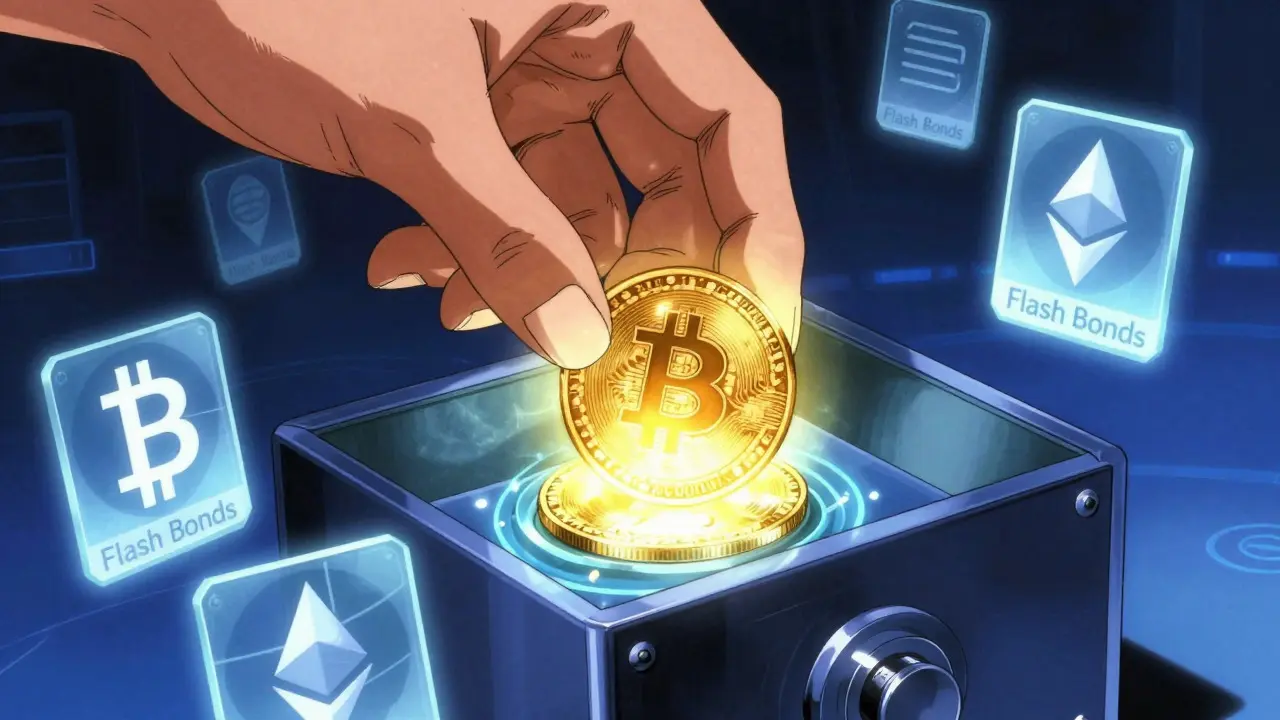
The twist is that ApeBond isn't just about buying unknown startup tokens. It also offers "Flash Bonds," which give users discounted access to established giants like Bitcoin (BTC), Ethereum (ETH), and BNB. This feature aims to attract users who want exposure to blue-chip assets but at a slight discount, incentivizing them to participate in the ecosystem.
To make all this happen across different blockchains, ApeBond integrates with LiFi, a popular multichain DEX aggregator. This means you don't have to manually bridge your assets from Ethereum to Polygon or BNB Chain yourself. The platform handles the cross-chain swaps automatically, making the experience smoother than dealing with multiple wallets and bridges separately.
The Role of the ABOND Token
You can’t really use the ApeBond platform without holding its native token, ABOND. It follows the BEP-20 standard, meaning it was originally launched on the BNB Chain on October 9, 2023. However, it has since expanded to support networks like Polygon, Ethereum, Base, and Lynex.
ABOND is not designed to be a passive investment you just hold in a wallet. Its primary function revolves around a mechanism called "True Yield." Here is how it works:
- Locking Tokens: To unlock benefits, you must lock your ABOND tokens in the protocol for a set duration.
- Earning Ape Points: Based on how many tokens you lock and for how long, you earn Ape Points.
- Tier System: These points determine your "Ape Tier." Higher tiers grant access to exclusive bond offerings, better discounts on Flash Bonds, and priority in future token sales.
This structure is intentional. By forcing users to lock their tokens, the developers aim to reduce selling pressure and encourage long-term commitment. If everyone could just buy ABOND, trade it immediately, and leave, the ecosystem would struggle with volatility. Instead, the protocol ties utility directly to time-locked ownership.
Tokenomics and Supply Details
When looking at any crypto asset, understanding the supply dynamics is crucial. With ABOND, things get a bit complicated because different data sources report conflicting numbers. As of mid-2026, here is what we know:
| Metric | CoinMarketCap / CoinDesk Data | CoinGecko Data | CoinCarp Data |
|---|---|---|---|
| Circulating Supply | ~440 Million | 380 Million | N/A |
| Total Supply | ~455 Million | N/A | 650 Million Max |
| Max Supply Cap | Infinite (Uncapped) | N/A | 650 Million |
| Contract Standard | BEP-20 (BNB Chain) | BEP-20 (BNB Chain) | BEP-20 (BNB Chain) |
The discrepancy in maximum supply figures is worth noting. Some sources list the max supply as uncapped (infinite), while others cite a hard cap of 650 million. This ambiguity suggests that either the contract parameters changed, or there is a lack of transparency in how the total potential issuance is managed. For investors, an uncapped supply can mean inflationary pressure if the team decides to mint more tokens later. Always check the latest contract details on a block explorer before committing significant funds.
Price Performance and Market Reality
Let’s talk about the elephant in the room: the price. ABOND is currently a micro-cap asset. In July 2026, prices hovered around $0.00045 to $0.00048 USD. While sub-cent prices often look attractive to retail traders hoping for a "100x" gain, they also indicate low market depth.
Look at the trading volume. On days when CoinGecko reported daily volumes of under $300, moving even a few thousand dollars worth of ABOND could cause massive slippage. Slippage is the difference between the expected price of a trade and the price at which the trade is executed. In thin markets, high slippage eats into your profits-or turns a profit into a loss.
Historically, the token has seen wild swings. Back in late 2025, quotes showed values closer to €0.00149, which is significantly higher than mid-2026 levels. This volatility is typical for small-cap DeFi tokens that rely heavily on community sentiment rather than institutional backing. There are no major centralized exchange listings driving consistent liquidity; most trading happens on decentralized venues like Thena Fusion.
Risks You Should Know Before Buying
Entering the world of niche DeFi protocols comes with specific risks that go beyond normal market fluctuations. Here are the main concerns with ApeBond right now:
- Liquidity Risk: With daily volumes sometimes dipping below $100 on primary pairs, getting out of a large position quickly without crashing the price is difficult.
- Smart Contract Risk: While the platform uses audited-looking infrastructure via LiFi, independent security audits of the core ApeBond bonding contracts are not prominently displayed in public marketing materials. Always verify audit reports yourself.
- Token Dilution: The conflicting data regarding the max supply raises questions about future inflation. If the team mints more tokens to fund development or rewards, existing holders get diluted.
- Complexity Barrier: Understanding lock durations, tier calculations, and cross-chain gas fees requires a solid grasp of DeFi mechanics. New users might accidentally lock tokens for longer than intended or pay excessive network fees.
Furthermore, the project lacks named institutional partnerships or clear corporate registration details found in more mature financial products. It is largely community-driven and maintained by the anonymous or semi-anonymous ApeSwap Finance team. This decentralization is a feature for some, but a red flag for others seeking accountability.

Who Is ApeBond For?
ApeBond isn't for everyone. If you are looking for a safe, steady store of value, stick to Bitcoin or stablecoins. However, if you fit one of these profiles, ABOND might interest you:
- Early-Stage DeFi Enthusiasts: You enjoy experimenting with new mechanisms like bonding curves and yield locking.
- Project Founders: You run a crypto startup and need a transparent, non-custodial way to raise initial capital using your own token.
- Yield Farmers: You are willing to lock up assets for months to chase higher APYs and tier-based rewards, accepting the risk of impermanent loss or protocol failure.
For the average investor who just wants to buy and forget, the complexity of managing locks and tracking tier statuses might be too much hassle for the potential reward. The platform demands active participation.
Final Thoughts on ABOND
ApeBond represents an interesting experiment in sustainable DeFi fundraising. By combining OTC bonding markets with discounted access to major assets, it attempts to create a self-sustaining ecosystem. The integration of LiFi makes it technically impressive, allowing seamless movement across BNB Chain, Ethereum, and Polygon.
However, the current market metrics tell a story of a niche product with limited adoption. The low market cap and erratic supply data mean you should treat ABOND as a high-risk speculative asset. Do your own research, start with small amounts, and never invest money you can’t afford to lose. The crypto space moves fast, and today’s innovative protocol could be tomorrow’s forgotten relic if it fails to grow its user base.
Is ApeBond (ABOND) a scam?
There is no definitive evidence labeling ApeBond as a scam. It is an active DeFi protocol with functioning smart contracts, listed on major trackers like CoinMarketCap and CoinGecko. However, like many small-cap DeFi projects, it carries high risk due to low liquidity, anonymous teams, and complex tokenomics. Always verify contract addresses and read documentation carefully before investing.
Which blockchain is ABOND built on?
ABOND was originally launched on the BNB Chain using the BEP-20 token standard. However, the ApeBond protocol is multi-chain, supporting transactions and swaps on Ethereum, Polygon, Base, and Lynex through its integration with the LiFi aggregator.
What is the purpose of locking ABOND tokens?
Locking ABOND tokens via the "True Yield" feature is mandatory to unlock the protocol's utilities. Locking generates Ape Points, which determine your Ape Tier. Higher tiers provide access to exclusive bond offers, discounts on Flash Bonds (for BTC, ETH, etc.), and priority in new token sales. It incentivizes long-term holding over short-term trading.
Can I buy ABOND on Binance or Coinbase?
As of mid-2026, ABOND is primarily traded on decentralized exchanges (DEXs) like Thena Fusion. It is not listed on major centralized exchanges such as Binance or Coinbase. Users typically need to connect a Web3 wallet (like MetaMask or Trust Wallet) to the ApeBond interface to swap for ABOND.
What are Flash Bonds in ApeBond?
Flash Bonds are short-duration investment opportunities within the ApeBond protocol that allow users to purchase major assets like Bitcoin, Ethereum, or BNB at a discounted rate. Access to these bonds is often gated by your Ape Tier, which is determined by how much ABOND you have locked in the system.
Why do different sites show different ABOND prices?
Price discrepancies occur because ABOND has low liquidity and trades on various decentralized exchanges. Different aggregators (CoinGecko, CoinMarketCap) pull data from different pools and update at different times. Additionally, regional pages may convert prices to local currencies (BRL, EUR), adding further variance.