Margin Trading Risks and Rewards in Blockchain Markets
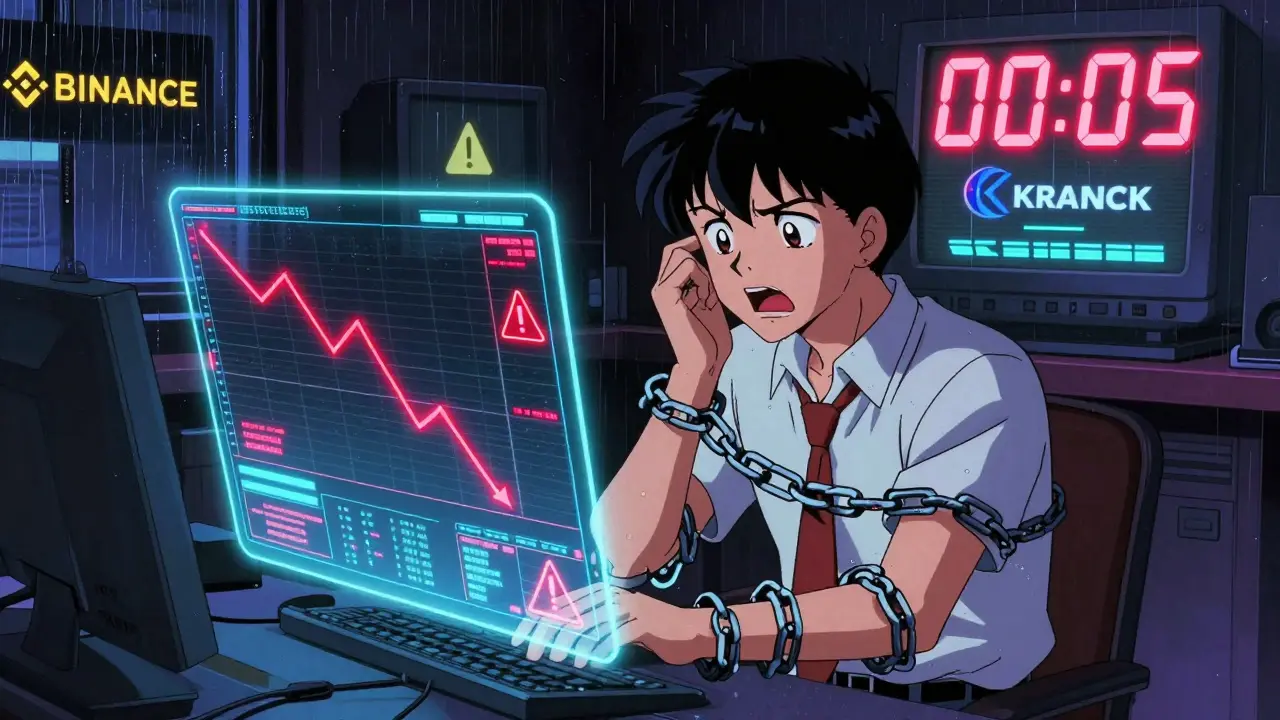
When you trade Bitcoin or Ethereum on margin, you’re not just betting on price movements-you’re borrowing money to bet bigger. It sounds like a shortcut to big profits. And sometimes, it is. But it’s also one of the fastest ways to lose more than you put in. In 2025, with crypto markets swinging 20% in a single day and exchanges like Binance, Kraken, and Bybit offering up to 100x leverage, margin trading isn’t just for professionals anymore. It’s everywhere. And that’s dangerous.
How Margin Trading Actually Works in Crypto
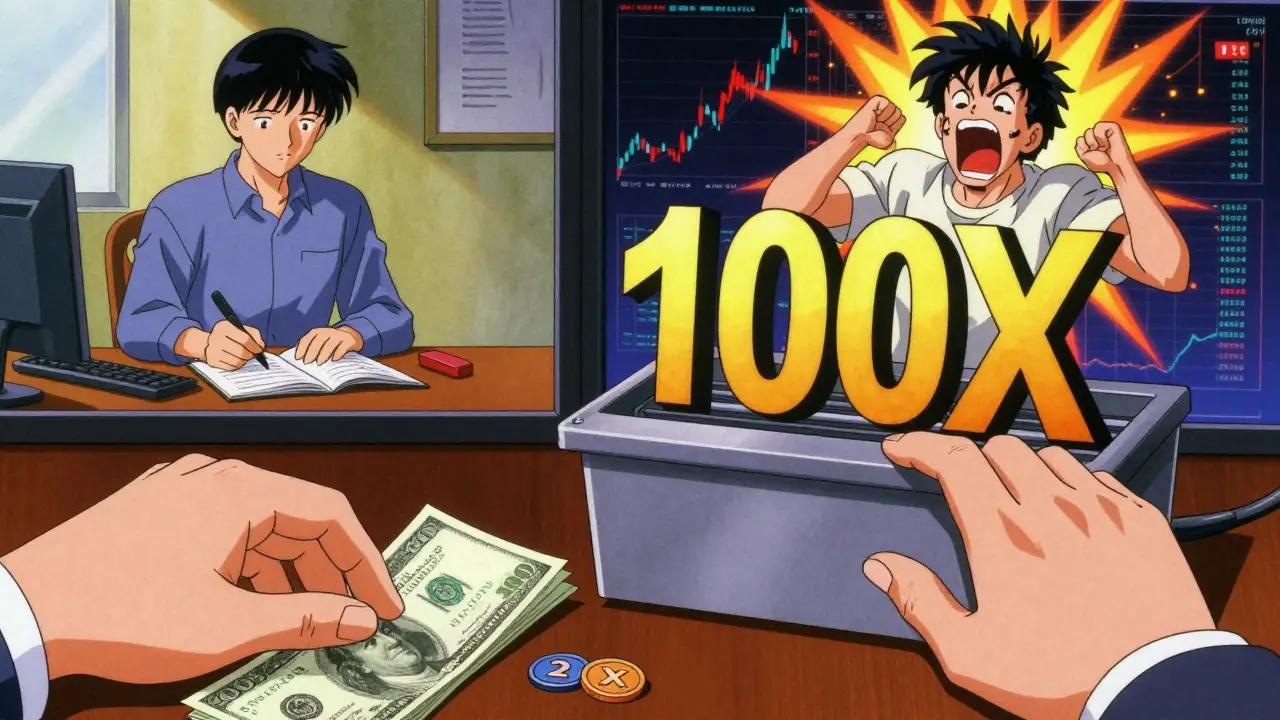
Margin trading lets you borrow funds from a crypto exchange to open a position larger than your account balance. If you have $1,000 and use 10x leverage, you control $10,000 worth of crypto. If Bitcoin goes up 5%, your $1,000 turns into $1,500. That’s a 50% return on your own money. Sounds amazing, right?
But if Bitcoin drops 5%, you lose $500-half your account. At 10x leverage, a 10% move against you wipes you out. At 25x, it’s just a 4% drop. At 100x? A 1% drop and you’re gone.
Exchanges don’t just give you cash. They lend you crypto or stablecoins, and you pay interest daily-sometimes as high as 0.1% per day. That adds up fast. If you hold a $5,000 position for a month at 0.05% daily interest, you pay $75 just in fees. And unlike a bank loan, there’s no fixed repayment date. The debt keeps growing until you close the trade or get liquidated.
The Big Risk: Liquidation and Margin Calls
Every exchange has a maintenance margin-the minimum equity you must keep in your account. For most crypto platforms, it’s around 5-10%. If your account drops below that, you get a margin call. The exchange asks you to deposit more funds. If you don’t, they automatically sell your assets to cover the loan.
Here’s the scary part: liquidation isn’t gentle. It happens in seconds. During the 2022 Terra collapse or the FTX crash, thousands of traders lost everything in under 60 seconds because prices crashed faster than the system could react. There’s no warning. No time to react. Just a red screen and a zero balance.
And unlike stocks, crypto markets don’t have circuit breakers. A coin can drop 30% in 30 seconds. A trader with 50x leverage on Solana in November 2024 lost $280,000 in 12 seconds after a single tweet from a major influencer. That’s not rare. It’s normal.
The Rewards: Speed, Leverage, and Flexibility
Yes, margin trading can make you rich. In 2023, a trader in Wellington used $5,000 to open a 20x long on Bitcoin before the ETF approval rally. When BTC jumped from $28,000 to $45,000 in 11 days, his $5,000 turned into $170,000. He cashed out, paid his $1,200 in interest, and walked away with $168,000 profit.
That’s the dream. And it happens. But it’s not luck-it’s preparation. He didn’t just pick a coin. He studied on-chain data, watched institutional accumulation, and set his stop-loss at 12% below entry. He knew the interest cost and planned his exit before entering. He treated margin like a scalpel, not a sledgehammer.
Another advantage? Liquidity. In traditional markets, you wait three days for a trade to settle. In crypto, you can borrow, trade, and withdraw within minutes. That lets you jump on news-like a major partnership, regulatory shift, or whale movement-before retail traders even hear about it.

Who Should Even Be Doing This?
Margin trading isn’t for beginners. It’s not for retirees. It’s not for people who think “I’ll just hold until it goes back up.”
It’s for people who:
- Understand how leverage multiplies both gains and losses
- Track their position size, not just their profit
- Have a cash buffer to cover margin calls without selling other assets
- Know the exact liquidation price of every trade before they open it
- Pay interest weekly, not monthly, to avoid compounding debt
Most people who lose big on margin don’t lose because the market moved. They lose because they didn’t know their own risk limits. One trader on Reddit admitted he opened a 50x position on Dogecoin because “it was going up.” He lost $12,000 in three hours. He didn’t even know what maintenance margin meant.
How to Trade Margin Without Getting Wiped Out
If you’re still considering it, here’s how to survive:
- Start small. Use 2x or 3x leverage. Not 10x. Not 25x. You’re learning, not gambling.
- Never risk more than 5% of your total portfolio on one trade. If you have $20,000, max $1,000 on a single margin position.
- Set a personal stop-loss 15-20% below your entry. Even if the exchange’s liquidation is at 8%, set your own exit higher. Markets move fast. Don’t rely on the platform to save you.
- Keep 20-30% of your account in stablecoins. This is your emergency fund. If the market drops, you can add funds without selling your crypto at a loss.
- Track interest daily. Use a spreadsheet or app. If your interest cost is 0.08% per day, and you’re holding a $10,000 position for a week, you’re paying $56. That’s a cost you must overcome just to break even.
And never, ever use margin to average down on a losing position. That’s how people end up owing brokers $50,000 after starting with $5,000.
Margin vs. Other Crypto Strategies
Compare margin to other approaches:
| Method | Leverage | Max Loss | Complexity | Best For |
|---|---|---|---|---|
| Cash Buying | 1x | 100% of capital | Low | Long-term holders |
| Margin Trading | 2x-100x | Unlimited (can owe money) | High | Experienced traders |
| Options (Put/Call) | Variable | Premium paid only | Medium | Hedgers, speculators |
| Futures (Perpetual) | Up to 125x | 100% of collateral | High | Day traders |
Options limit your loss to the premium you pay. Margin doesn’t. That’s the biggest difference. With margin, you can lose more than you deposited. With options, you can’t.
What Happens When the Market Crashes?
In 2022, over $10 billion in crypto positions were liquidated in a single week during the Terra-LUNA collapse. In 2024, when the U.S. SEC delayed Bitcoin ETF decisions, $2.3 billion in margin positions vanished in 48 hours.
These aren’t anomalies. They’re predictable. Margin trading thrives in calm markets and dies in panic. When fear spreads, exchanges freeze withdrawals. Liquidity dries up. And the system starts auto-selling your assets-often at prices nobody wants to buy at.
If you’re holding a long position on Solana with 30x leverage and the whole crypto market drops 20%, you don’t get a phone call. You don’t get a chance to respond. The system just closes you out. And if the price keeps falling after your position is liquidated, you still owe the exchange money. Some traders have been forced to take second jobs to pay back their margin debt.
Final Reality Check
Margin trading isn’t a get-rich-quick scheme. It’s a high-stakes game played with borrowed money. The rewards are real. But so are the consequences.
Most people who try it lose. Not because they’re unlucky. Because they underestimate the speed of crypto, the cost of interest, and the finality of liquidation.
If you’re serious about trying it, start with 2x leverage. Trade with $500, not $5,000. Learn how the math works before you risk real money. Keep a journal. Track every trade-why you entered, what your stop was, what happened, and why.
And remember: the goal isn’t to win big. The goal is to survive long enough to win again.
Can you lose more than you invest in crypto margin trading?
Yes. Unlike buying crypto with cash, margin trading lets you borrow funds. If your position liquidates and the market keeps falling, you can owe the exchange money. Some traders have ended up owing tens of thousands of dollars after their positions were closed automatically. This is rare but possible-especially with high leverage (50x+) and during flash crashes.
What’s the minimum amount to start margin trading?
Most exchanges require at least $100-$500 to open a margin account. But the real minimum is what you can afford to lose. Starting with $500 and 2x leverage is smarter than starting with $5,000 and 25x. Many beginners lose everything quickly because they over-leverage. Focus on learning, not size.
How do I avoid a margin call?
Keep extra stablecoins in your account-20-30% of your total balance. Set your own stop-loss well above the exchange’s liquidation level. Don’t trade on emotional news. And never use all your funds in one position. If you’re using 10x leverage, your position should be no more than 5% of your total portfolio.
Is margin trading legal in New Zealand?
Yes. Margin trading is legal in New Zealand, but not regulated like traditional brokers. Crypto exchanges operating here aren’t required to follow the same rules as banks. That means fewer protections. Always read the exchange’s terms. Use platforms with strong track records and transparent liquidation policies.
Do I pay taxes on margin trading profits?
Yes. In New Zealand, profits from crypto trading-including margin trades-are taxable as income if you’re trading regularly. If you’re holding for long-term investment, it may be treated differently. Keep detailed records of every trade: entry price, exit price, leverage used, interest paid, and profit/loss. The IRD requires this for audits.
What’s the difference between margin and futures trading?
Margin trading lets you buy or sell crypto using borrowed funds directly. Futures are contracts that bet on future prices without owning the asset. Both use leverage, but futures often have higher leverage (up to 125x) and are settled differently. Futures contracts can expire; margin positions can stay open indefinitely. Futures are more common for day trading; margin is used for both swing and day trading.
Which exchanges offer the lowest margin interest rates?
Binance, Kraken, and Bybit typically offer the lowest rates, often between 0.01% and 0.05% daily for stablecoin loans. Rates vary by coin and demand. Always check the current rate before opening a position. Some exchanges offer lower rates for users who hold their native tokens (like BNB or OKB). But don’t chase low rates-focus on risk control.
Next Steps: Are You Ready?
If you’re thinking about trying margin trading, ask yourself:
- Do I understand how liquidation works?
- Can I afford to lose this money?
- Do I have a plan for when the market turns?
- Have I practiced on a demo account first?
If you answered no to any of these, wait. There’s no prize for being the first to trade on margin. The real winners are the ones who stay in the game long enough to learn, adapt, and survive.





Comments
Mandy McDonald Hodge
January 3, 2026 AT 10:00OMG this is so real 😭 I lost $3k in 20 mins on 50x DOGE... I thought it was gonna moon. I didn't even know what maintenance margin meant. Lesson learned the hard way. Never again. 🙏
Jordan Fowles
January 4, 2026 AT 18:16The real danger isn't leverage. It's the illusion of control. You think you've got a plan-stop-loss, position sizing, interest tracking-but markets don't care about your spreadsheets. They move on fear, tweets, and liquidity voids. Margin trading doesn't amplify skill. It amplifies arrogance.
Steve Williams
January 6, 2026 AT 16:40I must respectfully observe that the risks outlined in this post are not merely theoretical but deeply existential for inexperienced participants. The financial systems governing crypto margin are not designed for retail protection but for capital efficiency. One must approach with utmost humility and discipline.
Alexandra Wright
January 7, 2026 AT 09:53Oh honey. You think you're a trader? You're a casino dealer's best friend. 100x leverage isn't trading-it's voluntary bankruptcy with extra steps. And don't even get me started on people who 'hold until it goes back up' with 25x on SHIB. You're not investing. You're donating to the exchange's yacht fund.
Jack and Christine Smith
January 8, 2026 AT 23:41so i tried margin like once... like 10x on btc... thought i was so smart... then the market dipped 8% and boom. gone. i cried. my cat judged me. now i just buy and hold. no stress. no debt. just vibes. 🌈✨
Jackson Storm
January 9, 2026 AT 14:17I'm new to this but I've been reading up. So if I start with $500 and 2x, and I set a stop at 15% below, and keep 30% in usdc... that's the right move? I just wanna survive long enough to learn. Anyone got a good demo platform to practice on?
Raja Oleholeh
January 11, 2026 AT 03:01USA traders always complain. In India we trade 200x on altcoins. If you lose, you work harder. If you win, you buy a bike. No tears. No excuses. 💪🇮🇳
Prateek Chitransh
January 11, 2026 AT 23:35Ah yes, the classic 'I'm not gambling, I'm trading' delusion. You're not a trader-you're a volatility tourist. The only thing you're mastering is how to lose money faster than your friends. Congrats.
Michelle Slayden
January 12, 2026 AT 17:51The psychological architecture of margin trading is fundamentally incompatible with human cognitive biases. The very structure incentivizes overconfidence, confirmation bias, and loss aversion. It is not a financial instrument; it is a behavioral trap disguised as opportunity.
christopher charles
January 12, 2026 AT 18:57I’ve been doing this for 3 years... and I still get nervous every time I hit 'confirm'. That’s the sign you’re doing it right. If you’re not shaking, you’re either lying to yourself-or already broke. 🤞
Vernon Hughes
January 13, 2026 AT 08:28Margin trading is like driving a Ferrari with no brakes while blindfolded and texting. The speed is thrilling until you hit the tree. Then you owe the tree.
Alison Hall
January 13, 2026 AT 23:59Start small. Track everything. Sleep before you trade. You’ll thank yourself later. 💕
Amy Garrett
January 15, 2026 AT 01:59i did 50x on solana and lost my rent money 😭 i thought it was gonna go to 500 but it went to 50... then i cried for 3 days... now i just buy btc and chill
Haritha Kusal
January 15, 2026 AT 09:25i started with 2x and now i make 5% a week... not rich but not broke too 😊 its slow but i sleep well at night
Mike Reynolds
January 15, 2026 AT 15:50I used to think I was smart until I got liquidated during the FTX crash. Didn’t even get a warning. Just... gone. Now I only trade with money I can afford to lose. And I don’t touch leverage over 3x. Peace of mind > profit.
dayna prest
January 15, 2026 AT 22:54Margin trading is the financial equivalent of eating a whole pizza in one sitting while standing on a cliff. Delicious in the moment. Horrifying in the aftermath. And you still have to pay for the plate.
Brooklyn Servin
January 16, 2026 AT 01:59I've seen too many people lose everything. I work with crypto beginners every day. Here's what I tell them: if you don't understand how interest compounds daily, if you don't know your liquidation price by heart, if you're excited about 100x-walk away. You're not ready. And that's okay. You'll still be richer than the ones who thought they were geniuses.
Phil McGinnis
January 17, 2026 AT 22:08This post is a classic example of Western financial fearmongering. In emerging markets, we don't have the luxury of waiting. We take risk. We leverage. We adapt. Your soft economy needs a spine. Margin isn't dangerous-it's necessary for growth.
Ian Koerich Maciel
January 19, 2026 AT 15:48I’ve been through three bear markets. I’ve seen friends cry over liquidations. I’ve seen people take loans from family to cover margin debt. And I’ve seen one man, who started with $200, turn it into $40,000 using 3x leverage and discipline. He didn’t chase hype. He tracked volume. He watched order books. He waited. He didn’t win because he was lucky. He won because he was patient. And that’s the real secret.