How Bitcoin Mining Works: A Simple Guide to Proof of Work
Imagine a global lottery where the ticket is a massive amount of electricity and the prize is brand new digital gold. That is essentially what is happening every second inside the Bitcoin network. But why does the network need this expensive, energy-hungry process? It is not just about creating new coins; it is about trust. In a world without banks, Proof of Work is the consensus mechanism that allows thousands of strangers to agree on who owns which bitcoin without needing a middleman.
The Big Picture: Why Mine at All?
At its heart, Bitcoin is just a ledger-a giant list of transactions. If you and I both have a copy of that list, how do we make sure neither of us is cheating? We can't just let anyone add a new page (a block) to the ledger, or people would write in fake transactions to give themselves more money. This is where Mining comes in. Mining is the process of auditing the network and securing the ledger. By requiring miners to spend real-world resources (electricity and hardware), the network ensures that cheating is prohibitively expensive.
The Secret Sauce: SHA-256 and the Cryptographic Puzzle
The engine driving this whole process is SHA-256, a cryptographic hashing algorithm that turns any input of data into a unique 64-character string of letters and numbers. Think of a hash like a digital fingerprint. If you change even one comma in a thousand-page document, the SHA-256 hash will change completely.
Miners aren't actually "solving" a math problem in the way we did in school. They are playing a guessing game. The network sets a "target hash"-a specific number. The miner's job is to take the data from the current block (including the transactions and a timestamp) and add a random number called a Nonce. They hash the whole package. If the resulting hash is lower than the target, they win. If not, they change the nonce and try again. They do this trillions of times per second until someone hits the jackpot.
| Component | What it is | Role in Proof of Work |
|---|---|---|
| SHA-256 | Hashing Algorithm | Creates the unique digital fingerprint of a block. |
| Nonce | Random Number | The variable miners change to find a valid hash. |
| Target Hash | Network Threshold | The "goal post" that determines how hard the puzzle is. |
| Mempool | Waiting Area | Where unconfirmed transactions sit before being picked. |
Step-by-Step: The Life of a Bitcoin Transaction
How does a payment actually move from your wallet into a permanent block? It follows a very specific path:
- Broadcasting: You send 0.1 BTC to a friend. This transaction is broadcast to a network of nodes.
- The Mempool: The transaction lands in the Mempool (memory pool). This is essentially a digital waiting room for unconfirmed transactions.
- Block Assembly: A miner picks a group of transactions from the mempool and bundles them into a candidate block. They usually pick the ones offering the highest fees first.
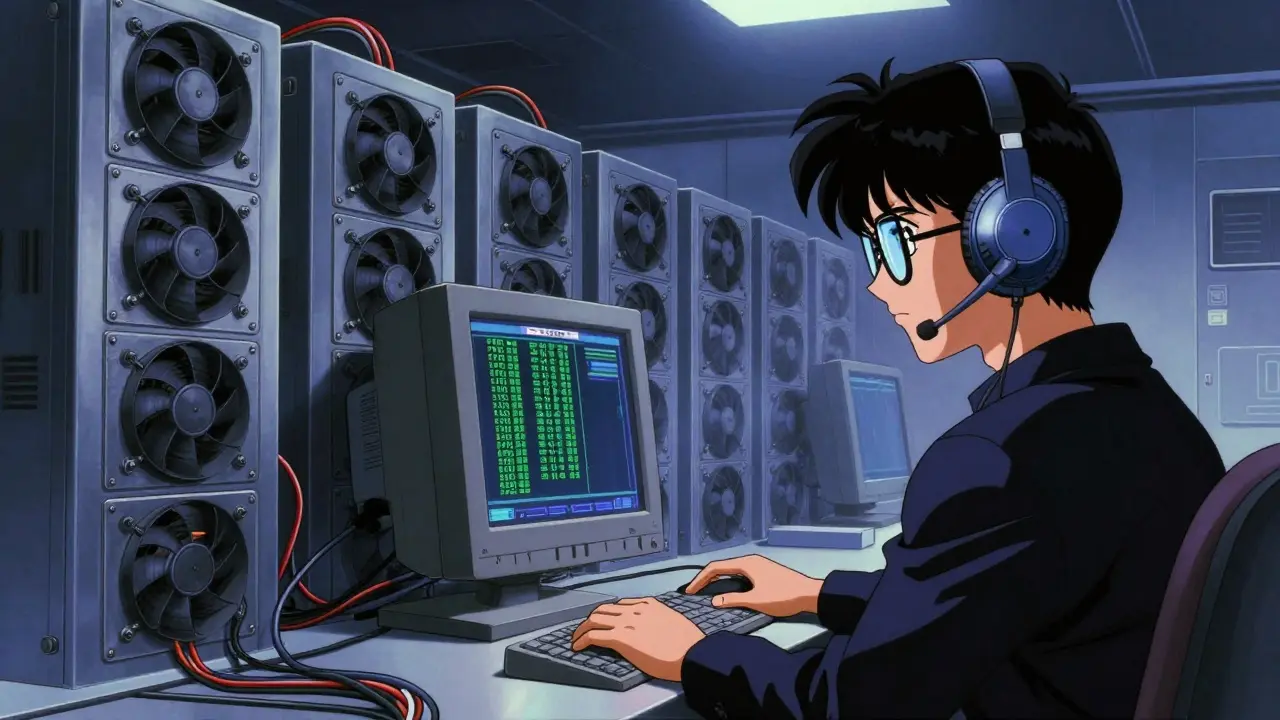
- The Race: Miners worldwide start guessing nonces. This is the energy-intensive part where ASIC (Application-Specific Integrated Circuit) hardware works at full throttle.
- Verification: The first miner to find a hash below the target broadcasts the block. Other nodes can instantly verify the solution is correct (verifying the work is easy, even though doing the work is hard).
- The Reward: The winning miner receives the block reward and the transaction fees, and the block is added to the chain.
The Difficulty Adjustment: Keeping the Clock Steady
What happens if a thousand new powerful miners join the network tomorrow? If the puzzle stayed the same, blocks would be found every 2 minutes instead of 10, and Bitcoin would be issued too quickly. To prevent this, Bitcoin has a built-in "thermostat" called the difficulty adjustment.
Every 2,016 blocks (which takes roughly two weeks), the network looks at how long it took to mine those blocks. If they were found too fast, the network lowers the target hash, making the puzzle harder. If they were too slow, the target is raised. This ensures that no matter how much computing power is thrown at the network, the average time between blocks remains about 10 minutes.
Hardware Evolution: From PCs to ASIC Farms
In 2009, you could mine Bitcoin using a standard home computer's CPU. But as the competition grew, miners moved to GPUs (Graphics Processing Units) because they could handle more guesses per second. Today, mining is dominated by ASICs-chips designed for one purpose and one purpose only: calculating SHA-256 hashes.
Because the hardware is so specialized, most individuals now join Mining Pools. Instead of trying to win the whole jackpot alone (which is nearly impossible for a single machine), miners combine their power and split the rewards based on how much work they contributed. This turns a volatile gamble into a more steady stream of income.
The Trade-off: Security vs. Energy
You'll often hear critics talk about the massive amount of electricity Bitcoin uses. While the energy footprint is real, it is the direct price of security. Because the cost of attacking the network (a "51% attack") requires controlling more computing power than the rest of the world combined, it is practically impossible. This makes Bitcoin the most secure decentralized network in existence.
Unlike Proof of Stake (used by Ethereum), where validators are chosen based on how many coins they own, Proof of Work requires a physical sacrifice of energy. This creates a "bottom-up" security model where the network is protected by the laws of physics and economics rather than just financial stakes.
Is it still possible to mine Bitcoin at home?
Technically, yes, but it is rarely profitable. Because the network difficulty is so high, you need specialized ASIC hardware. If your electricity costs are higher than the value of the Bitcoin you mine, you will lose money every month. Most home miners now use mining pools to get a share of the rewards.
What happens when all Bitcoins are mined?
Once the total supply of 21 million coins is reached, miners will no longer receive newly minted bitcoins (the block reward). Instead, they will be compensated entirely by the transaction fees paid by users. This shifts the incentive from creating new supply to simply securing the network.
Why is SHA-256 used instead of other algorithms?
SHA-256 provides a great balance of speed and security. It is "collision-resistant," meaning it is nearly impossible for two different inputs to produce the same hash. This ensures that the blockchain cannot be tampered with without changing every subsequent block.
How often does the mining difficulty change?
The difficulty adjusts every 2,016 blocks. Since each block takes about 10 minutes, this happens roughly every two weeks. This mechanism prevents the Bitcoin supply from being released too quickly if more miners join the network.
What is a 51% attack?
A 51% attack happens if a single entity controls more than half of the network's total mining power. They could potentially stop new transactions from being confirmed or "double-spend" their own coins. However, on the Bitcoin network, the cost of acquiring that much hardware and electricity is so astronomical that it is not a realistic threat.