Crypto Taxation in Russia 2026: Rules, Rates & Restrictions Under Law 418-FZ

The landscape for cryptocurrency in Russia changed dramatically on January 1, 2025. If you hold Bitcoin or trade Ethereum from Moscow, St. Petersburg, or anywhere else in the Russian Federation, you are no longer operating in a legal gray area. You are now subject to strict federal rules under Federal Law No. 418-FZ, which defines how your digital assets are taxed and reported.
This isn't just about paying a small fee. The new framework treats crypto as property, imposes specific income tax rates, bans mining in certain regions, and demands rigorous quarterly reporting. Get it wrong, and you face fines up to 40,000 rubles plus penalties of 15-40% on unpaid taxes. This guide breaks down exactly what you need to do to stay compliant in 2026.
How Crypto Income Is Taxed for Individuals
For most people, the biggest change is that cryptocurrency gains are now explicitly part of your personal income tax (PIT) calculation. Previously, there was ambiguity about whether profits from selling BTC counted as income. That confusion is gone. Article 210, Clause 2.1 of the Tax Code now consolidates crypto income with securities transactions into a single tax base.
You pay tax based on your total annual income from these sources:
- Up to 2.4 million rubles: You pay a flat 13% rate.
- Above 2.4 million rubles: The amount exceeding this threshold is taxed at 15%.
Let's say you made 3 million rubles profit from crypto trades in 2025. You don't pay 15% on the whole amount. You pay 13% on the first 2.4 million (312,000 rubles) and 15% only on the remaining 600,000 (90,000 rubles). Your total tax bill would be 402,000 rubles.
If you are a non-resident of Russia, the rules are harsher. You face a flat 30% tax rate on all cryptocurrency income, regardless of the amount. There is no progressive scale for non-residents.
Corporate Mining and Business Operations
Running a mining farm or a crypto business in Russia comes with heavier burdens. Companies cannot use simplified tax regimes like USN (Simplified Taxation System) or AUSN (Automated Simplified Taxation System). You must operate under the general taxation system (OSNO).
Here is the catch: mining operations and cryptocurrency sales by corporations are subject to a 25% profit tax. This is significantly higher than the standard 20% corporate profit tax rate. Experts from the Higher School of Economics noted that this 5-percentage-point hike pushes mining costs up, potentially driving some operations underground or out of the country entirely.
Additionally, businesses must calculate their tax base using market quotations from foreign trading organizers. These exchanges must meet strict criteria: daily trading volumes over 100 billion rubles and three years of publicly available data. This makes valuation complex, especially when domestic regulated exchanges are scarce.
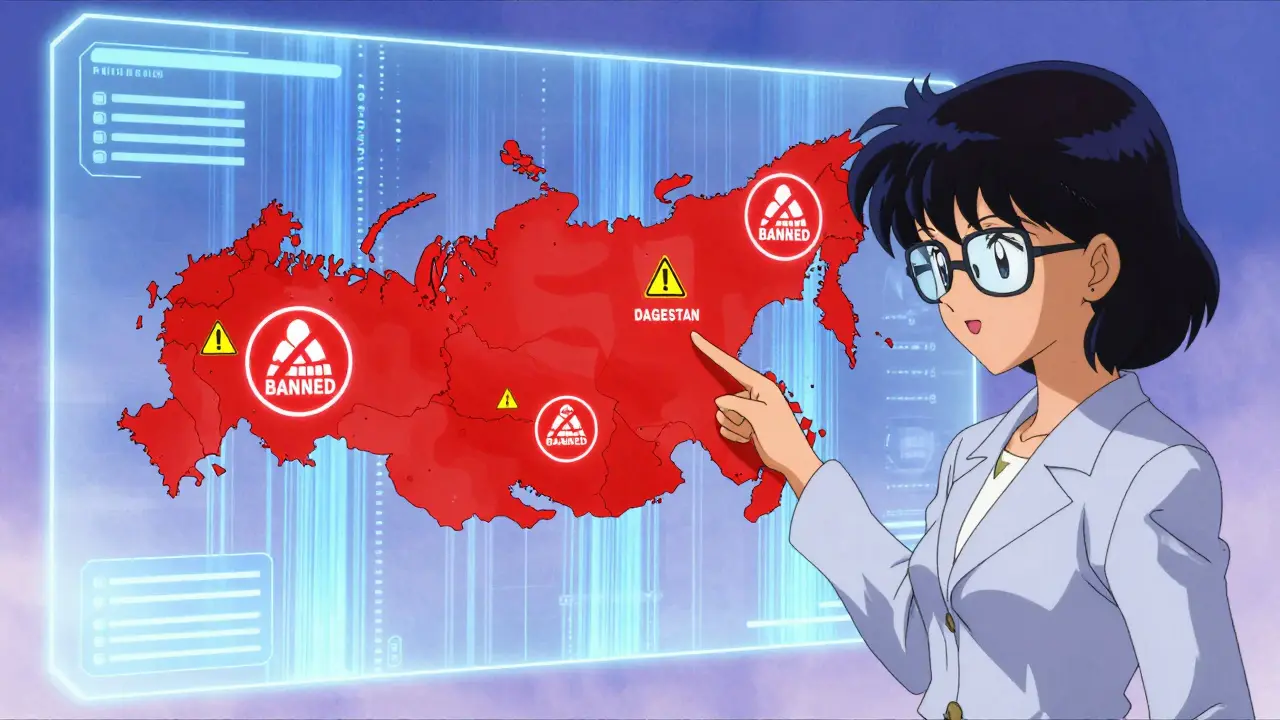
Mining Restrictions and Regional Bans
Taxation isn't the only hurdle. Where you live determines if you can mine at all. The government has placed significant restrictions on energy-intensive activities to protect regional power grids.
| Region | Status | Details |
|---|---|---|
| Dagestan | Banned | Complete prohibition until 2031 |
| Chechnya | Banned | Complete prohibition until 2031 |
| DPR / LPR Territories | Banned | Complete prohibition until 2031 |
| Irkutsk Oblast | Restricted | Seasonal bans during energy deficit periods |
| Buryatia | Restricted | Seasonal bans during energy deficit periods |
| Zabaykalsky Krai | Restricted | Seasonal bans during energy deficit periods |
If you own mining hardware in Dagestan or Chechnya, you must shut it down. In Irkutsk, Buryatia, and Zabaykalsky Krai, you might face sudden shutdowns during winter months when electricity demand peaks. The Central Bank reported a 22% decline in domestic mining operations in early 2025 due to these seasonal constraints.

Reporting Requirements and Penalties
The Federal Tax Service (FTS) wants visibility into every transaction. You are required to file quarterly reports detailing your digital asset holdings and movements. This includes wallet addresses, transaction IDs, and the exchange rates used at the time of each transaction.
You must keep detailed records. A survey by accounting firm Acsour found that 89% of firms needed specialized training to handle these calculations correctly. The complexity lies in verifying foreign exchange quotations since Russia lacks a large domestic regulated exchange ecosystem.
Failure to comply carries steep costs:
- Late or missing quarterly reports: Fines up to 40,000 rubles per violation.
- Unpaid taxes: Penalties of 15-40% of the unpaid amount, plus accrued interest.
There is also a reporting threshold nuance. While individual income tax applies to all gains, there is an annual reporting threshold of 600,000 rubles ($8,163) for certain disclosure obligations. However, experts warn that even if you fall below this threshold, you still owe income tax on your profits. Do not confuse reporting thresholds with tax liability exemptions.
No Holding Period Exemption
In many jurisdictions, holding an asset for more than three years exempts you from capital gains tax. Russia does not offer this benefit for cryptocurrency. Article 217, Paragraph 17.1 of the Tax Code specifically excludes crypto from the long-term ownership exemption applicable to other movable property.
This means if you bought Bitcoin in 2020 and sold it in 2025 for a massive profit, you still pay the 13% or 15% income tax on the gain. There is no "wait it out" strategy to avoid taxes here.
Practical Challenges for Users
Implementing these rules is harder than reading them. Users on RuTracker forums have complained about the sheer time investment required. One miner reported spending 37 hours calculating his January 2025 tax liabilities because he had to track prices across multiple foreign exchanges to find valid market quotations.
Another major pain point is the lack of expense deductions for miners. You cannot deduct electricity costs or hardware depreciation from your taxable income in the same way traditional businesses can. This effectively increases your tax burden beyond the stated percentage.
Despite these challenges, some users welcome the clarity. Before 2025, traders faced uncertainty about VAT applicability, which sometimes led to hidden 15-20% cost increases. Now, while the income tax is real, the VAT exemption provides stability for institutional players.
What Comes Next in 2026?
The regulatory framework is evolving. The State Duma is scheduled to debate amendments to Federal Law No. 418-FZ later in 2025, focusing on clarifying the reporting thresholds. Meanwhile, the Ministry of Finance projects crypto-related tax revenue to reach 28 billion rubles by 2027.
Keep an eye on the digital ruble pilot program, launching in October 2025. While distinct from private cryptocurrencies, its integration with welfare payments may influence how the state views and regulates broader digital asset usage. For now, the best strategy is meticulous record-keeping and professional tax advice tailored to the OSNO requirements.
Do I have to pay tax on crypto gifts in Russia?
Yes. Under Federal Law No. 418-FZ, cryptocurrency is treated as property. Receiving crypto as a gift from a non-relative is generally considered taxable income. You must declare this value and pay the applicable personal income tax (13% or 15%) based on your total annual income.
Can I deduct mining equipment costs from my taxes?
Currently, no. The legislation does not provide clear provisions for deducting operational expenses like electricity or hardware depreciation for individual miners. This is a major point of criticism among users, who argue it unfairly inflates the effective tax rate.
Is it legal to mine Bitcoin in Dagestan?
No. Mining operations are completely prohibited in Dagestan, Chechnya, and the DPR/LPR territories until at least 2031. Engaging in mining in these regions violates federal regulations and can result in confiscation of equipment and heavy fines.
What happens if I fail to file quarterly crypto reports?
You will face administrative fines of up to 40,000 rubles for each missed report. Additionally, if you owe taxes, you will be charged penalties of 15-40% on the unpaid amount plus interest. The Federal Tax Service actively monitors digital asset flows through blockchain analytics.
Does holding crypto for 3+ years exempt me from tax?
No. Unlike other movable property, cryptocurrency is explicitly excluded from the three-year ownership exemption under Article 217 of the Tax Code. You must pay income tax on gains regardless of how long you held the asset.