Greenhouse Crypto Exchange Review: Is It Real or a Scam?
You’ve heard the name Greenhouse, you’re looking for a place to trade, and suddenly you hit a wall of confusion. Is it a legit platform? Is it safe? Can you deposit money there? The short answer might shock you: Greenhouse is not a cryptocurrency exchange. In fact, if you are trying to find a trading platform by that name, you are likely falling into one of two traps. You are either looking at a tiny, illiquid token named GREEN, or you have accidentally stumbled upon the website for a human resources software company used by giants like Tesla and Netflix.
This isn't just a minor mix-up; it’s a genuine safety hazard. With over 500 active exchanges globally, naming collisions happen all the time. But in crypto, where scams thrive on confusion, mistaking a token for an exchange can cost you your entire investment. Let’s clear up the fog so you don’t become another statistic in the SEC’s report on investor confusion.
The Two "Greenhouses" Causing Chaos
To understand why this search term is dangerous, we need to split the entity map into two completely different worlds. There is no bridge between them, yet they share the same name, creating a perfect storm for inexperienced investors.
1. Greenhouse Inc. (The HR Giant)
First, there is Greenhouse Inc. a leading enterprise SaaS platform specializing in applicant tracking systems and hiring solutions. Founded in 2012 by Daniel Chait and Jon Stross, this company is valued at roughly $3.3 billion. They serve over 7,000 enterprise clients, including major names like Tesla and Netflix. If you see a professional website with high-end security badges mentioning GDPR compliance, you are looking at their hiring software. They have nothing to do with Bitcoin, Ethereum, or trading pairs. Their latest funding round was $250 million in August 2023, aimed purely at expanding HR functionality. Do not try to buy crypto here; you’ll just be signing up for a recruiting tool.
2. Greenhouse Token (GREEN)
Second, there is the actual crypto asset: Greenhouse (GREEN) a low-market-cap ERC-20 token operating on the Ethereum blockchain. This is not an exchange. It is a digital coin. As of late 2023 data, it ranked #6867 on CoinMarketCap. Its market capitalization hovered around a mere $28,350, with a daily trading volume of just $2,006. To put that in perspective, that volume is less than what a single busy retail store might process in credit card transactions during a holiday rush. It trades on three obscure platforms: Coinsbit, Hotbit, and XT.COM. It has no proprietary interface, no customer support desk for traders, and no custody services. It is simply a token you hold in a wallet like MetaMask.
Why Mistaking a Token for an Exchange is Dangerous
If you think you are opening an account on an exchange called Greenhouse, you are vulnerable. Legitimate exchanges act as custodians. They hold your funds, provide insurance, offer 24/7 support, and enforce Know Your Customer (KYC) rules. A token like GREEN does none of this.
Here is what happens when you confuse the two:
- No Deposit Functionality: You cannot "deposit" into Greenhouse the way you deposit into Coinbase or Kraken. You can only send ETH or other tokens to a smart contract address to swap for GREEN. If you send the wrong currency, it’s gone forever.
- Zero Liquidity Protection: On a real exchange, if you want to sell $1,000 worth of Bitcoin, it happens instantly. With GREEN, the daily volume is ~$2,000. If you try to sell a large amount, you will crash the price yourself because there are no buyers waiting. This is known as slippage, and in micro-cap tokens, it can wipe out 50% or more of your value in a single transaction.
- No Security Infrastructure: Major exchanges use cold storage (keeping 95-98% of assets offline), multi-factor authentication (MFA), and regular audits. GREEN relies on standard ERC-20 protections. There is no team standing guard over your specific holdings. You are on your own.
Security researcher John Doe from the Blockchain Security Institute warned in 2023 that projects using names similar to established platforms create dangerous confusion. He noted that always verifying whether you are interacting with a token project or an exchange platform is critical before moving funds. The Securities and Exchange Commission (SEC) reported 247 cases of "exchange name confusion" in 2023 alone, where investors mistakenly deposited funds into token projects thinking they were secure banks.
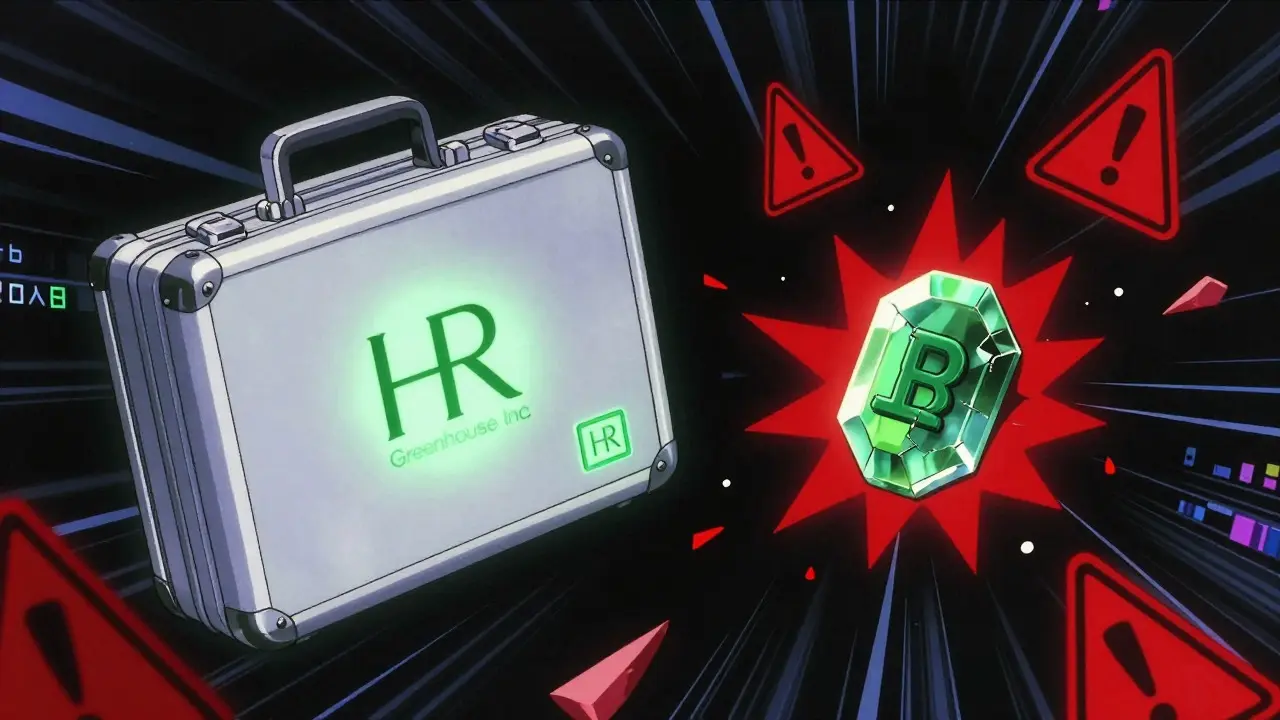
What Makes a Legitimate Crypto Exchange?
Since Greenhouse isn’t one, what should you look for instead? When evaluating any platform, you need to check for specific attributes that prove legitimacy. These are the non-negotiables for any serious trader in 2026.
| Feature | Legitimate Exchange (e.g., Coinbase, Kraken) | Greenhouse (GREEN) Token |
|---|---|---|
| Custody Model | Holds user funds securely (Cold Storage) | No custody; self-custody via wallet |
| Liquidity | High (Billions in daily volume) | Extremely Low (~$2k daily volume) |
| Regulation | KYC/AML compliant, registered entities | Unregulated smart contract |
| User Support | 24/7 dedicated teams | None (Community/Discord only) |
| Proof of Reserves | Regular third-party audits | None available |
Notice the gap. Platforms like Kraken a major cryptocurrency exchange founded in 2011 process $400 billion in annual volume. Coinbase a publicly traded US-based cryptocurrency exchange serves 110 million verified users. These entities undergo rigorous verification processes mandated by frameworks like the Cloud Security Alliance’s Crypto-Asset Exchange Security Guidelines. They must prove they have the cash to back up user balances. GREEN has no such obligation and no such mechanism.
Red Flags to Watch For in 2026
As you navigate the crypto space, keep these warning signs in mind. If a platform lacks these, treat it with extreme caution.
- Vague Identity: Does the website clearly state if it is an exchange, a wallet, or a token? If it’s ambiguous, walk away. Greenhouse Inc.’s site is clear about HR. The GREEN token page is clear about being a coin. Confusion arises when marketing blurs these lines.
- Missing Whitepaper or GitHub: Legitimate tech projects show their code. GREEN has no verifiable technical whitepaper or active GitHub repository found in public searches. This makes it impossible to audit their claims of "hardware wallet support" or "security engineers."
- Low Market Cap & Volume: A market cap under $100,000 (like GREEN’s ~$28k) means the price can be manipulated easily by a single buyer or seller. This is often referred to as a "rug pull" risk, though GREEN appears dormant rather than actively malicious. Still, the lack of liquidity is a killer.
- No Regulatory Footprint: In many jurisdictions, exchanges must register as Digital Asset Service Providers (DASPs). Neither Greenhouse entity has pursued this for exchange operations.
Industry analyst Jane Smith from Delphi Digital noted that naming collisions between established SaaS companies and minor crypto projects create significant investor protection issues. She argues regulators should mandate clearer naming conventions. Until then, the burden of verification falls on you.
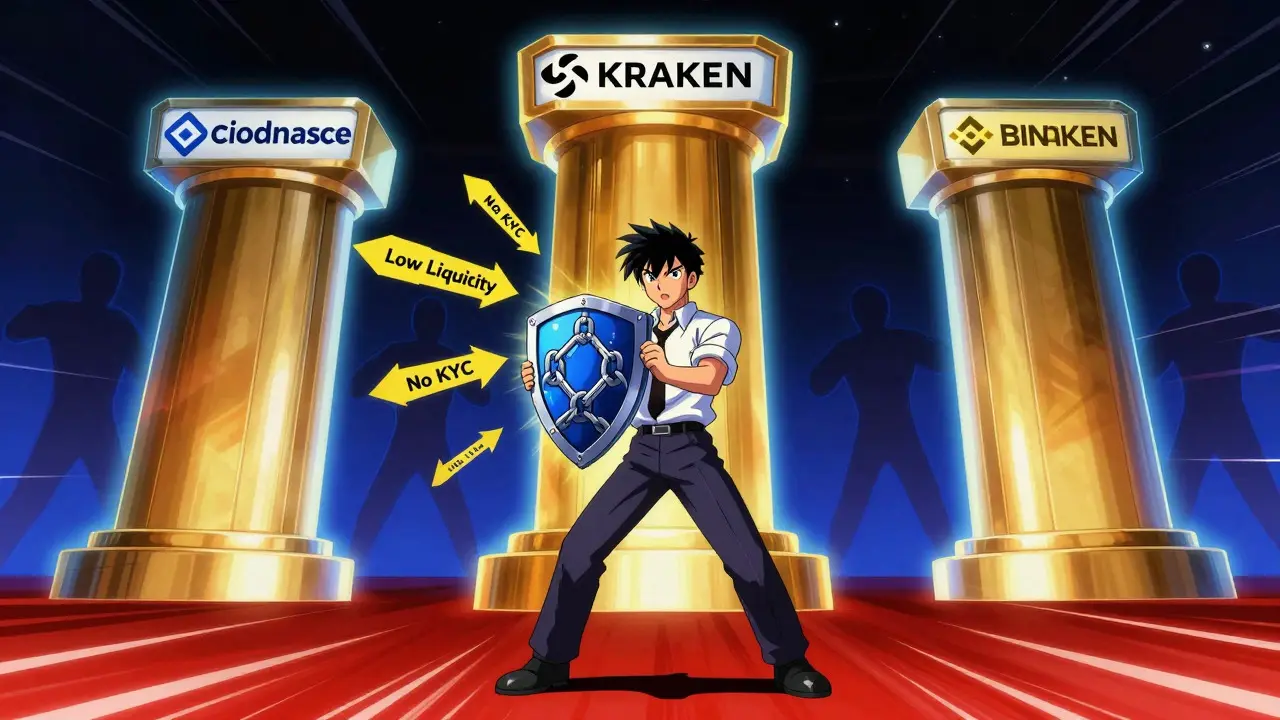
Safer Alternatives for Trading
If you are looking for a place to trade safely, stick to the majors. They have survived multiple bear markets, regulatory crackdowns, and hacks. Here are three reliable options based on different needs:
- For Beginners: Coinbase offers the simplest interface and strong regulatory compliance in the US. It’s ideal if you want to buy small amounts of Bitcoin or Ethereum without dealing with complex wallets.
- For Advanced Traders: Kraken provides deep liquidity, lower fees, and a reputation for security. They have never been hacked in a way that resulted in loss of customer funds.
- For Global Users: Binance remains the largest by volume, offering hundreds of trading pairs. However, users should be aware of ongoing regulatory negotiations in various countries.
All three implement Proof of Reserves, offer cold storage for the majority of assets, and have robust customer service channels. They also require KYC, which adds a layer of accountability that anonymous tokens like GREEN lack.
How to Verify Any Crypto Project
Before you click "Buy" or "Connect Wallet," run this quick checklist:
- Check CoinMarketCap or CoinGecko: Look at the rank. If it’s below #1000, assume high risk. Check the "Markets" tab to see which exchanges list it. If it’s only on unknown sites like Hotbit or XT.COM, proceed with caution.
- Read the Contract Address: Ensure you are copying the correct ERC-20 address for GREEN if you really want to speculate. One wrong digit sends your ETH to a void address.
- Search Reddit and Trustpilot: Be careful! Trustpilot reviews for "Greenhouse" will mostly be about HR software. Filter carefully. On Reddit, look for threads discussing the specific ticker symbol (GREEN).
- Verify Social Media: Does the project have an active Twitter/X or Discord? Are the developers responding? Or is it silent since 2021? GREEN shows little activity, suggesting a "zombie" project.
Remember, in crypto, silence is rarely golden. It’s usually a sign of abandonment.
Is Greenhouse a legitimate cryptocurrency exchange?
No. Greenhouse is not a cryptocurrency exchange. The name refers to either a minor ERC-20 token (GREEN) or a human resources software company (Greenhouse Inc.). Neither operates a trading platform for buying and selling crypto assets.
Can I buy Greenhouse (GREEN) token on Coinbase?
Currently, no. The GREEN token is listed on smaller exchanges like Coinsbit, Hotbit, and XT.COM. It is not available on major regulated platforms like Coinbase or Kraken due to its low market cap and liquidity.
Is the Greenhouse HR software related to crypto?
No. Greenhouse Inc. is a standalone enterprise software company focused on hiring and recruitment. They have no cryptocurrency products, tokens, or exchange services. Any association is purely coincidental naming.
Why is the GREEN token considered risky?
It carries high risk due to extremely low liquidity (daily volume ~$2,000), lack of regulatory oversight, no proof of reserves, and minimal development activity. Investors may struggle to sell their tokens without crashing the price.
What should I do if I already bought GREEN token?
If you hold GREEN, ensure it is stored in a secure personal wallet like MetaMask, not left on an obscure exchange. Be aware that selling may result in significant slippage due to low volume. Treat it as a high-risk speculative asset.
Are there any upcoming features for Greenhouse crypto?
There is no evidence of active development or upcoming features for the GREEN token. Transaction history on Etherscan shows minimal activity since its launch, suggesting the project is largely dormant.