What is Venus TUSD (vTUSD)? A Guide to the Interest-Bearing Receipt Token
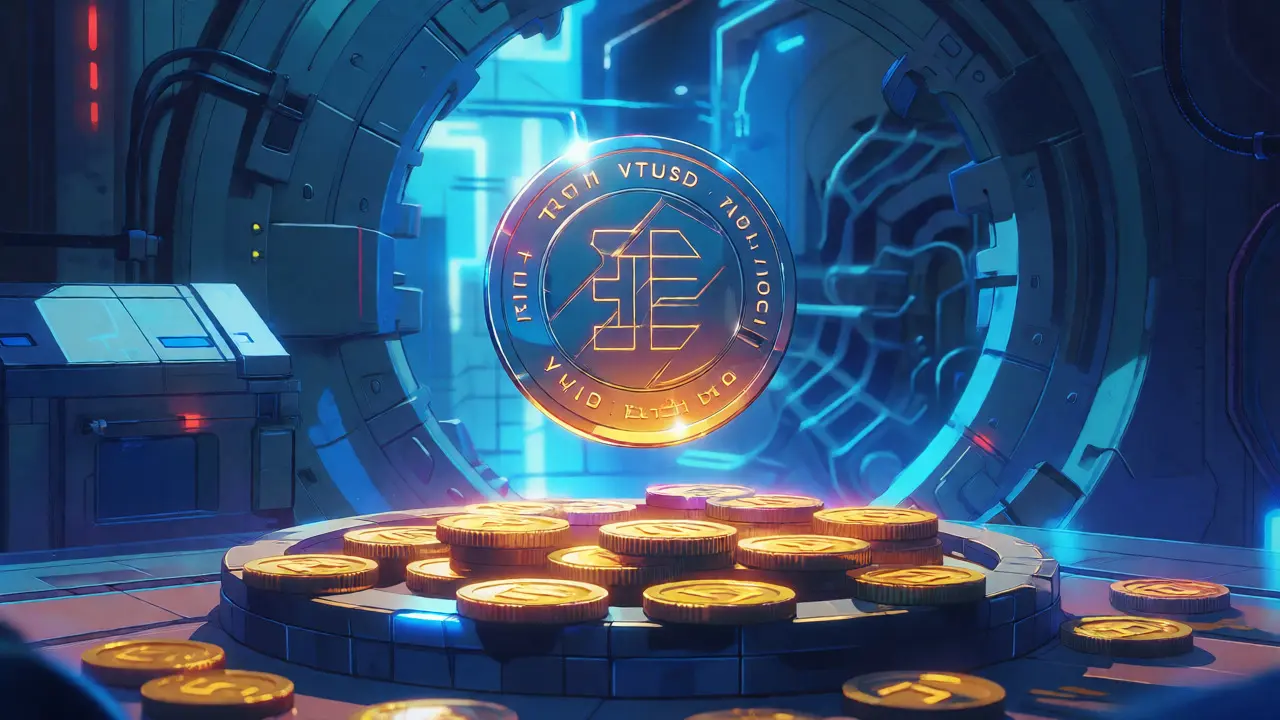
Think of vTUSD as a high-tech savings account receipt rather than a dollar bill. If you deposit TrueUSD (TUSD) into the Venus Protocol, the system hands you a vTUSD token. This isn't just a static record; it’s an interest-bearing claim on your deposited assets plus any yield generated by borrowers using that liquidity. Unlike holding plain TUSD in a wallet, which sits idle, vTUSD works for you while it rests in your balance.
But here is the catch: vTUSD is not a standalone cryptocurrency with its own market price driven by hype or speculation. It doesn’t trade like Bitcoin or even like a typical stablecoin on major exchanges. Its value is strictly tethered to the underlying TUSD and the specific exchange rate calculated by Venus smart contracts. If you are confused about why your "stablecoin" balance shows a different number of tokens than you deposited, this guide breaks down exactly how vTUSD functions, why it exists, and the critical difference between current vTUSD and the deprecated vTUSDOLD.
The Core Concept: More Than Just a Stablecoin
To understand vTUSD, you have to look at what it actually is under the hood. It is a vToken, a specific type of asset issued by Venus Protocol when users supply collateral or liquidity to the platform. Venus launched in 2020 on BNB Chain, blending elements of Compound-style money markets with synthetic stablecoin mechanics. When you supply TUSD, the protocol mints vTUSD to represent your position.
This mechanism creates a separation between the asset you hold (the receipt) and the asset you own (the underlying stablecoin). The vTUSD contract manages the accounting. As borrowers pay interest on their loans, the redeemable value of each vTUSD increases relative to TUSD. You don't receive separate interest payments in your wallet every hour; instead, the exchange rate between vTUSD and TUSD shifts upward. To realize those gains, you must redeem or burn the vTUSD back into TUSD. This design allows for composability within Decentralized Finance (DeFi), letting other protocols interact with your lent positions without needing to constantly query the Venus core contracts for balances.
How Supplying and Redeeming Works
The lifecycle of a vTUSD token is straightforward but relies entirely on smart contract execution. Here is the step-by-step process:
- Supply TUSD: You connect a compatible wallet (like MetaMask or Trust Wallet) to the Venus application on BNB Chain or Ethereum. You approve the spending of your TUSD and then "Supply" it to the TUSD market.
- Mint vTUSD: The Venus smart contract locks your TUSD in the protocol's pool and mints an equivalent amount of vTUSD to your address. Initially, the ratio is close to 1:1, but it fluctuates based on accrued interest.
- Earn Yield: While you hold vTUSD, you earn two types of rewards: the variable APY from lending interest and potential XVS governance token distributions if enabled for that market.
- Redeem: When you want out, you select "Withdraw." The protocol burns your vTUSD and releases the corresponding amount of TUSD back to your wallet, assuming sufficient liquidity exists in the pool.
It is crucial to note that redemption depends on available liquidity. If everyone tries to withdraw TUSD at once and there aren't enough liquid assets in the pool, you might face delays or partial withdrawals. This is a standard risk in all lending protocols, not unique to Venus, but it highlights why vTUSD is a claim on liquidity, not cash itself.
The Critical Distinction: vTUSD vs. vTUSDOLD
If you are digging through older transactions or looking at legacy wallets, you might encounter a token labeled vTUSDOLD. This is where things get tricky for newcomers. In June 2023, Venus implemented VIP-129, a proposal to migrate the TUSD market from an older BEP-20 representation to a new native TUSD contract. The old market was deprecated and renamed vTUSDOLD, while the new active market became the current vTUSD.
These two tokens are not interchangeable. The current vTUSD interacts with the modern, widely supported TUSD contract. vTUSDOLD is tied to a legacy contract that has been effectively phased out. According to recent treasury cleanup notices, the vTUSDOLD market had zero available cash for redemption on-chain during certain periods, meaning holders were stuck with a receipt they couldn't easily convert back to usable dollars. Always verify the contract address before sending or swapping these tokens. Confusing them can lead to lost funds or significant friction in recovering your capital.
| Feature | Current vTUSD | vTUSDOLD (Deprecated) |
|---|---|---|
| Underlying Asset | Native TUSD Contract | Legacy BEP-20 TUSD |
| Status | Active Market | Deprecated / Frozen |
| Liquidity | Available via Venus Pool | Often Zero Available Cash |
| Collateral Factor | Configured per current parameters | Reduced to 55% or disabled |
| Redemption | Standard On-Chain Withdrawal | Complex / Treasury Dependent |

Price Discovery and Market Data Reality
You might try to look up the "price" of vTUSD on CoinMarketCap or CoinGecko and find confusing data. Some aggregators show a spot price, others show zero volume, and some display inconsistent circulating supplies. Why? Because vTUSD is rarely traded directly on centralized exchanges. It is primarily an internal accounting unit within the Venus ecosystem.
For example, a conversion page might list 1 vTUSD at $1.22, but simultaneously report zero market capitalization and no trading volume. This discrepancy happens because the quoted price is often derived from the theoretical redemption value (underlying TUSD + accrued interest) rather than actual buy/sell orders from traders. There is no deep order book for vTUSD like there is for USDT or BTC. Therefore, do not treat third-party price feeds as proof of liquid exit opportunities. Your true exit price is determined solely by the Venus exchange rate at the moment you click "Withdraw," minus gas fees.
Risks: Smart Contracts, Oracles, and Bad Debt
Holding vTUSD exposes you to risks that simply holding TUSD does not. First, there is smart contract risk. Venus has undergone multiple audits, including reviews by Hacken and OpenZeppelin, which resolved numerous issues. However, history shows that vulnerabilities can slip through. Reports of donation-based supply-cap bypasses and oracle manipulation attacks in 2023 and 2025 resulted in bad debt for the protocol. While these incidents didn't necessarily wipe out vTUSD holders, they highlight that the code governing your funds is complex.
Second, there is liquidity risk. If the Venus TUSD pool runs dry due to mass withdrawals or insolvency from borrowers defaulting on collateral, you may not be able to redeem your vTUSD immediately. Third, TUSD depegging remains a factor. Since vTUSD is a claim on TUSD, if TrueUSD loses its peg to the US Dollar, your vTUSD redemption value drops accordingly. Finally, confusion with vTUSDOLD poses operational risk. Sending funds to the wrong contract address or interacting with the deprecated market can lock your assets until manual intervention or treasury actions resolve the status.
Who Should Use vTUSD?
vTUSD is ideal for DeFi users who want to maximize capital efficiency. If you already hold TUSD and plan to keep it in crypto for months, supplying it to Venus via vTUSD lets you earn yield without actively managing loans. It also serves as useful collateral in certain strategies, though you must check the current collateral factor, which can change via governance votes.
However, if you need simple, instant access to dollars for paying bills or moving funds across chains quickly, plain TUSD is safer. vTUSD adds layers of complexity: you must manage approvals, monitor exchange rates, and ensure you are on the correct network (BNB Chain or Ethereum). For most casual investors, the extra yield may not justify the hassle and added smart-contract exposure compared to simpler staking options or centralized exchange Earn products.
Frequently Asked Questions
Is vTUSD a stablecoin?
No, vTUSD is not a stablecoin. It is an interest-bearing receipt token issued by the Venus Protocol. While it represents a claim on the stablecoin TrueUSD (TUSD), its primary function is to track lending positions and accrued interest within the Venus lending market.
Can I trade vTUSD on Binance or Coinbase?
Generally, no. vTUSD is not listed on major centralized exchanges like Binance or Coinbase. It is primarily used within the decentralized Venus Protocol ecosystem. Liquidity is provided by the Venus smart contracts themselves, not by external market makers on CEXs.
What is the difference between vTUSD and vTUSDOLD?
vTUSD refers to the current active market linked to the native TUSD contract. vTUSDOLD is a deprecated market linked to a legacy TUSD contract following the VIP-129 migration in 2023. They are not interchangeable, and vTUSDOLD often lacks immediate on-chain liquidity for redemption.
How do I earn interest on vTUSD?
You earn interest automatically as long as you hold vTUSD. The interest accrues by increasing the exchange rate between vTUSD and TUSD over time. You realize these earnings only when you redeem (withdraw) your vTUSD back into TUSD.
Is vTUSD safe?
Safety depends on the security of the Venus smart contracts and the stability of TUSD. While Venus has undergone rigorous audits, DeFi always carries risks such as smart contract bugs, oracle failures, and liquidity crunches. It is not risk-free like FDIC-insured bank deposits.