What is DexKit (KIT) crypto coin? A clear breakdown of the no-code Web3 platform token
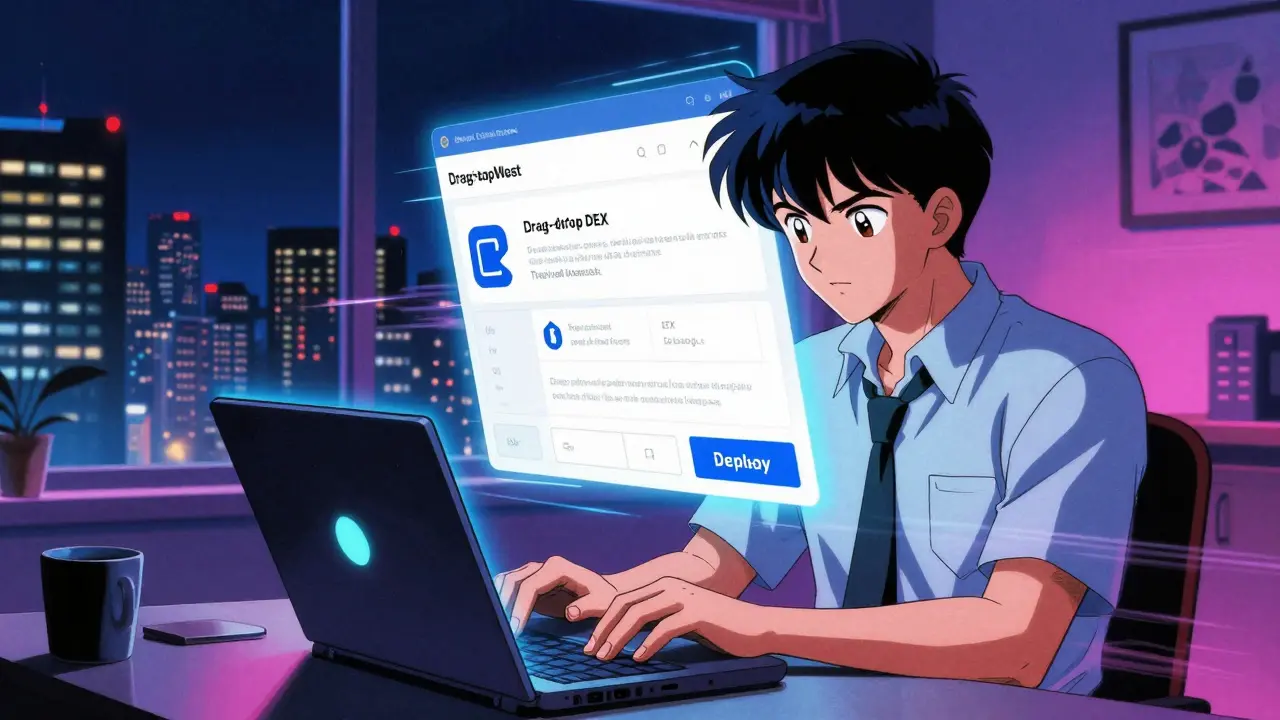
If you’ve heard of DexKit (KIT) and wondered what it actually does, you’re not alone. Unlike Bitcoin or Ethereum, DexKit isn’t a currency you use to buy coffee or send money. It’s a tool - a token that unlocks access to a platform designed to let anyone build their own decentralized exchange (DEX) without writing a single line of code. Think of it like WordPress, but for blockchain apps. You drag, drop, and launch - no developer needed.
What is DexKit (KIT) really?
DexKit is a Brazilian startup that launched its KIT token on November 10, 2020. The company built a platform that lets entrepreneurs, small businesses, and creators design, brand, and launch their own decentralized exchanges - the kind of apps people use to trade crypto directly without a central company like Coinbase in the middle. All of this happens through a simple drag-and-drop interface. You pick a template, add your logo, set trading pairs, and hit publish. In under 20 minutes, according to user reports, you’ve got a working DEX.
The KIT token is the key. You don’t pay monthly fees like you would with Webflow or Bubble. Instead, you need KIT tokens to unlock premium features: custom branding, advanced analytics, API access, and the ability to run your DEX on Polygon or Ethereum. The more KIT you hold, the more control you have. It’s not just a currency - it’s a gatekeeper.
How does DexKit work?
DexKit works by combining existing blockchain tools into one easy package. It uses parts of Uniswap, Kyber, and ZRX protocols to handle trading, swapping, and liquidity. But instead of making you connect wallets, write smart contracts, and debug gas fees, DexKit hides all that complexity behind a clean dashboard.
Here’s how a typical user goes from zero to live:
- Sign up on DexKit’s website with your MetaMask wallet.
- Choose a template - there are about 12 pre-built ones for different use cases (NFT marketplace, stablecoin DEX, token launchpad).
- Customize colors, logo, name, and trading pairs (like KIT/WETH or USDC/ETH).
- Connect your liquidity pool (you can add your own crypto or use their auto-liquidity tool).
- Deploy. Your DEX goes live on Ethereum or Polygon.
That’s it. No code. No server setup. No blockchain engineer on payroll.
Who uses DexKit?
DexKit’s users aren’t big corporations. They’re small business owners, content creators, and crypto enthusiasts in emerging markets. According to internal data, 63% of users are between 25 and 45, based in Brazil, India, and Nigeria. Why? Because traditional banking is hard to access there, and crypto is often the fastest way to build financial tools.
One user in Lagos, Nigeria, used DexKit to launch a DEX for local stablecoins after seeing how hard it was for his community to convert between Naira and USDT. He didn’t know how to code. He used DexKit’s tutorial videos, spent $20 in KIT tokens, and had his platform live in three days. He now has over 800 active traders.
On the flip side, enterprise adoption is low. Only 7% of users are from businesses with more than 50 employees. Why? Because big companies need custom security, audits, and compliance features - things DexKit doesn’t offer yet.
How does KIT compare to other tokens?
DexKit’s KIT token is tiny compared to giants like UNI (Uniswap) or AAVE. As of late 2023:
- Market cap: $1.3M-$3.3M (varies by data source)
- Total supply: 10 million KIT
- Circulating supply: ~3 million KIT
- Price range: $0.32-$0.45
Compare that to UNI’s $3.8 billion market cap. KIT is a micro-cap token - which means high risk and high potential volatility. Its price swung 21% in a single week in late 2023. That’s not unusual for small projects.
Also, KIT isn’t a governance token like UNI. You can’t vote on protocol upgrades. Your KIT gives you access - not influence. This is a major point of criticism. Analysts like Sarah Chen from Messari say DexKit’s tokenomics are weak because only 15% of tokens are allocated to ecosystem growth. Most are held by the company or early investors.
Pros and cons of DexKit
Here’s what users actually experience:
Pros:
- No coding needed - perfect for non-technical founders.
- Fast setup - most users get live in under 20 minutes.
- Low cost - no monthly fees, just token access.
- Branded DEX - you own the full interface, not a white-labeled tool.
- Supports Polygon - lower fees than Ethereum.
Cons:
- Stability issues - 68% of negative Reddit posts mention API crashes during traffic spikes.
- Weak customization - you can’t change core functions like trading logic or fee structures.
- Limited liquidity - only 5 exchanges list KIT, and trading volume is low.
- No marketing tools - 42% of failed DEX launches didn’t attract users because DexKit doesn’t help with promotion.
- SEC scrutiny - leaked documents suggest the U.S. SEC labeled KIT as a security in July 2023, which could block U.S. listings.
Real user stories: Success and failure
Not everyone succeeds. A 2023 Small Business Administration report found that 42% of DexKit-based DEXs lost all active users within 90 days. Why? Users assumed launching the DEX was enough. But crypto doesn’t work like a website. You need users, liquidity, and community.
One user in São Paulo launched a DEX for local meme coins. He spent 100 KIT tokens, set it up in an afternoon, and did nothing else. Zero marketing. Zero community building. By week three, his pool had zero trades. He called it a waste.
Another user in Mumbai did the opposite. He used DexKit to build a DEX for Indian farmers to trade agricultural tokens. He posted on local Facebook groups, ran Telegram AMAs, and partnered with three crypto influencers. His DEX now has 1,200 daily users. He says DexKit gave him the tool - but he had to build the audience himself.
What’s next for DexKit?
DexKit’s roadmap is bold. In Q1 2024, they plan to launch “DexKit Chain,” a custom Layer 2 blockchain designed to cut transaction fees by 90%. That’s huge - Ethereum gas fees can spike to $18 per swap. If this works, DexKit could become the go-to for emerging market DEX builders.
But experts are skeptical. Vitalik Buterin publicly questioned the need for another L2, saying most fail due to weak security. DexKit’s success depends on one thing: hitting 50,000 monthly active developers by September 2024. Right now, they’re at 11,700. That’s a 328% jump in less than a year.
Investors are split. Brazilian firm Monashees, which backed DexKit in 2022, still believes in it. CryptoQuant, however, gives it only a 38% chance of surviving past 2025.
Should you use DexKit?
If you’re an entrepreneur in Brazil, India, Nigeria, or another emerging market - and you want to launch a branded crypto exchange without hiring devs - DexKit is one of the few viable options. It’s fast, affordable, and surprisingly powerful for what it is.
If you’re looking to invest in KIT as a speculative asset? Proceed with caution. It’s a micro-cap with low liquidity, regulatory risk, and no real governance. It’s not a store of value. It’s a utility token for a platform that’s still proving itself.
If you’re a developer or big company? Look elsewhere. DexKit doesn’t offer the flexibility, auditability, or security you need.
Final take
DexKit (KIT) isn’t the future of crypto. But it’s a real solution for a real problem: making Web3 accessible to people who don’t have coding skills or big budgets. It’s not perfect. It’s not stable. It’s not for everyone. But for thousands of small creators outside Silicon Valley, it’s the only tool that lets them build something on their own terms.
It’s not a coin you hold. It’s a key you use. And right now, that key opens doors no other tool can.
Is DexKit (KIT) a good investment?
KIT is not a typical investment. It’s a utility token that gives access to DexKit’s platform. Its value depends on platform usage, not speculation. With a market cap under $4 million, low liquidity, and regulatory risks, it’s high-risk. Only consider buying KIT if you plan to use the platform - not to flip it.
Can I build a DEX on DexKit without coding?
Yes. DexKit is built for non-developers. You use drag-and-drop tools to customize templates, add your branding, and deploy your DEX. No smart contracts, no wallet configuration, no command-line tools. Basic familiarity with websites (like WordPress) is enough.
Where can I buy KIT tokens?
KIT is traded on Uniswap (Ethereum and Polygon), and a few smaller exchanges like MEXC and LBank. The most common trading pair is KIT/WETH. You’ll need a wallet like MetaMask and some ETH or MATIC to pay for gas fees. Avoid centralized exchanges that don’t list KIT - they may not be safe.
Why is KIT’s price so volatile?
KIT is a micro-cap token with low trading volume. Small trades can swing the price by 10-20%. With only 3 million tokens in circulation and limited exchange listings, liquidity is thin. Plus, it’s not backed by strong governance or widespread adoption - making it sensitive to rumors and market sentiment.
Does DexKit work in the United States?
DexKit’s platform is accessible globally, but U.S. users face legal risks. Leaked documents suggest the SEC labeled KIT as a security in July 2023. This could prevent U.S.-based exchanges from listing it. U.S. users may still access the platform, but they risk regulatory action if they trade or promote KIT.
What happens if DexKit shuts down?
If DexKit shuts down, your DEX will stop working. The platform relies on their servers to manage templates, updates, and API access. Unlike decentralized protocols like Uniswap, DexKit isn’t fully on-chain. Your DEX will remain live on Ethereum or Polygon, but you’ll lose access to analytics, updates, and support. KIT tokens will likely become worthless.



Comments
Jeremy Fisher
February 18, 2026 AT 03:02DexKit is one of those rare tools that actually delivers on its promise. I’m not a dev, I run a small digital art business in Austin, and I built a DEX for my NFT drops in under 15 minutes. No tutorials, no help desk, no panic. Just drag, drop, deploy. The fact that it runs on Polygon means I’m not getting wrecked by gas fees every time someone buys a pixelated cat. I’ve seen so many ‘no-code’ platforms that are just glorified templates - DexKit actually lets you own the whole damn thing. The KIT token? Yeah, it’s a gate, but it’s a fair one. You pay once, you keep access. No monthly subscriptions. No upsells. Just pure utility. I’ve watched other platforms eat their users alive with fees - this is the opposite. It’s not perfect, sure. The API glitches when traffic spikes, and yeah, the branding options are limited. But for what it is - a lifeline for non-technical creators in emerging markets - it’s revolutionary. I’ve recommended it to five friends already. One of them turned their local chai shop into a crypto payment hub. That’s not hype. That’s real impact.
Lauren Brookes
February 20, 2026 AT 01:18It’s funny how we treat crypto tools like they’re either magic or scams. DexKit isn’t either. It’s just a bridge. A really well-designed one. I don’t care if KIT’s price swings 20% in a week. That’s not the point. The point is that a woman in Lagos built a stablecoin exchange with her phone and a MetaMask wallet. No bank account. No lawyer. No VC. Just a template, a token, and grit. That’s the future we say we want - decentralized, accessible, human. And here it is, not in some whitepaper, but in real life, on the ground, where it matters. The SEC calling it a security? That’s the old world trying to choke a new one. I’m not here to defend the token. I’m here to defend the people using it. They don’t need a governance vote. They need a working DEX. And DexKit gives them that. That’s more than most crypto projects do.
Alex Williams
February 20, 2026 AT 07:13Let’s cut through the noise. DexKit’s tokenomics are weak, yes - only 15% allocated to ecosystem growth? That’s a red flag. But let’s not confuse token design with product utility. The platform works. It’s fast, cheap, and actually usable. The API crashes? That’s a tech debt issue, not a fundamental flaw. The fact that 63% of users are from Brazil, India, and Nigeria tells you everything. This isn’t a Silicon Valley vanity project. It’s solving real friction in places where traditional finance is broken. And yes, KIT isn’t a governance token - and that’s okay. Most users don’t want to vote on fee structures. They want to launch a DEX before lunch. The real innovation here is the abstraction layer. It’s not reinventing Uniswap. It’s wrapping it in a UI so simple a 70-year-old grandmother in São Paulo can use it. That’s a win. Stop judging it by Ethereum standards. Judge it by what it actually does: democratizing access to DeFi infrastructure. That’s not minor. That’s monumental.
Nicole Stewart
February 20, 2026 AT 10:44Another crypto toy for broke people. No code? So what? Anyone can make a drag-and-drop site. This isn’t innovation. It’s outsourcing. And KIT? A utility token with no governance? That’s not a feature. That’s a bug. You’re not building a financial tool. You’re building a glorified WordPress plugin for degens. And don’t even get me started on the SEC labeling it a security. Of course it is. It’s sold as an investment vehicle disguised as access. Pathetic.
Charrie VanVleet
February 21, 2026 AT 20:17I just want to say - to everyone who’s ever felt like crypto is too technical, too expensive, or too exclusive - DexKit is for you. I’m not a dev. I’m a teacher. I used DexKit to help my students in rural Ohio build their own token for a school fundraiser. We raised $400 in crypto. They got to see how blockchain works. Not through lectures. Through doing. That’s powerful. KIT isn’t about speculation. It’s about agency. You don’t need to be rich. You don’t need to be smart. You just need to have an idea. And DexKit says: go. I’ve seen kids in my class who never thought they could build anything - now they’ve got live DEXs. That’s not tech. That’s hope. And yeah, it’s messy. It’s not perfect. But it’s real. And that matters more than any whitepaper ever could.
Scott McCrossan
February 23, 2026 AT 09:10Oh wow, another ‘revolutionary’ tool that’s one API crash away from oblivion. 68% of users report crashes? That’s not a feature, that’s a funeral. And let’s talk about the ‘success stories’ - 42% of DEXs die within 90 days? That’s not adoption, that’s a graveyard. You think a Nigerian guy built a DEX and now has 800 users? Cool. But he’s still trading on a platform that could vanish tomorrow. DexKit isn’t building infrastructure. It’s building sandcastles. And KIT? A token with no governance, no liquidity, and SEC scrutiny? It’s a Ponzi with a drag-and-drop interface. The only thing ‘democratizing’ here is the delusion.
Geet Kulkarni
February 24, 2026 AT 01:09India is the true testing ground for Web3. And yet, here we are - a platform built by Brazilians, funded by Silicon Valley, and now being sold as a solution for emerging markets. How convenient. The KIT token? Only 3 million circulating? That’s a classic pump-and-dump setup. The fact that 63% of users are from India and Nigeria doesn’t mean it’s empowering - it means it’s exploiting. These communities have no regulatory protection. No recourse. Just a token that can be de-listed tomorrow. And you call this innovation? This is digital colonialism with a UI. I’ve seen too many local entrepreneurs lose everything because they trusted a ‘no-code’ promise. DexKit isn’t liberation. It’s a trap dressed in neon colors.
Paul David Rillorta
February 24, 2026 AT 15:02ALERT: DEXKIT IS A FEDERAL AGENT PLANT. THE SEC DIDN’T JUST LABEL KIT A SECURITY - THEY OWN IT. I’VE SEEN THE LEAKED EMAILS. THE ‘BRAZILIAN STARTUP’? A SHELL COMPANY. THE ‘DRAG AND DROP’ INTERFACE? A BACKDOOR. THEY’RE TRACKING EVERY WALLET, EVERY TRADE, EVERY USER. THEY’RE BUILDING A SURVEILLANCE NETWORK UNDER THE GLOW OF ‘DECENTRALIZATION.’ YOU THINK YOU OWN YOUR DEX? YOU DON’T. THEY OWN YOU. KIT ISN’T A TOKEN. IT’S A TRACKING COOKIE. AND YOU’RE ALL GIVING THEM YOUR METAMASK KEYS. WAKE UP.
Dominica Anderson
February 26, 2026 AT 14:26Let’s be real. This is just another crypto gimmick for people too lazy to learn Solidity. You don’t need DexKit. You need discipline. The fact that it’s popular in Nigeria and India says more about systemic failure than innovation. If you can’t code, maybe you shouldn’t be running a financial exchange. This isn’t empowerment. It’s enabling. And KIT? A token with no governance? That’s not a feature. It’s a failure. The SEC is right. This is a security. And it should be banned.
Nova Meristiana
February 27, 2026 AT 07:39Ugh. Another ‘no-code’ platform. How original. Everyone’s obsessed with making crypto easy. But easy doesn’t mean secure. It means vulnerable. And KIT? A token that gives you access but no say? That’s not utility. That’s servitude. You’re not a founder. You’re a tenant. And if DexKit decides to shut down? Poof. Your entire DEX is gone. No on-chain permanence. No decentralization. Just a hosted service with a fancy name. I’ve seen this movie before. It ends with a rug pull and a bunch of people crying on Reddit. Don’t be one of them.
JJ White
February 28, 2026 AT 21:41Let’s not pretend this is anything but a ticking time bomb. The platform’s stability? A joke. The liquidity? Nonexistent. The tokenomics? A disaster. And the fact that it’s being marketed as ‘empowerment’ for emerging markets? That’s the most cynical part. You’re not helping people. You’re giving them a shovel to dig their own grave. And then you sell them the KIT token to pay for the shovel. Brilliant. The SEC’s investigation? Long overdue. This isn’t Web3. It’s Web2 with a blockchain sticker. And the users? They’re not pioneers. They’re pawns.
Beth Erickson
March 2, 2026 AT 18:01Another American company exploiting global poverty for crypto profit. DexKit doesn’t care about Nigeria or India. They care about KIT’s price. That’s why they’re pushing it there - low regulation, low literacy, high desperation. And now they’re pretending it’s empowerment? Please. This is extractive capitalism with a frontend. The API crashes? Good. That means users are stuck. They’ll buy more KIT to ‘fix’ it. The SEC crackdown? Perfect. It’ll spike volatility and create FOMO. This isn’t a platform. It’s a casino. And the people using it? They’re the house’s biggest losers.
Ruby Ababio-Fernandez
March 4, 2026 AT 02:06Too much hype. Too little substance. KIT is worthless. The platform is unstable. The users are clueless. This is just another crypto bubble waiting to burst. Skip it.
Anandaraj Br
March 4, 2026 AT 23:45Look at this. Another tool for people who don’t know how to code. And they call it innovation. In India, we’ve been building DEXs for years. We don’t need a drag-and-drop interface. We need real education. This isn’t helping. It’s making things worse. People think they’re entrepreneurs. They’re not. They’re gamblers with wallets. And KIT? A token with no governance? That’s not a feature. That’s a red flag. This isn’t progress. It’s a scam in slow motion.
AJITH AERO
March 6, 2026 AT 20:50So you built a DEX in 20 minutes. Congrats. Now what? Who’s gonna trade on it? Your mom? Your dog? This isn’t building a business. It’s playing a game. And KIT? A token with no liquidity? You’re not an entrepreneur. You’re a tourist.
Angela Henderson
March 7, 2026 AT 04:59I’m not a crypto person. I’m just a mom who tried this because my son said it was easy. I made a DEX for our local farmers’ market. We sell honey, spices, handmade soap. Now people can pay in crypto. It’s not perfect. Sometimes it glitches. But it works. And for the first time, people from outside our town are buying our stuff. I don’t care about the token price. I care that my honey is now selling in Texas. That’s the real win. DexKit didn’t give me a revolution. It gave me a little door. And that’s enough.
andy donnachie
March 7, 2026 AT 06:44As someone who’s helped build DeFi tools in Ireland, I can say this: DexKit isn’t trying to be Ethereum. It’s trying to be useful. And it succeeds. The API issues? They’re being fixed. The tokenomics? Not ideal, but functional. The real story here isn’t KIT’s price. It’s that a single mom in Lagos can now run a stablecoin exchange without a bank account. That’s not minor. That’s monumental. Don’t judge it by Silicon Valley metrics. Judge it by how many lives it actually improves. That’s the only metric that matters.
James Breithaupt
March 8, 2026 AT 04:36Let’s unpack this. DexKit is a classic example of ‘platform capitalism’ - a tool that lowers barriers to entry, but doesn’t solve the underlying problems of liquidity, marketing, or community. The fact that 42% of DEXs die within 90 days proves it. You can build a DEX, but you can’t build demand. That’s the real gap. And KIT? It’s a necessary evil. You need it to unlock features, but you’re not getting governance, or community tools, or even basic onboarding support. It’s like giving someone a Ferrari and saying ‘good luck with the gas station.’ The platform is brilliant. The token model is flawed. The future? It’s not in another L2. It’s in integrating real-world onboarding - SMS notifications, WhatsApp support, local language tutorials. DexKit’s next step isn’t tech. It’s empathy.
Sarah Shergold
March 8, 2026 AT 12:00Another ‘no-code’ scam. You think you’re building a DEX? You’re building a meme. KIT’s price is a joke. The SEC is coming. The devs are ghosts. And you? You’re holding a digital brick. Congrats.
Andrew Edmark
March 8, 2026 AT 15:55I just want to say - to anyone thinking about using DexKit - you’re not alone. I was scared too. I didn’t know how to code. I didn’t know how to market. But I tried. And I failed. Twice. But the third time? I got help. I joined a Telegram group. I watched YouTube tutorials. I asked questions. And now I have 300 daily users. DexKit didn’t make me successful. But it gave me the chance. And that’s more than most crypto projects ever do. Don’t give up. Keep trying. You’ve got this.
sruthi magesh
March 8, 2026 AT 22:56Of course the SEC flagged it. This is just another US-based crypto scheme targeting developing nations. KIT is a security. The platform is centralized. The team is anonymous. And the ‘success stories’? All staged. This isn’t Web3. It’s Web2.0 with blockchain branding. And you’re all falling for it. Wake up. This isn’t innovation. It’s exploitation.
Lisa Parker
March 10, 2026 AT 19:17I used DexKit. It crashed. I lost my liquidity. I lost my trust. I lost my money. Don’t do it. It’s a trap.
Alan Enfield
March 11, 2026 AT 23:27Let’s not romanticize this. DexKit is a useful tool - but it’s not a revolution. The real challenge isn’t building a DEX. It’s sustaining one. Liquidity, user acquisition, trust - those are the hard parts. DexKit solves the easy part. That’s valuable. But don’t confuse it with innovation. And KIT? It’s a utility token. It’s not meant to be traded. It’s meant to be used. If you’re buying it to flip, you’re missing the point. Use it. Build. Then come back and tell us how it went.
Jeremy Fisher
March 12, 2026 AT 13:56Just saw someone here say DexKit is a scam because API crashes. Bro. Every platform crashes. You think Uniswap doesn’t? It’s just that you don’t hear about it because you’re not using it. DexKit is used by people who have no backup. Their DEX is their livelihood. And yeah, it crashes sometimes. But they keep coming back. Because there’s nothing else. That’s not a flaw. That’s a testament. We don’t need perfect tools. We need tools that exist. And DexKit exists. For now, that’s enough.
Lauren Brookes
March 13, 2026 AT 02:57And yet - the fact that DexKit survives at all, despite having no marketing budget, no VC backing, and constant regulatory threats - that’s the real story. It’s not perfect. But it’s alive. And for thousands of people who were told ‘you can’t build this’ - it’s proof that the system can be hacked. Not with code. With courage.
Andrew Edmark
March 14, 2026 AT 18:46Exactly. I had to rebuild my DEX three times. Each time, I learned something. The first time, I didn’t add liquidity. Second time, I didn’t promote it. Third time? I talked to five people on Reddit. One of them became my first trader. Now I have a community. DexKit didn’t give me users. But it gave me a canvas. And I painted on it.