Common Seed Phrase Mistakes to Avoid: A Practical Guide

Imagine losing everything you own because you forgot where you put a piece of paper. That is the reality for many cryptocurrency holders who treat their seed phrase as a minor detail rather than the master key to their digital assets. A seed phrase, also known as a mnemonic or recovery phrase, is a sequence of 12 or 24 words that allows you to restore your wallet on any device. If you lose it, there is no customer support line to call and no "forgot password" button to click. You are out of luck.
The stakes are high. Recent data suggests that nearly 80% of cryptocurrency loss incidents stem from poor seed phrase management. Whether you hold a small amount of Bitcoin or a diversified portfolio, understanding how these phrases work-and more importantly, how they fail-is the single most important step in protecting your wealth. This guide breaks down the specific errors people make, why they happen, and exactly how to fix them before it’s too late.
Why Your Seed Phrase Is More Fragile Than You Think
To understand the mistakes, you first need to grasp what makes a seed phrase unique. Standardized by BIP-39, the protocol created by SatoshiLabs in 2013, a seed phrase uses a fixed dictionary of 2,048 words. Each word represents a specific chunk of cryptographic entropy. For a 12-word phrase, this provides 128 bits of security, making brute-force attacks impossible with current technology. However, this mathematical strength relies entirely on human accuracy.
The system includes a checksum mechanism, meaning the last word (or last two words) acts as a validation code for the rest of the sequence. If you type a word incorrectly, the wallet software will often reject it immediately. But here is the trap: if you swap two words, the phrase might still pass the checksum but lead to a completely different, empty wallet. This is where most silent failures occur. Unlike a bank account number, which has built-in error correction, a seed phrase offers zero forgiveness for subtle transcription errors.
The Top Mistake: Storing It Digitally
The most common and dangerous error is storing your seed phrase on a connected device. Many users take a screenshot, save it in a notes app, or upload it to cloud storage like iCloud or Dropbox. They assume their phone is safe because they have a strong screen lock. In reality, this creates a massive target for hackers.
Cybersecurity firms have shown that unprotected digital files can be compromised within 72 hours through malware or phishing attacks. One documented case involved a user who lost over 2 BTC after their iCloud account was breached via a SIM-swapping attack. The hacker didn't need to hack the blockchain; they just needed access to the photo of the words.
- Screenshots: Easily accessible if your phone is stolen or synced to a backup service.
- Password Managers: While secure, they create a single point of failure. If the master password is cracked, all your crypto keys are exposed simultaneously.
- Emails: Sending a seed phrase to yourself is risky because email servers store metadata and content in plain text.
The rule is simple: if it touches the internet, it isn't safe. Keep your seed phrase offline at all times.
Physical Storage Pitfalls: Paper Isn't Forever
If digital storage is risky, why not just write it on paper? It seems logical, but standard printer paper is surprisingly fragile. Environmental factors like humidity, heat, and light degrade ink and paper quality faster than most people realize. Studies show that untreated paper can become illegible within three years under normal household conditions.
I know a friend who kept his seed phrase on a sticky note behind a monitor. When he tried to recover his wallet after moving apartments, coffee stains had blurred three of the words. He had to guess the missing letters, leading to a failed recovery and total loss.
For long-term storage, consider durable media:
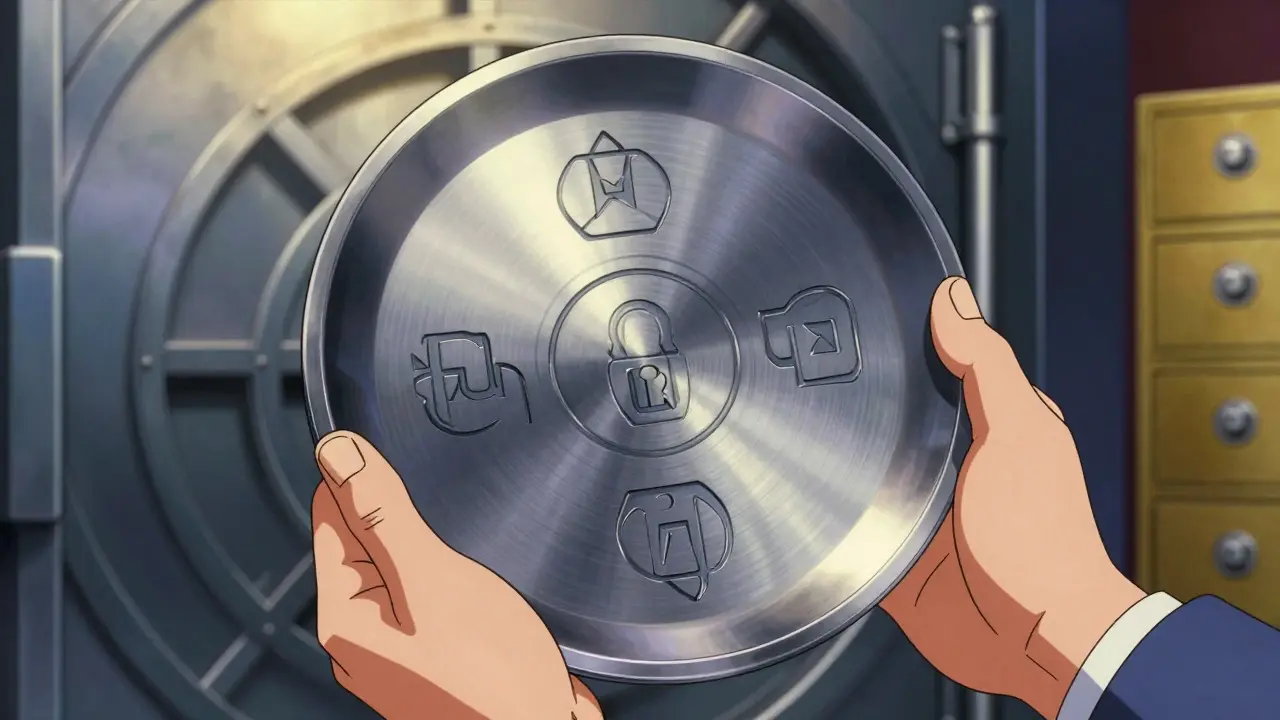
- Stainless Steel Plates: These can withstand fire, water, and corrosion. Laser-engraved steel plates remain legible for decades.
- Titanium Sheets: A lighter alternative to steel, though slightly less resistant to extreme heat.
- Foil Laminated Cards: A budget-friendly option that protects against water damage, though not fire.
Whichever medium you choose, avoid using glue or tape that can deteriorate over time. The goal is to ensure the words survive not just for a year, but for twenty.
The Danger of Sharing and Memorizing
Many people think sharing their seed phrase with a trusted family member is a good inheritance plan. In practice, it’s one of the biggest risks. Family dynamics change, relationships sour, and information leaks. Data from incident reports shows that family members are the most common source of unintentional breaches. If you share the phrase, you effectively give away full control of your assets.
What about memorizing it? It sounds impressive, but it’s unreliable. Human memory is notoriously bad at retaining long sequences of random words, especially under stress. Neurological studies suggest we reliably remember only about seven items at a time. Trying to recall 12 or 24 words accurately after a few years is a gamble. If you forget even one word, you’re locked out.
A better approach for inheritance is using multisignature wallets. Instead of relying on a single secret phrase, you split the control across multiple devices or people. For example, a 2-of-3 setup means you need two out of three keys to move funds. This way, no single person holds the entire power, and losing one key doesn’t mean total loss.
Skipping the Test Restore
This is the mistake that catches even experienced users off guard. You generate your new wallet, write down the words, and start buying crypto. You never test if the backup actually works. Then, six months later, when you need to move funds, you discover a typo in the third word.
Here is the golden rule: always perform a test restore. After writing down your seed phrase, wipe your wallet (or use a second device) and try to recover it using only the written words. Send a tiny amount-like 0.001 BTC-to verify it works. If it fails, you’ve caught the error while the cost is minimal. If you wait until you have significant holdings, the cost of discovery could be catastrophic.
Only 30% of users bother with this step, yet it is the most effective way to prevent permanent loss. It takes five minutes and saves potential thousands.
| Method | Durability | Security Risk | Best For |
|---|---|---|---|
| Digital Screenshot | Low (Data corruption) | High (Hacking/Malware) | Short-term testing only |
| Standard Paper | Medium (Fades in 3-5 years) | Low (If stored safely) | Short-to-medium term |
| Steel Plate | Very High (Fire/Water proof) | Low | Long-term holding |
| Multisig Setup | High (Distributed) | Very Low (No single point of failure) | Large portfolios/Inheritance |

How to Set Up Your Seed Phrase Safely
Now that you know the pitfalls, here is a straightforward checklist to set up your seed phrase correctly today.
- Generate Offline: Use a hardware wallet or an air-gapped computer to generate the phrase. Avoid creating seeds on devices connected to the internet.
- Write It Down Carefully: Use a permanent marker on durable material. Double-check every word against the screen. Do not rely on memory.
- Verify the Checksum: Most wallets will tell you if the phrase is invalid. If it accepts it, great. If not, re-write it.
- Perform a Test Restore: On a separate device, enter the words you wrote down. Ensure the wallet recovers successfully. Send a small test transaction.
- Store in Multiple Locations: Keep one copy in a home safe and another in a bank safety deposit box. This protects against house fires or theft.
- Ignore the Passphrase Trap: If you use a 25th word (passphrase), document it separately. Losing this word creates a hidden wallet that looks empty without it.
By following these steps, you eliminate the vast majority of risks associated with self-custody. It requires a bit of effort upfront, but compared to the peace of mind it provides, it’s worth every minute.
Frequently Asked Questions
Can I use the same seed phrase for different cryptocurrencies?
Yes, most modern wallets use a standard derivation path (BIP-44) that allows one seed phrase to generate keys for Bitcoin, Ethereum, and many other coins. However, be cautious with older altcoins that may use non-standard paths, as this can sometimes expose private keys. Always check your wallet's compatibility before importing a seed into a new platform.
Is it safe to keep my seed phrase in a password manager?
It is generally considered unsafe for large holdings. While password managers encrypt data, they introduce a single point of failure. If your master password is compromised, all your crypto assets are at risk simultaneously. For smaller amounts, it might be acceptable, but for serious investments, physical offline storage is superior.
What happens if I lose one word of my 12-word phrase?
You will likely lose access to your funds unless you have a backup. While some tools allow you to brute-force the missing word based on the checksum, it is computationally intensive and not guaranteed to work quickly. This is why maintaining multiple backups is critical.
Should I write my seed phrase on metal or paper?
Metal is recommended for long-term storage. Paper is susceptible to fire, water, and fading ink. Metal plates, such as stainless steel or titanium, are durable and can last for generations. If budget is a concern, foil-laminated cards are a decent middle ground, but pure paper should be avoided for primary backups.
Do I need a passphrase (25th word)?
A passphrase adds an extra layer of security by creating a hidden wallet. It is useful if you fear physical theft, as a thief finding your seed phrase won't find your money without the passphrase. However, it doubles the complexity of your backup strategy. If you forget the passphrase, your main wallet appears empty. Only use it if you are comfortable managing two separate secrets.





Comments
Patrick Pat
August 22, 2026 AT 09:01Great article, really. Just like the rest of them that tell you to buy a $300 titanium plate because your printer paper might get a little damp. Truly revolutionary advice for the masses.
Mohamed Shoaeb
August 23, 2026 AT 19:10actually the steel thing is pretty solid if you hold long term. i did it last year and never thought about it again which is the point right? just make sure you engrave it deep enough so it doesnt wear off
Mohamed Shoaeb
August 24, 2026 AT 20:02also the test restore part is underrated. most people skip it because they are lazy or scared something will break but honestly its just five minutes of work to save yourself from crying later
Claudio Perrone
August 26, 2026 AT 12:18WTF why do we even need this stuff. I keep mine in my head because memory is power. If I forget it then its karma. Also paper burns easy so maybe stop using paper. Who uses paper anymore? The old folks. Anyway this post is drama because everyone loses their coins eventually. Its fate.
Melissa G
August 27, 2026 AT 12:25One must consider the philosophical weight of such responsibility. We have moved from the communal trust of banks to the solitary burden of self-custody. It is a profound shift in how humanity interacts with value. The seed phrase is not merely a key; it is a covenant between the individual and the decentralized network. To mishandle it is to breach that covenant. Yet, the fragility of human memory against cryptographic permanence is a poignant reminder of our limitations. We build systems of infinite security, only to be undone by a coffee stain or a forgotten word. This tension defines our current era of digital asset ownership.
Sonia Gomez Gomez
August 28, 2026 AT 00:05You guys are all doing it wrong! 🙄 You should share your seed phrase with your mom. She is the safest person alive. Why would you hide your money from family? That is selfish and also dangerous if you die. Just give her the words. Trust me, she won't lose it. Unless she throws it away, but that's on you for not trusting her enough. 😊
Aaron Morrissey
August 28, 2026 AT 05:48It is a rather dramatic situation when one considers the sheer volatility of the medium. Paper, that ancient vessel of knowledge, is indeed susceptible to the whims of humidity and fire. However, the solution proposed-metal-is not without its own peculiar challenges. One must ponder the irony of storing digital ghosts in physical metal plates. It is a strange alchemy of the modern age. Nevertheless, the durability of stainless steel offers a certain comfort in an otherwise precarious landscape. The act of engraving one’s destiny into cold, hard steel is both poetic and practical. It serves as a tangible anchor for intangible wealth. One should not underestimate the psychological benefit of such a robust backup strategy. It transforms anxiety into assurance. It turns fear into fortitude. It is, in essence, a small act of defiance against entropy itself. A necessary ritual in the temple of self-custody. A quiet victory over chaos. A step towards true financial sovereignty.
SHIV SHANKAR KANTA
August 29, 2026 AT 06:16the soul of the coin is in the phrase. if you lose the phrase you lose the soul. it is a spiritual journey. i feel your pain. i lost my phone once and felt like i died inside. it was dark. very dark. you must meditate on your words. repeat them daily. chant them like a mantra. if you do not remember them you do not deserve the crypto. it is a test of character. a trial of will. do not complain. just fix it. now go sit in silence and think about your mistakes. 🧘♂️
Susan Kiley
August 29, 2026 AT 12:55Oh, darling, you simply must get the expensive titanium ones. 💅 Nothing looks quite as sophisticated as a laser-engraved metal card in your safe deposit box. It’s not just storage; it’s a statement. A declaration that you are serious. And don’t you dare use those cheap foil laminated things, they’re so... pedestrian. Only the best materials will do for assets of this magnitude. It’s practically a civic duty to maintain the aesthetic integrity of one’s private keys. ✨
Daniel Brown
August 30, 2026 AT 11:56Listen up. In America we do things right. We buy the hardware wallet, we buy the steel plate, and we put it in a bank vault. No excuses. If you are holding more than $5k you are basically a millionaire and you better protect it like your life depends on it. Which it does. Stop being lazy. The government wants you to lose your money so they can tax it later. Keep it offline. Keep it American. Keep it safe. Don't let the Europeans mess with your setup with their fancy multisig nonsense. Simple is best. Steel and silence. That's the way.
Darren Moon
August 31, 2026 AT 07:43The narrative surrounding 'seed phrase management' is, frankly, a testament to the inherent obsolescence of cryptographic primitives in the face of human fallibility. One observes a persistent failure mode wherein users conflate the mnemonic with the actual private key material, leading to a catastrophic misalignment of expectations regarding recovery vectors. The checksum mechanism, while elegant in theory, provides negligible protection against transcription errors that preserve structural validity but alter semantic content. Furthermore, the reliance on single-factor authentication via a static string is a vulnerability vector that grows exponentially with the liquidity of the underlying asset class. It is a pity that the industry has not yet standardized a more robust, multi-layered recovery protocol that accounts for cognitive decay and environmental degradation. Until then, we remain at the mercy of ink and iron. A sad state of affairs for a technology that promised decentralization. But here we are. Still writing words on paper. How quaint.
Quang Thai Tran
September 1, 2026 AT 04:53It is imperative to note that the BIP-39 standard, while widely adopted, is not without its conspiratorial undertones. One must ask: who benefits from the loss of these funds? The centralized exchanges, naturally, who profit from the volatility and the eventual re-acquisition of lost assets through market manipulation. The 'forgotten' coins are not truly lost; they are merely held in escrow by the algorithmic gods until the next bull run. Therefore, the risk of losing your seed phrase is less a technical issue and more a geopolitical one. The elites know this. They encourage paper storage because paper burns easily, and fire is a convenient method of resetting the ledger. Stay vigilant. Do not trust the narrative. Trust the code, but verify the source. Always.
Dianne Ritter
September 2, 2026 AT 12:35Nice summary. Thanks for sharing.